
Last updated November 16, 2026
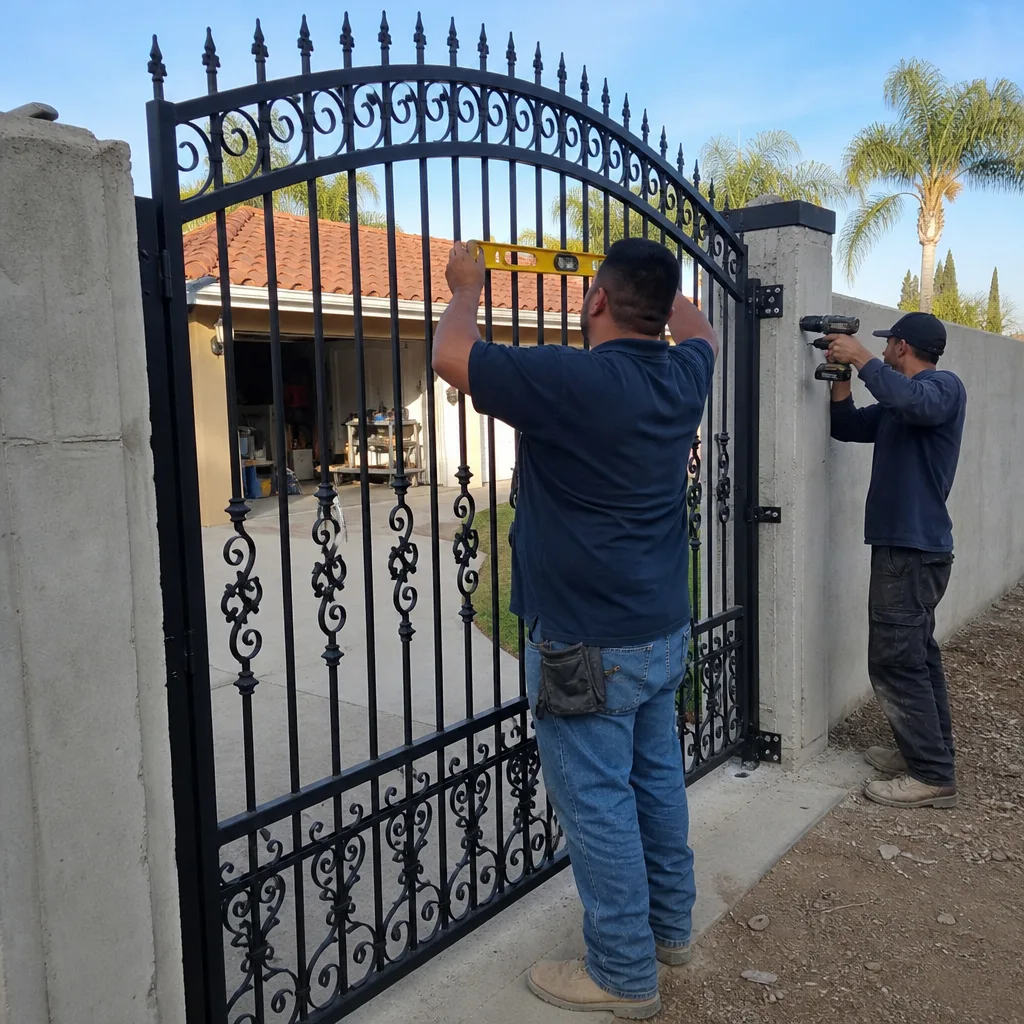
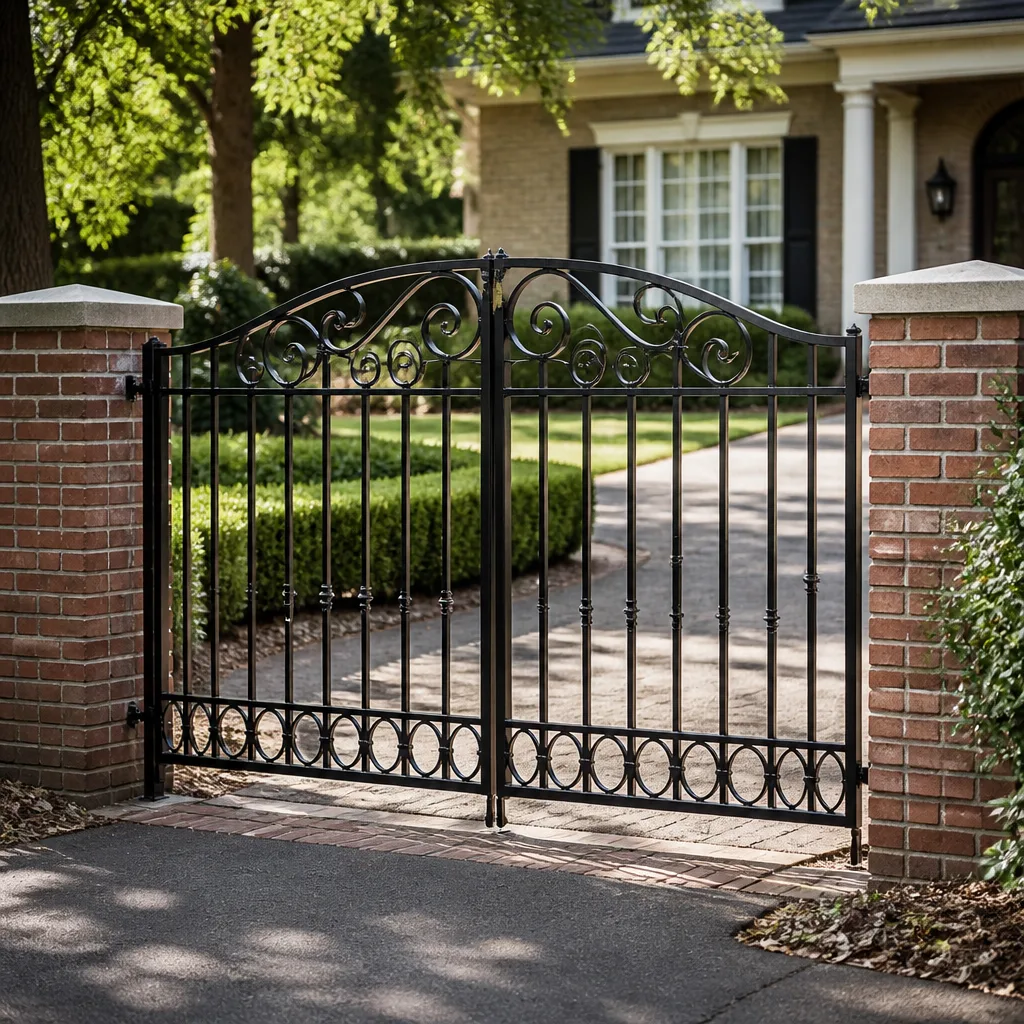 Wrought iron
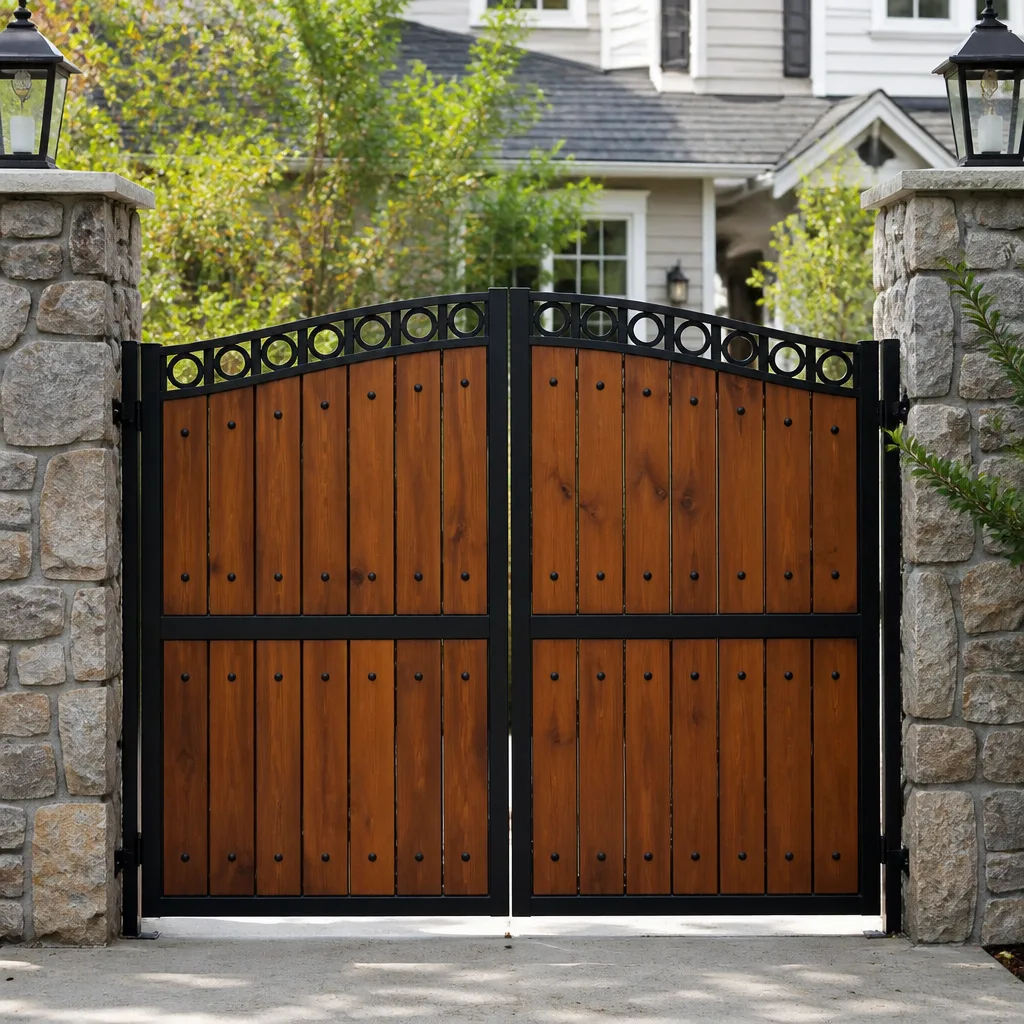 Wood & steel frame
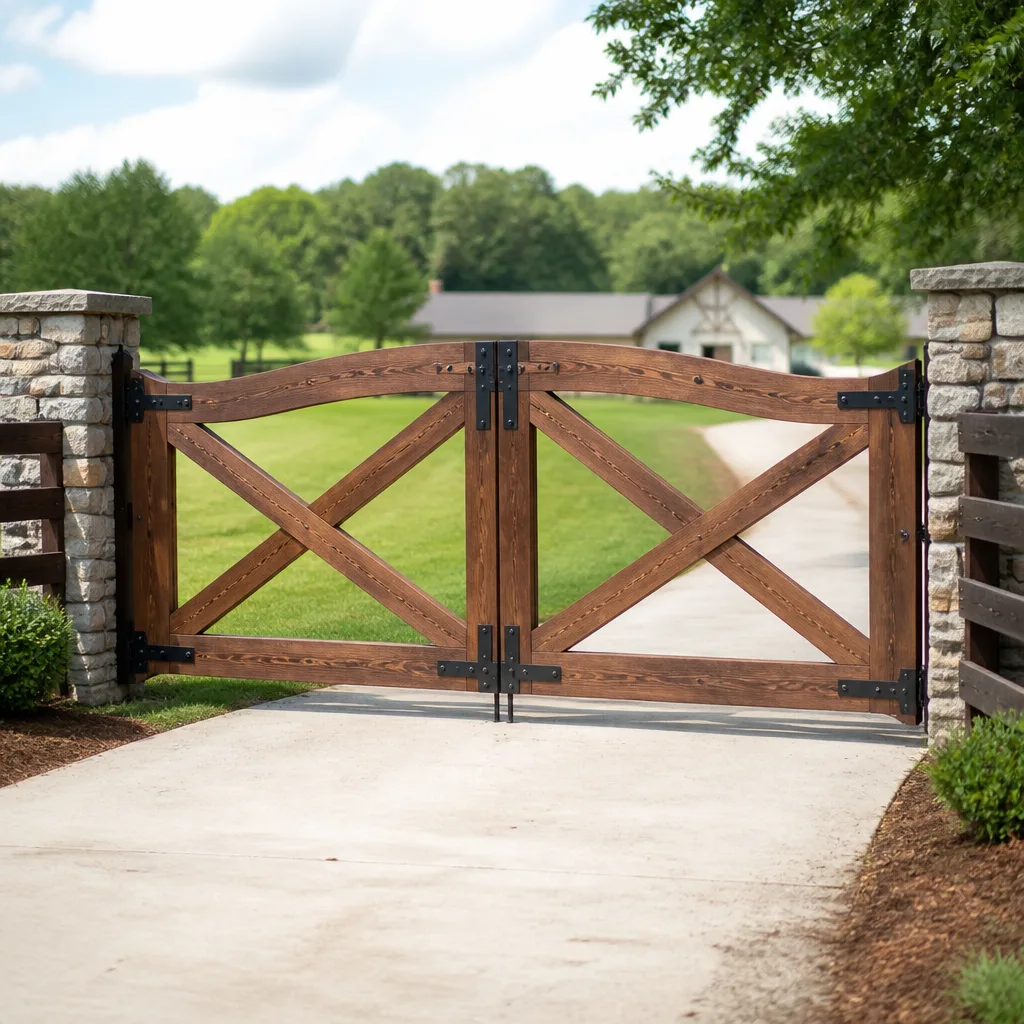 Farm & ranch
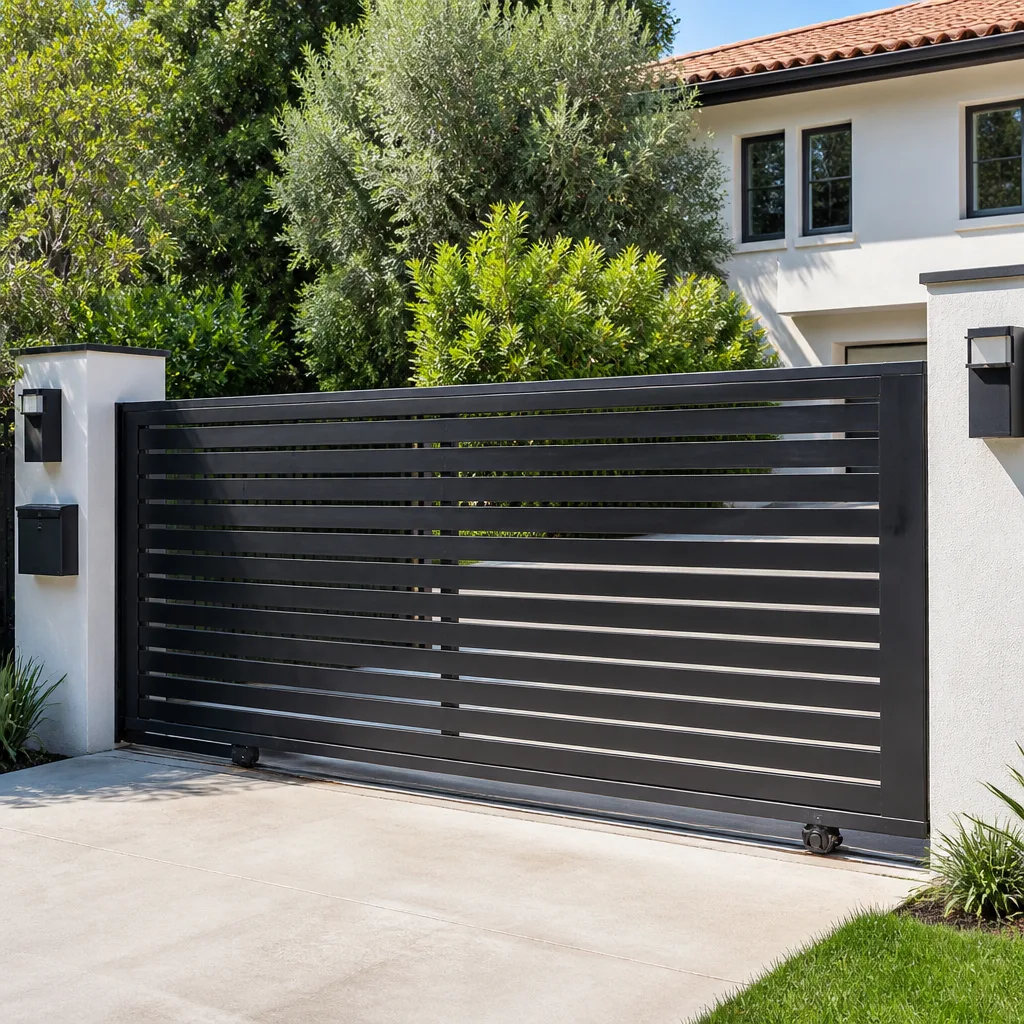 Sliding driveway gates
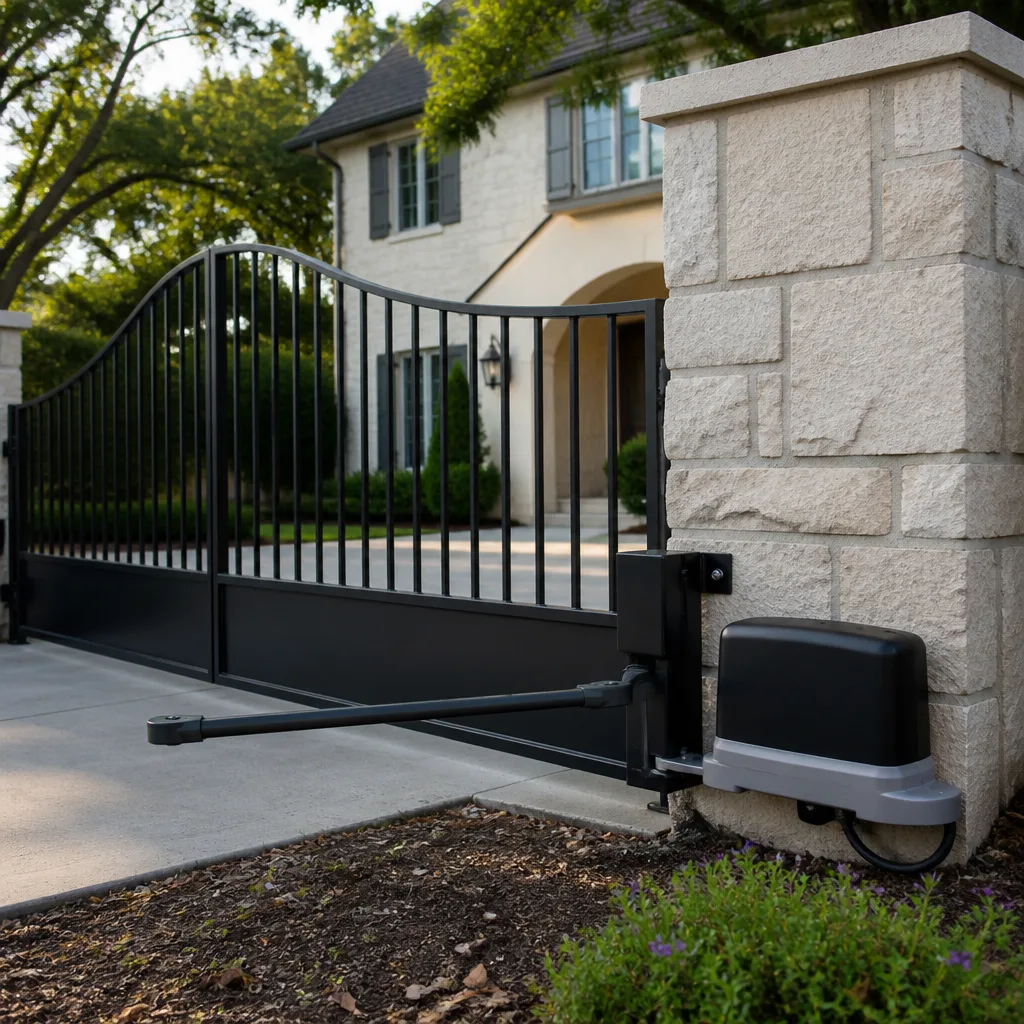 LiftMaster operators
Free on-site gate assessment - hinges, posts, and your LiftMaster or Nice gate operator checked before anything is quoted
The assessment is free and the quote is the invoice.
Get your free estimateGate Repair Warning Signs: A San Bernardino Homeowner’s Reference Guide
Most gate failures don’t happen without warning. They announce themselves for weeks, first as a half-second hesitation, then as a faint grind, then as a gate that stops halfway and waits for a second command. The problem isn’t that the signals are missing. It’s that most homeowners never learn what normal operation sounds and feels like, so they have nothing to compare against. This guide catalogs the audible, visible, and operational signals that come before the five most common gate failures we diagnose in San Bernardino, and it tells you which ones give you time to plan a repair and which ones need a call this week.
Quick Answer
The most reliable gate repair warning signs are a delay before the gate starts moving, grinding or clicking during travel, a slide gate that stops short of its limit, decreasing remote range, visible post lean, and rust bleed at welds or hinges. A gate that hesitates before it moves usually means the operator is drawing extra current to overcome a mechanical bind, and that pattern tends to end in motor or control board failure if the underlying cause isn’t corrected. In San Bernardino, post lean from soil movement and heat-cracked wire insulation are two of the earliest warnings we see.
Styles & brands we work with
- Wrought iron
- Wood & steel frame
- Farm & ranch
- Sliding driveway gates
- LiftMaster operators
Table of Contents
- What Your Gate’s Sounds Are Telling You
- Visual Inspection Signals: Rust Bleed and Post Lean
- Operational Warnings: Hesitation, Partial Travel, and Remote Range
- San Bernardino-Specific Warning Patterns
- The Five Most Common Gate Failures and the Signs That Precede Them
- Planned Repair vs. Same-Week Repair: Knowing the Difference
- What to Check Yourself Without Touching the Electrical System
- Why Brand Matters When Symptoms Show Up
What Your Gate’s Sounds Are Telling You
A healthy gate has a short, consistent sound signature: the operator engages, the gate moves with a smooth mechanical hum, and it stops with a clean mechanical finish. Anything that departs from that baseline is data. We’ve learned to treat sound as the first diagnostic layer because it points to a specific component before anyone has touched a meter.
Grinding
Grinding points to friction between moving metal parts. On a slide gate, a rhythmic grind that matches the gate’s speed usually means worn rollers, a track that’s out of alignment, or debris packed into the track channel. On a swing gate, grinding at the hinge side suggests a hinge bearing that’s drying out or a sagging leaf dragging on the ground. Grinding is rarely an operator problem. It’s mechanical, and left alone it forces the motor to work harder every cycle.
Clicking
A sharp click that repeats in a pattern often comes from the control board’s relays, from a slipping limit switch, or from a gear that’s skipping teeth inside the operator housing. Clicking that happens once at the start of travel can be normal. Clicking that repeats through the cycle or happens at the same point every time is a signal that something in the control or drive train is losing its grip.
Humming With No Movement
A motor that hums but doesn’t move the gate is trying to work against a load it can’t overcome, or it’s receiving power without a valid command. This one deserves same-day attention. Continued operation in this state pushes current through the motor and control board with nothing to dissipate it, and it’s one of the quickest paths to a burned-out operator.
Silence Where There Used to Be Sound
If the gate used to make a small relay click on command and now makes nothing at all, the problem is usually upstream of the motor: the control board, the receiver, a safety device holding the gate open, or the power supply. Silence isn’t always the operator’s fault, which is why brand-specific diagnostic knowledge matters when we open the housing.
Visual Inspection Signals: Rust Bleed and Post Lean
You can learn a lot about a gate’s condition in a five-minute walk-around without touching a single wire. The two visual signals that matter most are rust bleed and post lean, and they tell you different things about how much time you have.
Reading Rust Bleed
Rust bleed is the rust-colored staining that travels out from a joint, weld, or fastener. Where it appears tells you whether the corrosion is structural or cosmetic:
- Surface-only rust across flat panel faces is cosmetic. It’s a maintenance item, not a failure warning.
- Rust bleeding from a weld seam suggests corrosion is starting inside the joint, where the metal is thinnest and hardest to inspect. This is a structural warning.
- Rust rings around hinge bolts or post anchors usually mean the fastener is seizing. A seized fastener can’t be adjusted, which turns a simple alignment job into a cutting and replacement job.
- Rust bleeding at the base plate where a post meets its footing is the one we take most seriously. It often travels down into the footing, and it changes the repair scope from a paint-and-seal job to a structural correction.
Measuring Post Lean
Post lean is a footing signal. A post that was plumb when installed and is visibly out of plumb now means the soil underneath it has moved, the footing wasn’t set at proper depth for the load, or water is undermining it. On a swing gate, a small lean on one post throws the leaf alignment off and puts constant sideways load on the hinges. On a slide gate, a leaning post can push the track out of level, which forces the operator to fight gravity through every cycle.
You don’t need a laser to check it. A four-foot level against the post face, checked on two perpendicular sides, gives you a working reading. Mark where the bubble sits now and check again in a month. Movement between two readings is the thing to act on, not the absolute number.
Operational Warnings: Hesitation, Partial Travel, and Remote Range
How a gate behaves is the layer homeowners notice first and understand least. Three operational changes consistently show up before a hard failure.
Hesitation Before Movement
A gate that pauses for a fraction of a second before it starts moving is not “just slow.” The pause is usually the operator’s soft-start circuit taking longer to bring the motor up to speed because the mechanical load has increased. Something is binding: a roller, a hinge, a track, or the gate’s own weight shifting onto a new contact point. That hesitation typically precedes motor burnout by four to six weeks, and correcting the bind early is far cheaper than replacing the operator.
Partial Travel Stops
If the gate stops at the same point every time, the limit switch or its magnet is drifting out of position. If it stops at random points, the safety edges or photo eyes are triggering, or the board is losing position memory. The distinction matters. A consistent stop is a calibration fix. A random stop is a safety system doing its job or a control board on its way out.
Remote Range Degradation
A remote that used to open the gate from the street and now only works from the driveway is communicating a problem with the receiver, the antenna, or the board’s power output. In a San Bernardino summer, heat accelerates the failure of capacitors and solder joints on older control boards, and range loss is one of the earliest signs. Not every short-range remote is a receiver problem, though. A weak battery mimics it exactly, so change the battery first before you assume the board is going.
San Bernardino-Specific Warning Patterns
San Bernardino’s climate and soil put a specific spin on gate wear. Two local patterns show up on our diagnostics far more than a generic troubleshooting guide would suggest.
Post Lean Timelines Driven by Soil Movement
The dry, hot stretches San Bernardino runs through most of the year pull moisture out of the soil and cause it to shift and shrink. When the rains return, that soil swells back. Posts that were set to proper footing depth handle this well. Posts set shallow, or set in soil with a lot of sand and little compaction, don’t. A post can look plumb for a long stretch and then develop a lean over the course of a single wet season. Because of that, the useful check is a repeat measurement, not a one-time look. Watch the anchors and the base plate as much as the post itself.
Heat and Exposed Wiring Insulation
Wiring run along a fence line or exposed to direct afternoon sun in San Bernardino takes a UV and heat load that short interior runs don’t. Insulation cracks and becomes brittle. A cracked wire can work fine for months while the conductor inside stays intact, then fail intermittently when it flexes or when moisture gets in. Intermittent failures in a LiftMaster or FAAC operator that “work fine in the morning and act up in the afternoon” often trace back to wiring rather than the board itself. Wiring repairs belong with a trained technician because the operator circuit carries real current and a shock or an arc at a compromised conductor isn’t a homeowner job.
The same dry heat drives dust into track channels and hinge points. A slide gate track with packed dust behaves like a gate with worn rollers, and it’s worth clearing the channel before assuming the hardware has failed.
The Five Most Common Gate Failures and the Signs That Precede Them
Across residential and commercial systems in San Bernardino, five failures account for most of what we repair. Each has a recognizable warning period.
- Operator motor or gearbox failure. Preceded by hesitation on start, humming without movement, or a motor that runs hot to the touch after a cycle. Warning window: roughly four to six weeks from the first hesitation.
- Control board failure. Preceded by random stops, remote range loss, unexplained beeping, or a gate that responds differently to the same command. Warning window: two to five weeks, sometimes less after a heat wave.
- Safety device failure (photo eyes, safety edges, loops). Preceded by the gate reversing for no visible reason, stopping short, or refusing to close. This one is a safety issue, not a convenience issue, and it should be treated as urgent.
- Hinge, roller, or track wear. Preceded by grinding, a gate that sags at the free end, or a slide gate that climbs its track. Warning window: longer, often a month or more, because mechanical wear announces itself early.
- Post or footing failure. Preceded by visible lean, rust bleed at the base plate, and a gate that drags or binds on one side. Warning window: variable, and driven by how fast the soil beneath is moving.
Notice the pattern: the failures that cost the most come with the clearest early signals, and the signals are almost always in the sound or the behavior long before the gate stops functioning entirely.
Planned Repair vs. Same-Week Repair: Knowing the Difference
The single most useful skill in gate maintenance is telling the difference between a warning sign that lets you schedule a repair on your own timeline and one that requires a same-week response. Getting this wrong goes both ways: waiting on a safety issue, or paying for an emergency repair on something that had three weeks of runway left.
Signs That Allow Planned Scheduling
- Cosmetic surface rust that hasn’t reached a weld or a fastener.
- A gradual grinding noise that’s been consistent for a while and hasn’t worsened.
- A remote with modestly reduced range that a fresh battery didn’t fix.
- A gate that hesitates on start but still completes every cycle.
- A post measurement that’s off by a small amount and isn’t moving between readings.
Signs That Need Same-Week or Same-Day Attention
- Any safety device that isn’t working: photo eyes blocked or dead, a safety edge that doesn’t reverse the gate, a loop that doesn’t detect.
- A motor that hums without moving, or a gate that won’t fully open or fully close.
- Visible post movement between two readings a month apart.
- Intermittent operation that’s now failing most cycles instead of occasionally.
- Any sign of heat damage at the control box, smell of burning, or a tripped breaker that resets and trips again.
A gate that won’t stay closed is a security gap. A gate whose safety devices aren’t working is a hazard to anyone who gets in its path. Both land on the urgent list regardless of how the gate looks.
What to Check Yourself Without Touching the Electrical System
There’s a useful set of checks a homeowner can do safely, and there’s a clear line where a trained technician has to take over. The distinction is important: the operator’s electrical components and the power run carry enough current to cause serious injury, and a heavy gate leaf can crush if it drops or swings unexpectedly while someone is working near the hinges or the track with the power on.
- Do a sound check. Stand back and run the gate through a full cycle. Listen for grinding, clicking, hesitation, and any change in the normal hum. Note where in the cycle it happens.
- Walk the perimeter with a flashlight. Check seams, welds, hinge bolts, and the base plates for rust bleed. Look at the track channel for packed debris.
- Measure post plumb and date it. Use a level on two faces of each post, note the reading, and check again in thirty days.
- Test the safety devices. With the gate in motion, verify the photo eyes stop and reverse it when blocked. This is a safe test that doesn’t involve opening anything.
- Check the remote. Change the battery first, then compare range from the same spot. If range hasn’t improved, note the symptom for a technician.
- Watch for wiring weathering. Eyeball any exposed wiring along the fence line for cracked insulation or sun bleaching. Note it. Don’t touch, cut, or splice it.
What not to do: don’t open the operator housing, don’t adjust limit switches or springs, don’t probe the control board, and don’t run the gate with the safety devices bypassed to “test it.” Those are the jobs where a specialist’s training earns its keep. We handle the electric and automated systems across LiftMaster, FAAC, BFT, and the rest of the brands we service, and that includes the wiring, operators, and access hardware most generalists won’t touch.
Why Brand Matters When Symptoms Show Up
Symptoms that look identical on paper point to different components depending on the system. A random mid-travel stop on a LiftMaster operator often traces back to the safety sensor wiring, while the same symptom on a FAAC swing operator can point to the encoder or the board’s position memory. BFT systems have their own logic for how the control board reports faults, and Linear operators fail in still other patterns.
That’s the practical reason brand-specific diagnostic knowledge matters: a technician who knows the system’s logic reads the symptom correctly the first time instead of replacing parts on a guess. Misdiagnosis is expensive in two ways. It costs the part you didn’t need, and it delays the actual repair while the underlying problem gets worse. When you call about a symptom, tell us the brand and model. It shortens the path to the fix.
If you want the full picture on what we do, the Valor Gate Repair homepage lays out our three service lines. Our broader gate repair service covers mechanical failures, hinges, rollers, and structural correction, while our electric gate repair covers operators, control boards, and access hardware. If you’re in the San Bernardino area and aren’t sure which one you need, the symptom itself usually tells us.
Common Mistakes to Avoid
- Waiting for the gate to fail completely. The whole value of early warning signs is the runway they give you. A hesitation that gets a diagnostic now costs less than a burned-out operator and a control board in six weeks.
- Greasing everything. Not every gate part wants lubricant, and the wrong product on a track or a limit switch can attract dust and make the problem worse. Ask before you spray.
- Bypassing the safety devices to “just get it working.” Photo eyes, safety edges, and loops exist to stop a heavy moving gate on a person or vehicle. Bypassing them is a hazard, and it’s the most common mistake we correct in San Bernardino.
- Blaming the remote for range loss. A weak battery causes most short-range complaints, so change it before you assume the receiver or board is failing.
- Ignoring post lean because the gate still works. A leaning post is moving the load onto the hinges, the operator, and the track. It works until it doesn’t, and the eventual repair is structural rather than mechanical.
- Calling a generalist for an automated gate. Operators, control boards, and access hardware are their own specialty. A generalist who guesses on a brand-specific fault usually makes two visits instead of one.
- Running the gate in the heat without checking the wiring. San Bernardino summers stress exposed wiring and control boards. A cracked conductor or a heat-weakened board usually shows up as intermittent behavior first.
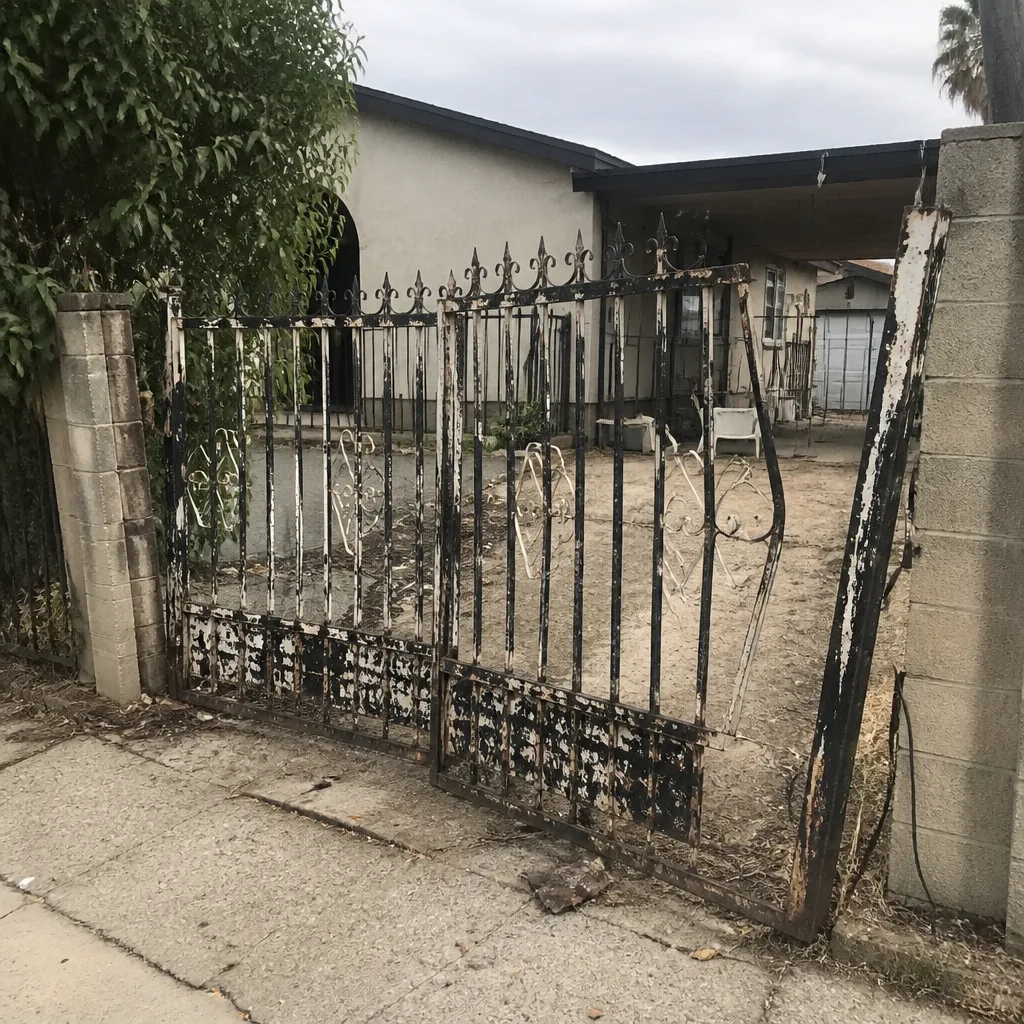
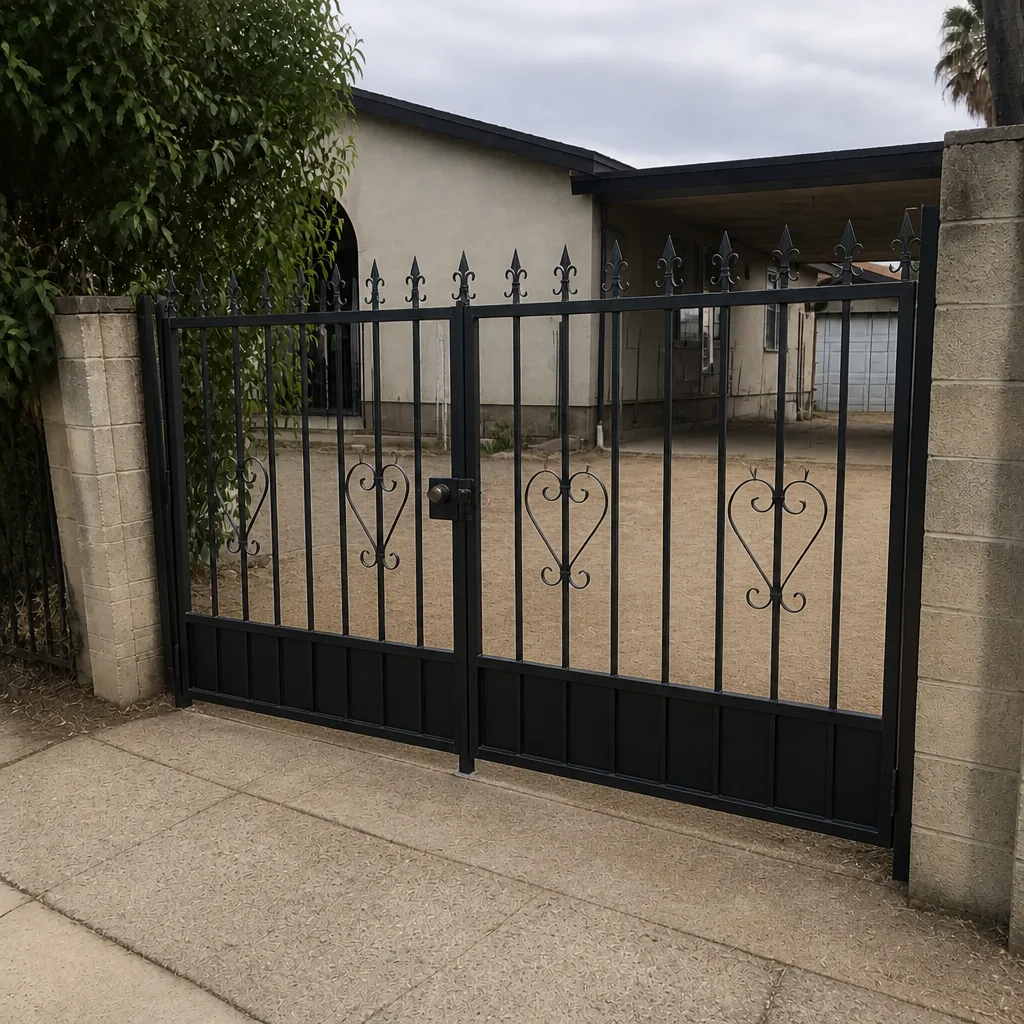
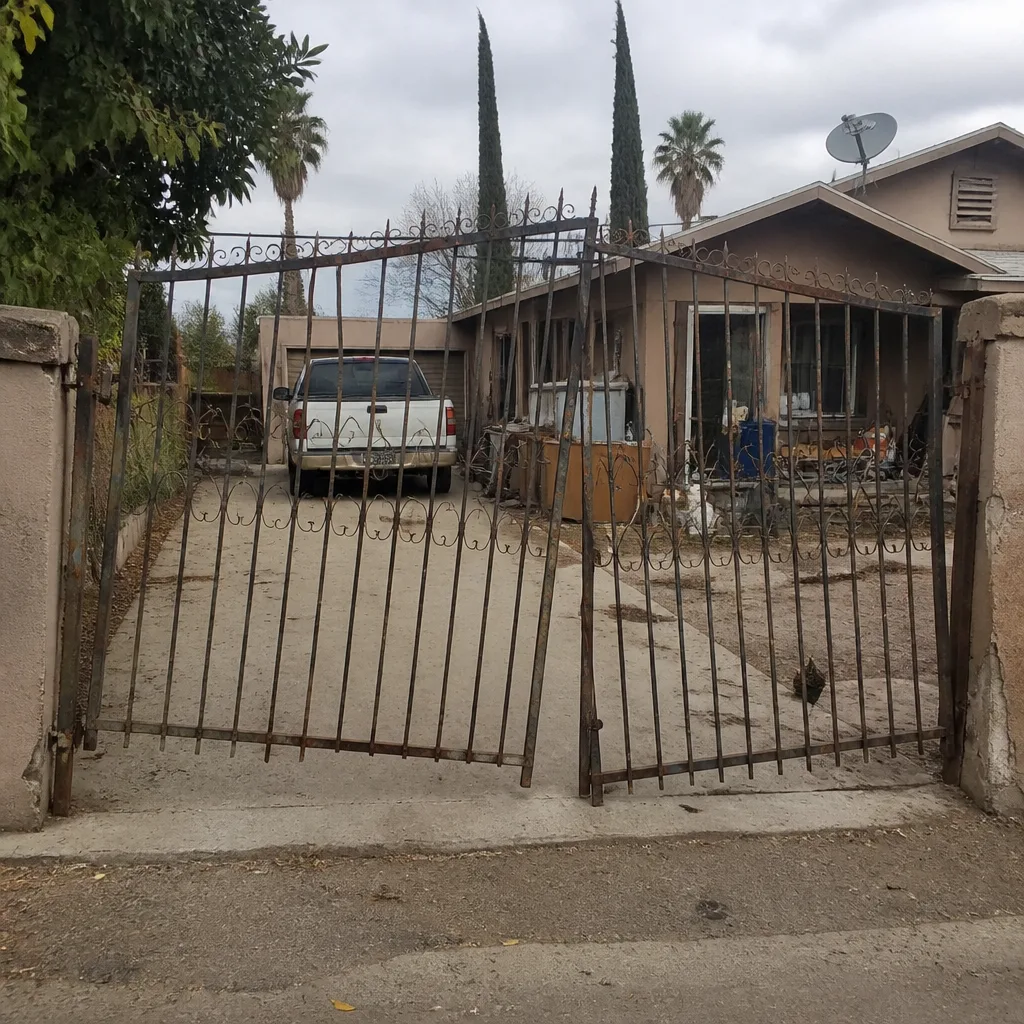
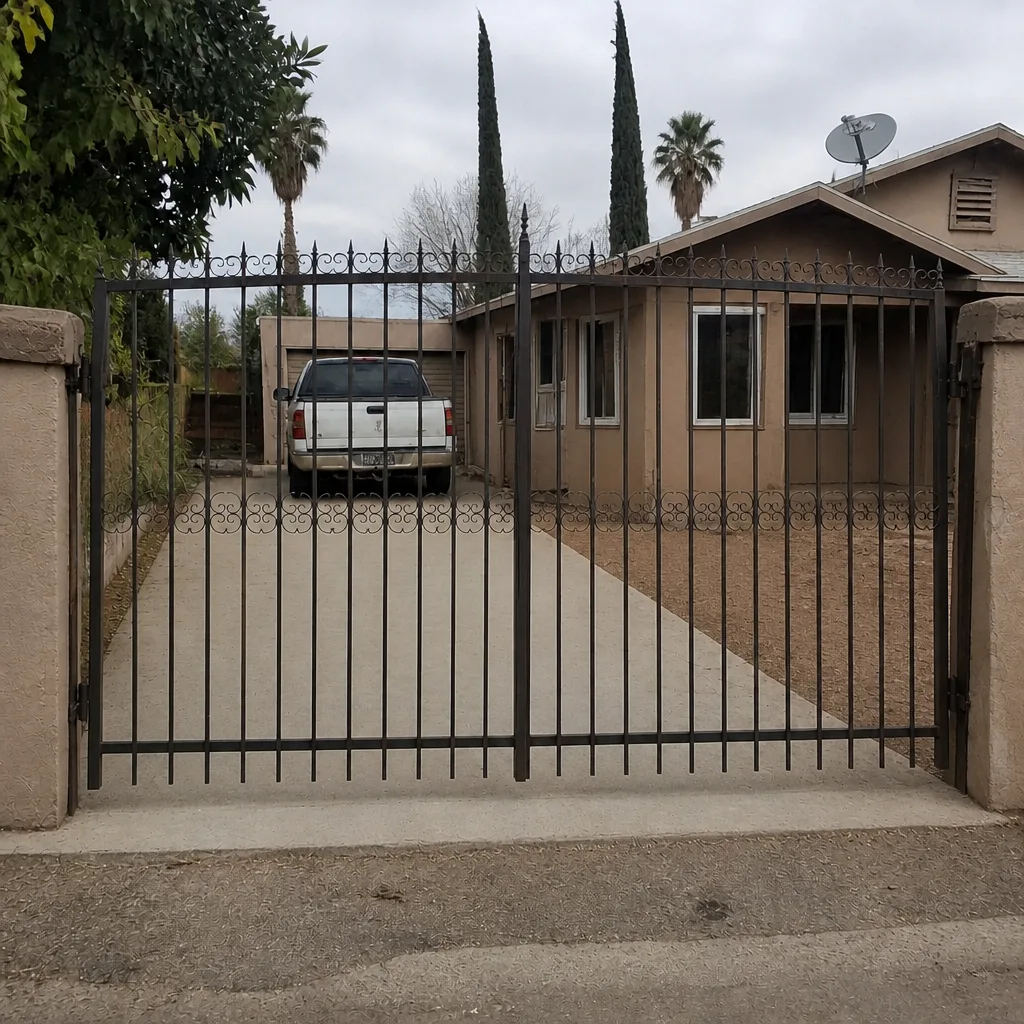
See the difference
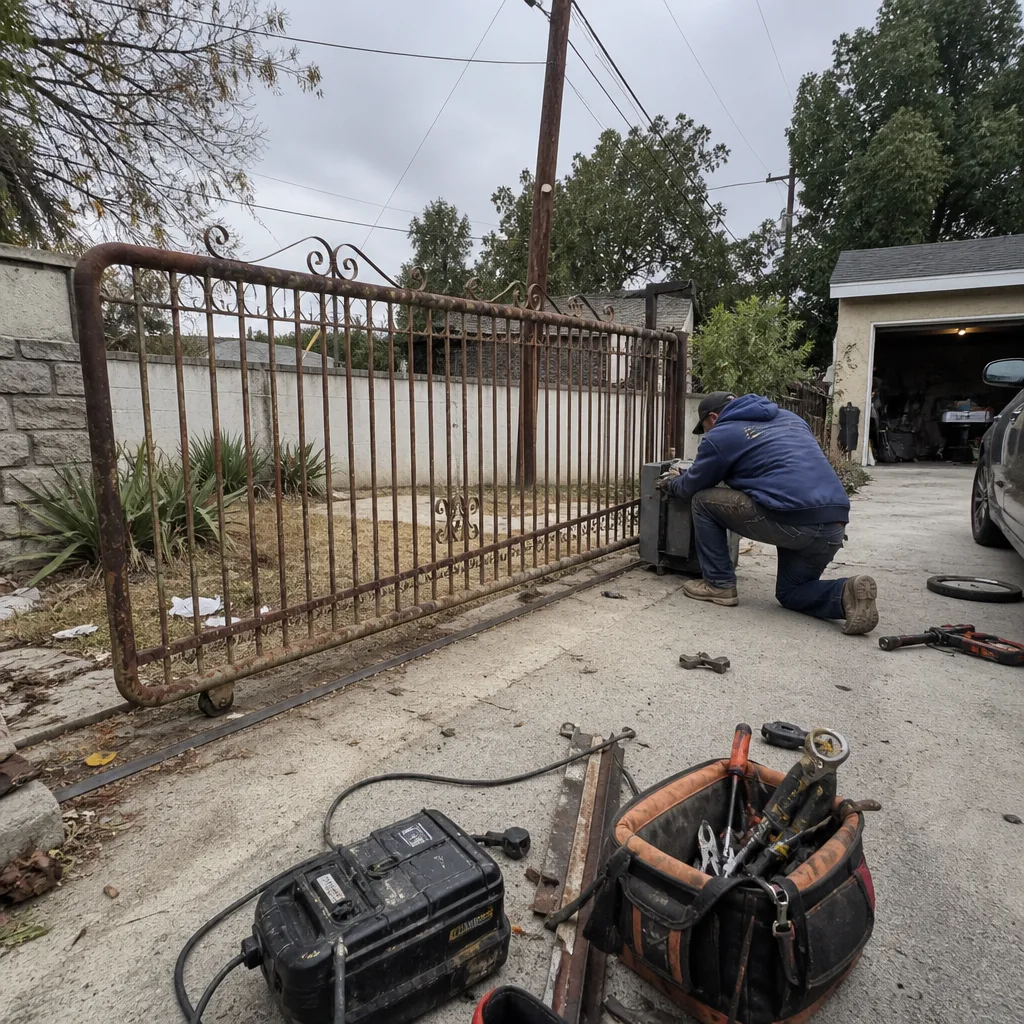 Before
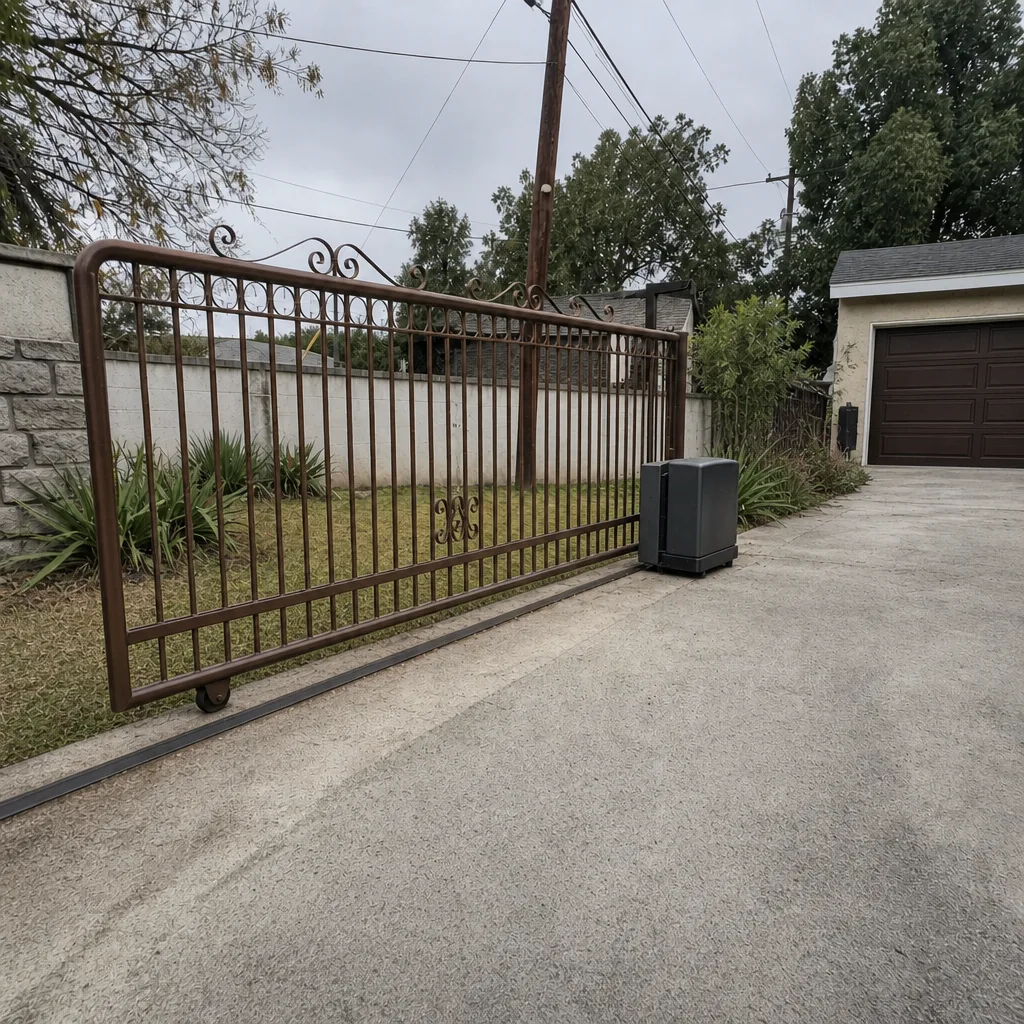 After
 Before
 After
 Before
 After
When to Call a Professional
Call us when the gate hangs mid-cycle, hums without moving, reverses for no reason, or won’t hold position when closed. Call when a photo eye or safety edge isn’t stopping the gate, when a post is visibly out of plumb, or when exposed wiring shows cracked insulation. Call when the same symptom returns after a reset, or when heat or dust has pushed a marginal system into failing. The electrical side of a gate isn’t a do-it-yourself repair. From there, we diagnose, repair, and restore access, and we bring brand-specific knowledge to whichever operator you have. Valor Gate Repair offers free estimates in San Bernardino. Call (866) 389-3501. We answer 24/7. Fast dispatch from 7am to 7pm, Sunday through Friday.
Frequently Asked Questions
Most residential gate systems run for years with routine attention to hinges, rollers, and tracks, but the timeline depends on duty cycle, exposure, and how fast problems get corrected. A gate that hesitates on start but still completes every cycle is in the warning window, and catching the bind early is what extends the system’s life. If your gate is hesitating or grinding, call (866) 389-3501 for a free estimate. We answer 24/7. Fast dispatch from 7am to 7pm, Sunday through Friday.
If the gate stops at the same point every cycle, it’s usually a limit switch or magnet drift and can be scheduled. If it stops at random points or the safety devices aren’t reversing it, treat it as urgent, because a gate that won’t reliably stop for a person or vehicle is a hazard. Call (866) 389-3501 and describe the pattern. Estimates are free.
Short remote range is most often a weak battery, so change that first. If range is still down, the receiver, antenna, or control board may be weakening, and heat accelerates that in San Bernardino summers. Call (866) 389-3501 to get the receiver and board checked. The estimate is free.
Yes, a motor that hums without movement is one of the failures we fix most often, and it’s one you don’t want to leave running. Continued operation in that state pushes current through the motor and board with nothing to dissipate it. Call (866) 389-3501 for a diagnosis. We answer 24/7. Fast dispatch from 7am to 7pm, Sunday through Friday.
A gate specialist, because automated gates are the operator, the control board, the access hardware, and the mechanical linkage, and generalists usually don’t carry the brand-specific diagnostic knowledge. Our technicians work across LiftMaster, FAAC, BFT, Linear, and other major systems, and they diagnose by each brand’s logic. Call (866) 389-3501 for a free estimate.
Yes, on most automated systems the photo eyes must detect a clear path or the control board will hold the gate open or reverse it. A gate that refuses to close is often a safety device doing its job, not a failure. If your photo eyes or safety edges aren’t working, call (866) 389-3501 for a same-week repair. Estimates are free.
The Bottom Line
Gate failures follow a script. The motor hesitates before it burns out. The track grinds before the roller fails. The post leans before the hinge tears out. The safety device flickers before it stops protecting anyone. The work of avoiding a costly breakdown is recognizing the signal and knowing whether it gives you three weeks or three days. In San Bernardino, pay close attention to post lean between wet and dry seasons and to cracked insulation on sun-exposed wiring, because those two warnings tend to arrive quietly. Check your gate monthly, measure your posts, test the safety devices, and call a specialist the moment a symptom shows up. The earlier a gate diagnosis happens, the smaller the repair.
Written by the team at Valor Gate Repair.