
Last updated November 16, 2026
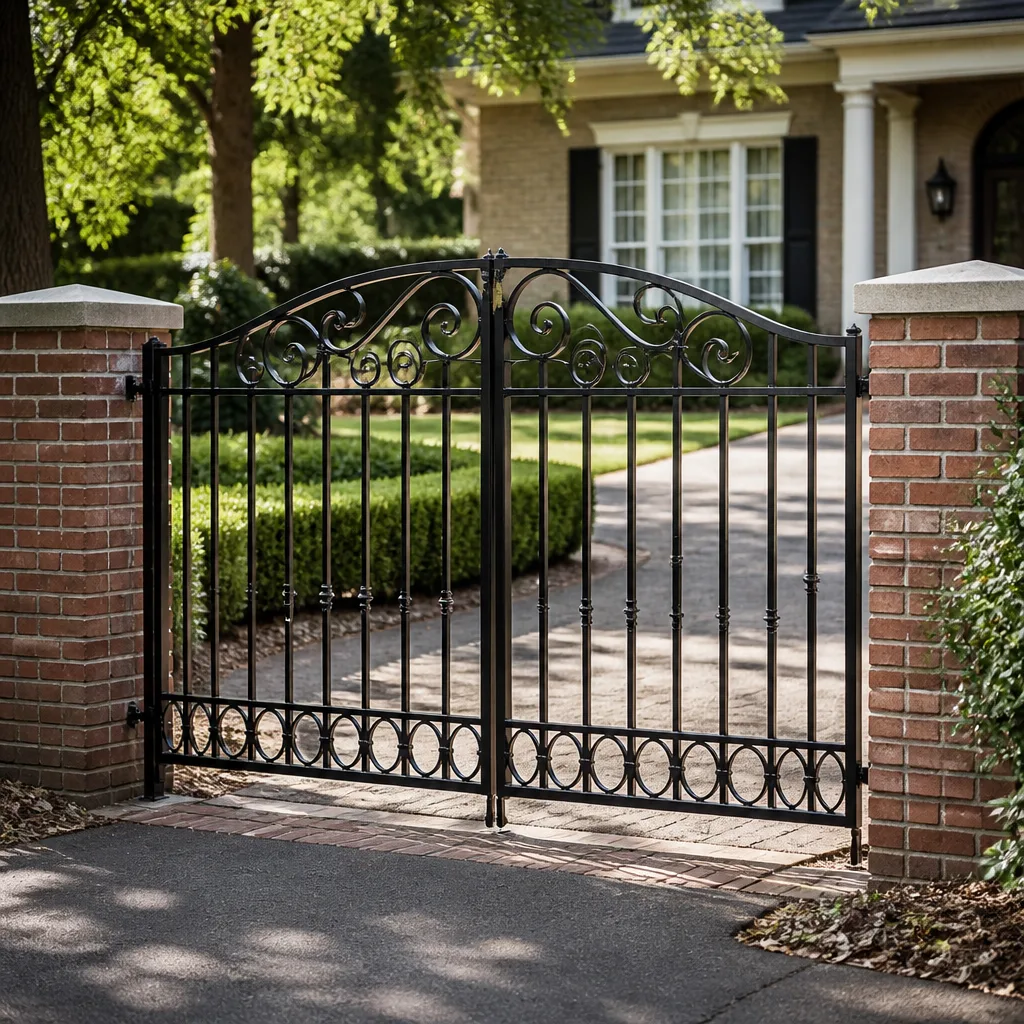 Wrought iron
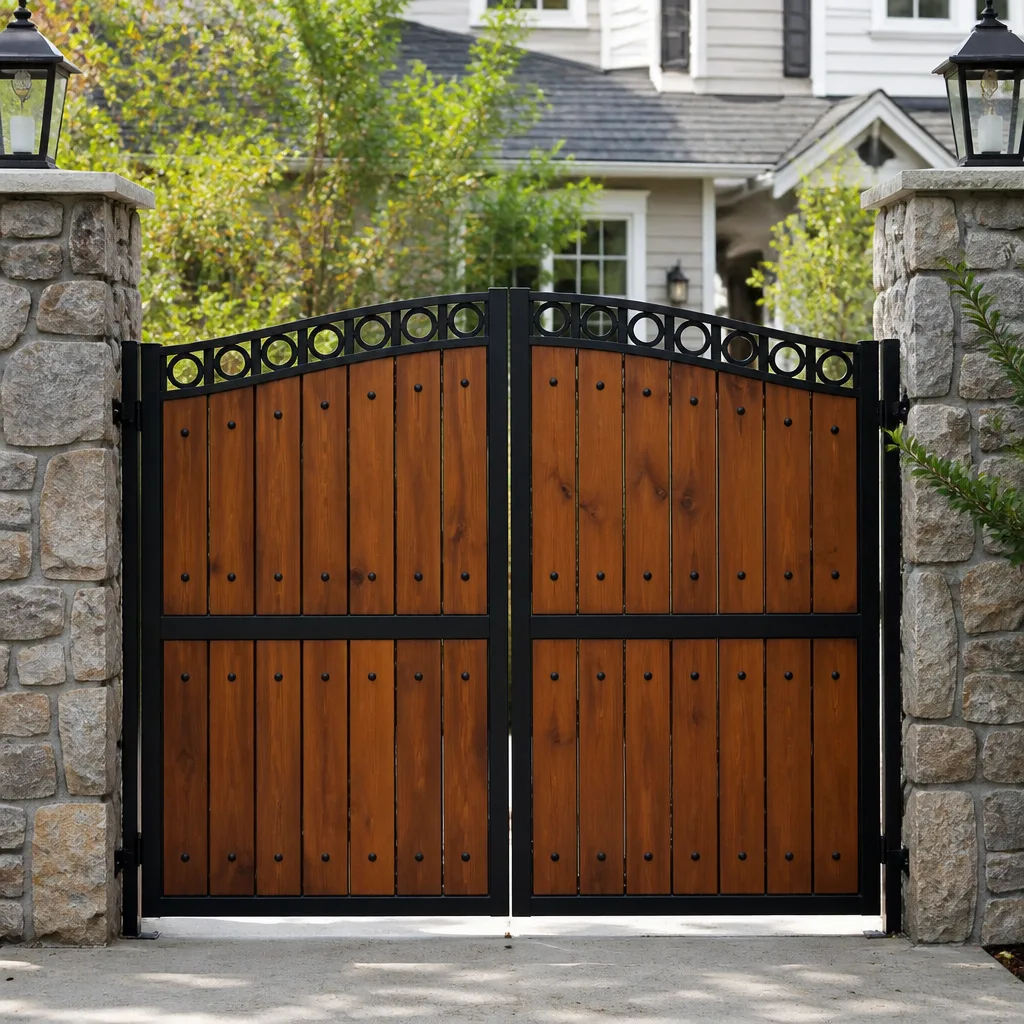 Wood & steel frame
 Farm & ranch
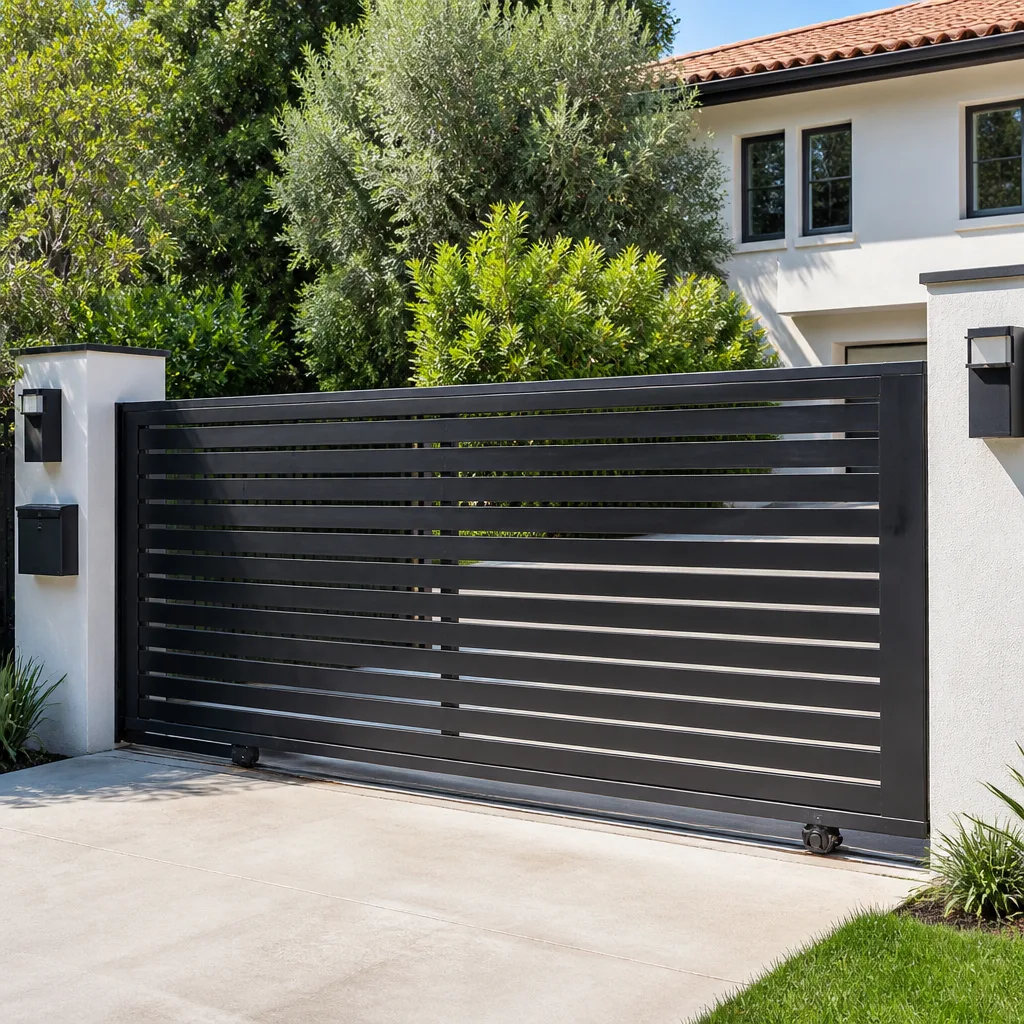 Sliding driveway gates
 LiftMaster operators
Free on-site gate assessment - hinges, posts, and your LiftMaster or Nice gate operator checked before anything is quoted
The assessment is free and the quote is the invoice.
Get your free estimateSeasonal Gate Repair Care for San Bernardino: Year-Round Homeowner’s Guide
Most gate owners in San Bernardino wait for something to break before they think about it. That instinct is understandable, and it’s also why so many automated gates fail in the same handful of weeks each year. The damage almost never starts when the gate stops moving. It starts weeks earlier, quietly, in a limit switch channel packed with windblown debris or a post footing that’s shifted a quarter inch as the soil dries. October is the worst offender, and not for the reason you’d guess. This guide breaks the year into four real stress windows, gives you the tasks that belong to each one, and shows you a 15-minute walk-around that catches most developing failures long before they become a breakdown.
Quick Answer
Seasonal gate care in San Bernardino means matching maintenance to four stress windows rather than four calendar seasons: a summer heat-and-UV window, a Santa Ana wind window in fall, a wet-soil window in winter, and a short mild window in spring. The highest-value tasks are clearing limit switch channels and photo-eye lenses before wind season, checking post footings and drainage before rain, and refreshing lubrication once temperatures settle in spring. A 15-minute walk-around done at each transition catches most failures before they turn into emergency calls.
Styles & brands we work with
- Wrought iron
- Wood & steel frame
- Farm & ranch
- Sliding driveway gates
- LiftMaster operators
Table of Contents
- Why San Bernardino’s “Seasons” Don’t Behave Like Seasons
- Summer Protocol: Heat, UV, and Expansion Stress
- Santa Ana Season: Debris, Hinges, and Static Interference
- Winter and Rain: Footings, Drainage, and Corrosion
- Spring: Soil Re-Settling and Lubrication Refresh
- The 15-Minute Seasonal Walk-Around
- Matching Seasonal Care to Your Operator Brand
- Common Mistakes to Avoid
Why San Bernardino’s “Seasons” Don’t Behave Like Seasons
San Bernardino sits where the valley floor meets the foothills of the San Bernardino Mountains, and that position drives everything about how a gate wears here. Summer heat loads onto metal and electronics for months at a time. The Santa Ana winds arrive in fall with dry, fast-moving air that turns loose grit into an abrasive. Rain, when it comes, tends to arrive in concentrated storms that saturate soil quickly and then leave. Then there’s a brief mild window before the heat returns.
Each of those windows attacks different parts of the same gate system. A residential gate on the north side of San Bernardino, closer to the foothills where wind funnels down the canyons, will see more debris loading than a gate on flatter ground further out toward the valley. A commercial sliding gate at a property near the downtown core faces the same wind but different traffic and different duty cycles on the operator.
What that means practically is that a generic “spring cleaning and fall checkup” schedule borrowed from a national checklist misses the two windows that matter most here. Wind season is a maintenance event, not a nuisance. Heat season is a hardware event, not just a comfort issue. Once you start treating them that way, gate care stops being guesswork.
This is the foundation for how we approach gate repair across the area: diagnose against the season that caused the wear, not just the symptom showing on the gate today.
Summer Protocol: Heat, UV, and Expansion Stress
Summer in San Bernardino is the longest stress window on the calendar, and it attacks automated gates from three directions at once. Heat drives motor thermal cutouts, sun exposure degrades control board enclosures, and repeated heating and cooling works at every welded steel joint on the frame.
Thermal Cutout Resets
Most operators protect themselves with a thermal cutoff that shuts the motor down when internal temperature climbs too high. In a San Bernardino summer, a gate that runs several cycles in quick succession can trip that cutoff on a perfectly healthy system. If your gate stops mid-cycle and then works again after a rest, that’s the motor protecting itself, not a failing board.
Repeated trip-outs are a different story. If your gate is hitting the cutoff most days through July and August, the operator is working harder than it should. That points to drag somewhere in the mechanism: a hinge binding, a track out of line, or a roller that’s flat-spotted. Chasing the motor won’t fix it. The thermal cutout is doing its job and telling you where to look.
UV Damage to Control Board Enclosures
Plastic control enclosures and photo-eye housings take direct sun year after year. UV exposure makes the plastic brittle, and hairline cracks let in dust and grit that eventually reach the board. On older GateKing-style and Elite control housings, a cracked lens or a hinge tab that’s snapped on an enclosure door is one of the most common heat-season findings. It’s a cheap part now and an expensive diagnostic later.
Expansion Stress on Steel Frames
Steel expands in the heat. On a long sliding gate in San Bernardino, that expansion has to go somewhere, and it usually shows up as a slight change in where the gate settles when it closes. A gate that lines up in February can bind by August. Check that the gate still travels smoothly by hand, that it isn’t dragging on the guide rollers, and that the frame isn’t developing fresh cracks at weld seams.
Santa Ana Season: Debris, Hinges, and Static Interference
October is the most damaging month for automated gates in San Bernardino. That surprises most people, who assume it’s a rain month. Rain isn’t the problem. The Santa Ana winds carry debris into limit switch channels and across photo-eye lenses while the soil underneath the post footings starts to contract as the air dries. Two failure paths opening at once.
Debris Clearing from Sensor Paths
The photo-eye on an automated gate is a safety device. When dust, leaves, or fine grit coat the lens, the beam scatters, and the operator either refuses to close or closes and re-opens repeatedly. That’s a safety function doing what it was designed to do, and it’s also the most common call we get after the first windy week.
Clean both photo-eye lenses, both sides, with a soft dry cloth. Check the mounting brackets; a lens that’s been hit and now sits half a degree off will fail intermittently. And check the limit switch channel on sliding gates, which is a narrow slot that collects windblown grit and then jams the switch in position. A switch stuck in the “open” limit will stop the gate from closing. A switch stuck in “closed” will make it grind when it tries to re-open.
Hinge Inspection After High-Wind Loading
A swing gate that’s been buffeted by high winds has been subjected to loading it doesn’t see the rest of the year. Check every hinge for play by lifting the gate edge slightly. Any movement means the hinge pin or bushing has worn. Check the hinge plates on the post side for wallowing or loose bolts. A hinge that’s slightly loose in October becomes a sagging gate by spring.
Remote Frequency Interference from Dry-Air Static
Dry air and dry ground raise the amount of static in the environment, and that can affect remote range. If your Mighty Mule or Ghost Controls remote has gotten stubborn about working from the driveway, it may not be the remote at all. Try a fresh battery first and check the receiver antenna position. If the range improves on a cool, humid morning and drops on a windy dry afternoon, that’s environmental, not a failing receiver.
Winter and Rain: Footings, Drainage, and Corrosion
San Bernardino winters are mild, and mild is exactly what makes water problems easy to miss. There’s no hard freeze to test the drainage, no visible damage to track, and the gate keeps working. Underneath the gate, the soil is getting saturated and the footings are discovering they have a problem.
Drainage Around Post Footings
Post footings on a San Bernardino property should sit on soil that drains. When rain arrives in concentrated storms, water pooling against a post does two things. It softens the soil around the footing, and it finds its way into any crack in the footing surface. Either one allows the post to shift by a fraction of an inch, which is enough to make a swing gate drop or a sliding gate rub.
Walk the gate line after a heavy rain and look for standing water against any post or along the ground track of a sliding gate. Note where water tends to sit. This is diagnostic information for the spring check.
Corrosion Acceleration on Unpainted Welds
Bare welds, chipped paint on steel frames, and unpainted hardware corrode faster when they’re wet more often. Winter is when that shows up first. Look at weld seams, hinge plates, latch hardware, and the bottom edge of any gate frame that sits close to the ground. Anywhere bare metal shows through paint is a spot to treat before the problem grows.
Battery Backup Performance
Automated gate operators typically use a battery for backup. Cold mornings reduce battery capacity, and a battery that’s two or three years into its life will become noticeably weaker as the temperature drops. If your gate fails to open on the first attempt on a cold morning, or if the operator beeps and stalls, the battery is the first thing to check. This is also the time to confirm that the backup function actually works, since you’re depending on it most during power outages and storm-driven grid interruptions.
When the system itself is the problem, our electric gate repair service covers operators, boards, and safety hardware across the area.
Spring: Soil Re-Settling and Lubrication Refresh
Spring in San Bernardino is the brief window between wet-soil season and summer heat. The soil has finished its last big shift, temperatures have stabilized, and the gate hardware is in its most predictable state of the year. That makes it the right time to correct anything the winter moved and to reset lubrication before the heat returns.
Soil Re-Settling Inspection
Once the soil has dried back to its normal level, check for footing movement. On swing gates, the test is simple. Open the gate halfway and let it settle. If it wants to swing inward or outward on its own, the post has tilted slightly. On sliding gates, check that the gate still runs level along the track without lifting or grinding. A post that moved even a small amount in the rain will show up now.
Also check the gate’s ground clearance and its alignment with any receiving post, latch, or strike plate. Alignment problems that didn’t exist in fall are a strong signal the footing moved.
Lubrication Refresh
Lubricant applied in summer has been cooked by heat and dried out by wind. Refresh it in spring once temperatures have stabilized. The components that matter: hinge pins and bushings, rollers and roller tracks on sliding gates, latch mechanisms, and the manual release mechanism on any automated operator. Use the lubricant the operator manufacturer specifies for the drive mechanism; on a screw-drive or chain-drive operator, the wrong lubricant can cause more wear than running dry.
Don’t over-lubricate. A hinge that’s packed with grease collects grit, and grit is the actual enemy. A thin, even coat on a clean surface is the goal.
The 15-Minute Seasonal Walk-Around
The purpose of a short walk-around is not to repair anything. It’s to catch developing problems while they’re still small. Done four times a year at the seasonal transitions, this routine catches most of what turns into an emergency call. Put it on the calendar and treat it the way you treat changing the air filter.
Step-by-Step Checklist
- Walk the full travel path. Open the gate and walk the ground it moves across. Look for debris, uneven surface, or anything the gate would contact.
- Listen. With the gate closed and the operator in manual mode, run the gate by hand. Any scraping, grinding, or binding is a signal. Operator noise should be consistent, not varying cycle to cycle.
- Check every hinge and roller. Lift and press on the gate to check for play at hinges. Roll the sliding gate along its track and watch for flat spots on rollers or jumps in the track.
- Clean the photo-eyes. Both lenses, both sides. Soft dry cloth. Confirm the safety function by standing in the beam; the gate should reverse or hold.
- Inspect limit switches and sensor channels. On sliding gates, look into the limit switch channel for grit. On swing gates, check the operator arm or actuator mount for looseness.
- Test remotes and keypad. Confirm range from the usual entry point. Try a second remote if available. Note any inconsistency.
- Look at the battery indicator. Many operators have a status light or diagnostic readout. Learn what “normal” looks like so seasonal changes stand out.
- Photograph the gate. Four photos: both hinge sides, the latch, and the operator. A photo from last season answers a lot of questions the next time something changes.
What the Walk-Around Won’t Catch
Some problems live inside the operator. Control board faults, sensor calibration drift, and firmware issues won’t show up in a visual walk-around. If your walk-around comes up clean and the gate still misbehaves, the answer is a diagnostic on the operator itself, and that’s where a specialist with brand-specific knowledge saves you time and money.
Matching Seasonal Care to Your Operator Brand
Different operator brands have different weak points, and knowing your brand shortens the diagnostic. Our technicians have up to 13 years of experience across the brands installed at residential and commercial properties in San Bernardino, and that experience informs what we check first in each season. Four that come up often:
Ghost Controls
Ghost Controls systems are common on residential swing gates and see a lot of wind exposure in the foothills. Their use in solar-assisted setups means battery management matters more, particularly in winter when charging capacity drops. Check the solar panel angle and clear any dust or debris off the panel surface during the fall walk-around.
Mighty Mule
Mighty Mule operators are widely installed on residential swing gates here, and they use control logic that’s sensitive to safety sensor state. A photo-eye that’s coated with windblown dust can cause the operator to behave as if the gate is obstructed. Sensor cleaning during wind season is the single highest-value task for these systems.
Elite
Elite operators are common on sliding gates where the duty cycle is heavier. Limit switch channels on these systems collect grit in wind season, and the track under the gate is a target for debris. Clearing the limit channel before the first Santa Ana wind event prevents the most common failure we see on Elite operators.
DoorKing
DoorKing is a commercial-grade brand that also appears on large residential estates. Access hardware, keypads, and entry systems built around DoorKing operators need inspection for water ingress during the winter and heat stress on enclosure hardware during summer. Clear communication through access hardware is the priority for seasonal care on these systems.
If you’re not sure what brand your operator is, check the housing. The model name is almost always embossed on the case or printed on a label inside the control enclosure door.
Common Mistakes to Avoid
- Skipping the wind-season check because it hasn’t rained. Wind debris does more gate damage in San Bernardino than rain does, and the season rarely announces itself.
- Holding the gate open by hand and forcing it. A gate that binds is telling you something in the mechanism is failing. Forcing it strains the operator and can damage the gearing.
- Over-lubricating to “protect” components. Excess lubricant collects grit, and grit causes more wear than a dry surface.
- Ignoring small shifts in gate position. A gate that closes slightly differently than last season is signaling footing or hinge movement. Small shifts catch cheaply; misaligned gates catch expensively.
- Testing the photo-eye by walking through it. Test the safety function by standing in the beam without advancing. This tests the sensor without risking a collision with a moving gate.
- Replacing a battery without checking the charging system. A new battery in a system with a failing charger will be dead again in a few months. Confirm the charging path is working.
- Assuming your brand needs the same care as the neighbor’s. Brand-specific weak points differ. A maintenance task that belongs on an Elite sliding gate may not apply to a Mighty Mule swing gate.
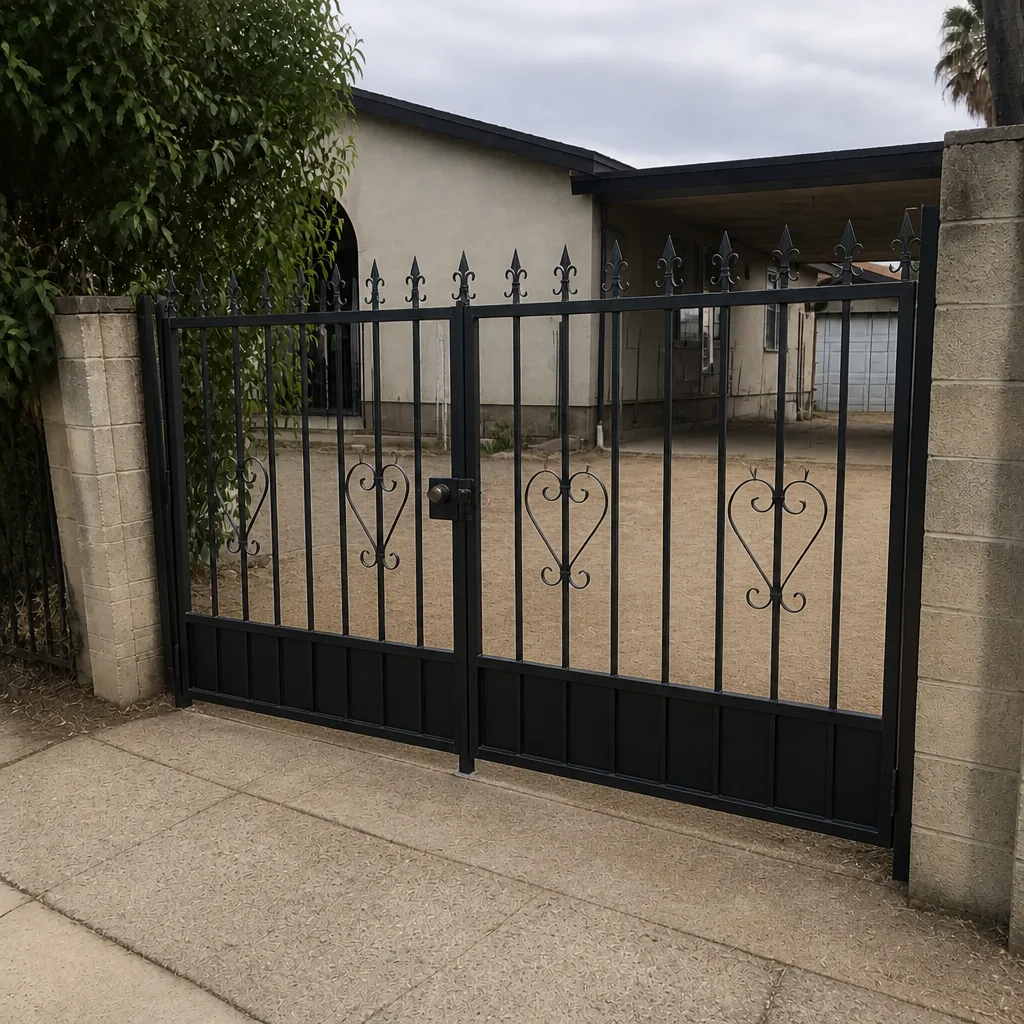
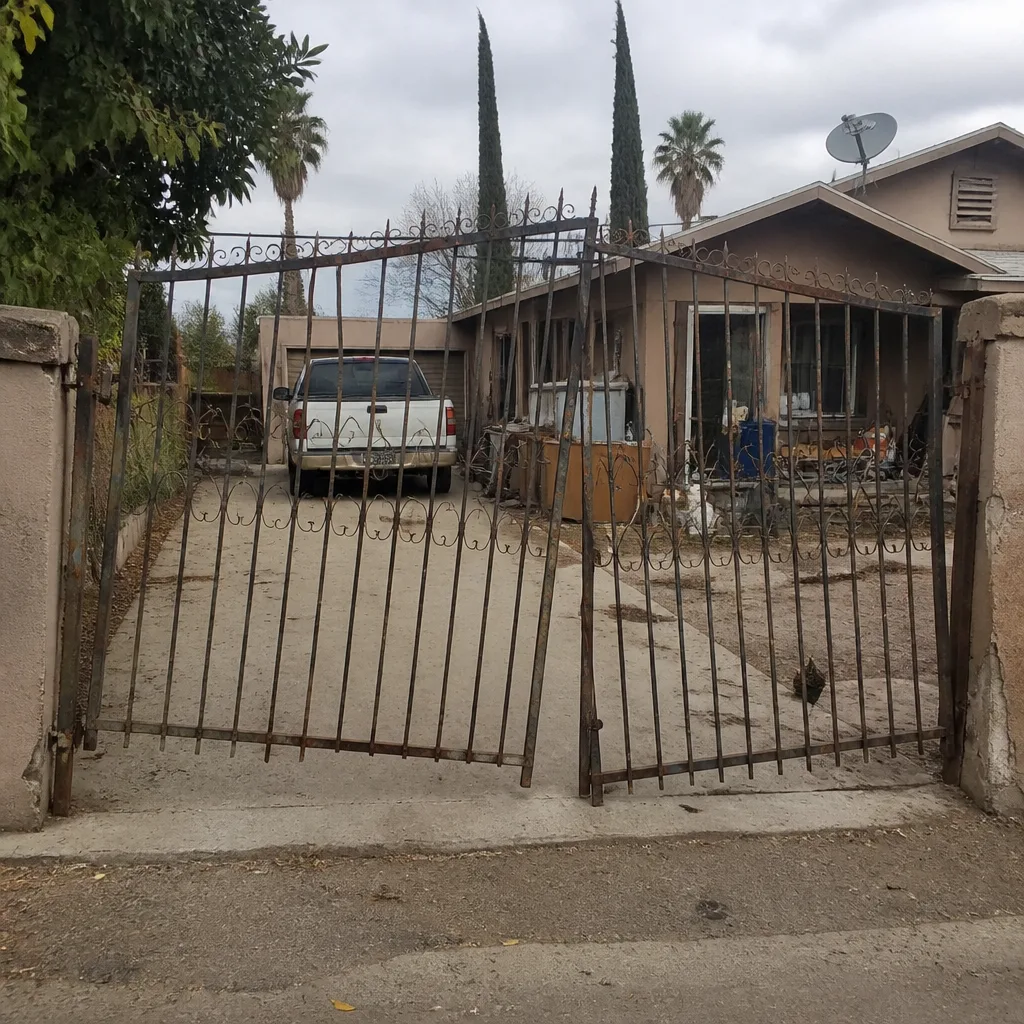
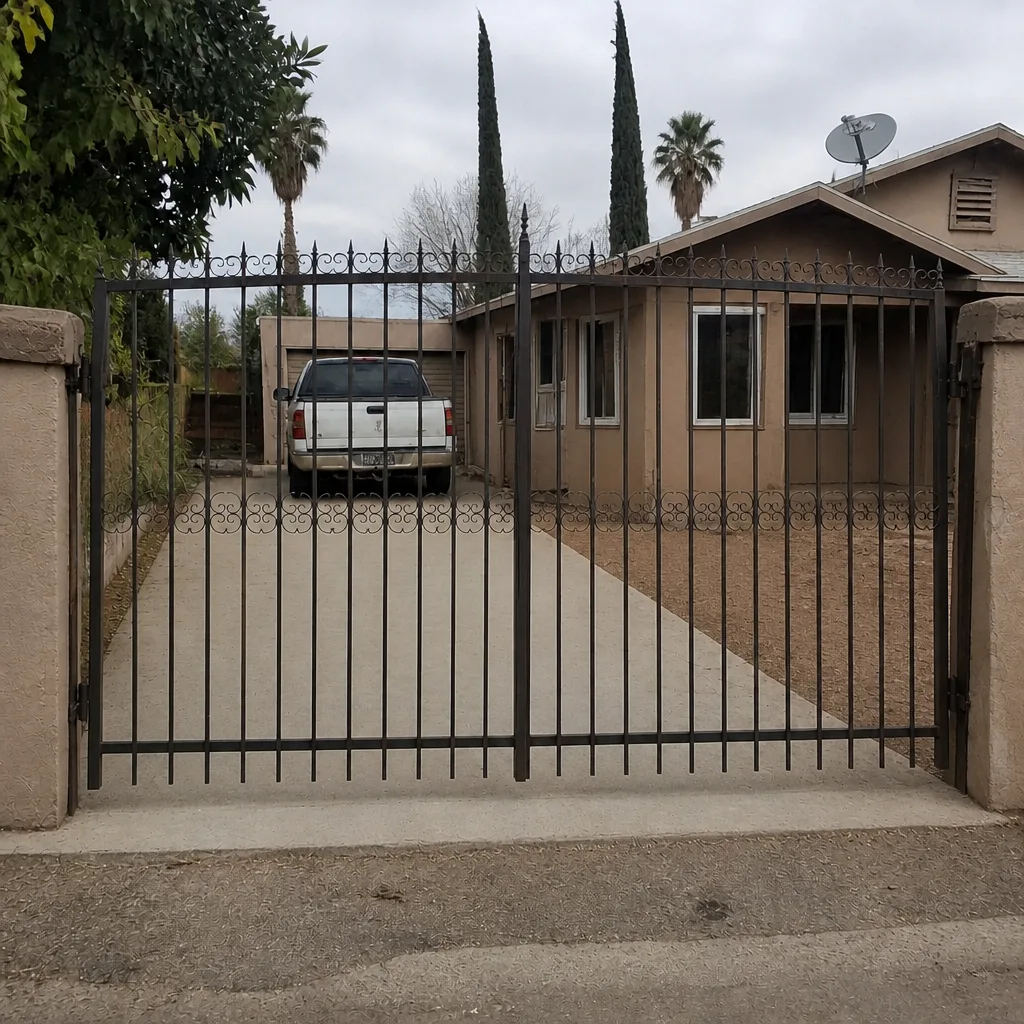
See the difference
 Before
 After
 Before
 After
 Before
 After
When to Call a Professional
Some seasonal care is safe to do yourself: photo-eye cleaning, visual inspection, and listening for changes in how the gate moves. Some care belongs with a trained technician. Call us when the gate hits the thermal cutout repeatedly rather than occasionally, when the safety reversing function fails when you test it, when the gate has moved off its alignment or the post visibly tilts, when the operator runs but the gate doesn’t move, when a limit switch is jammed and won’t free up with cleaning, or when the remote loses range across the whole property instead of only intermittently.
These are all conditions where a wrong guess means replacing the wrong part or leaving a real safety issue in place. Automated gate operators and their power supplies are high-voltage systems and should only be opened by a trained professional. Valor Gate Repair offers free estimates in San Bernardino – call (866) 389-3501. We answer 24/7. Fast dispatch from 7am to 7pm, Sunday through Friday.
Frequently Asked Questions
Four times a year, aligned with the seasonal transitions rather than a flat calendar. The most important service points are the Santa Ana wind window in fall and the spring soil re-settling window. A gate that’s working well may only need two visits a year, but the wind-season photo-eye and limit switch check should not be skipped on any automated gate in San Bernardino. Call (866) 389-3501 for an exact quote – estimates are free.
October is the most damaging month, driven by Santa Ana winds and post-footing soil contraction rather than rain. Windblown debris reaches limit switch channels and photo-eye lenses while soil shifts under the posts at the same time. Two separate failure paths open in the same window, and both of them show up as the gate misbehaving. Call (866) 389-3501 for an exact quote – estimates are free.
Yes, for the inspection tasks: walking the travel path, checking hinges and rollers for play, and cleaning photo-eye lenses. You should not open the operator housing, test electrical components, or attempt any repair involving the power supply or control board. Those are high-voltage and should be handled by a trained professional. Call (866) 389-3501 for an exact quote – estimates are free.
Summer heat often triggers the operator’s thermal cutoff, a built-in protection that shuts the motor down when internal temperature climbs too high. A healthy gate might trip it once or twice on a very hot day and reset itself. A gate that trips the cutoff most days in July and August is signaling excess drag in the mechanism, typically a binding hinge, a misaligned roller, or track wear. Call (866) 389-3501 for an exact quote – estimates are free.
We service nine brands: LiftMaster, FAAC, BFT, Linear, Viking, Ghost Controls, DoorKing, Elite, and Mighty Mule. That covers essentially every operator brand installed on residential and commercial gates in San Bernardino. If you’re not sure what brand your operator is, check the housing. Call (866) 389-3501 for an exact quote – estimates are free.
Check the photo-eye lenses and limit switch channel first. Windblown grit is the most common cause of a gate that stops after Santa Ana winds, and both issues are visible without opening any electrical enclosure. If both are clean and the gate still won’t run, that’s the point to call a technician. Call (866) 389-3501 for an exact quote – estimates are free.
If you’re in the middle of a seasonal check and want to see the full picture of what Valor Gate Repair covers, that’s the place to start. The city page for San Bernardino also has more on how our coverage works locally.
The Bottom Line
The core principle of gate care in San Bernardino is that the calendar drives the diagnosis. Summer is a heat-and-UV problem. Fall is a wind-and-debris problem. Winter is a soil-and-moisture problem. Spring is a correction window. Open the operator housing never; open your calendar four times a year, always. Catch the small shifts and clean the sensors before the stress window arrives, and the same gate that would have failed in August keeps working through the season. When the walk-around comes up clean but the gate doesn’t, that’s the moment a specialist saves the most money and time.
Ready to get a seasonal check on your gate? Call (866) 389-3501 for a free estimate. We answer 24/7. Fast dispatch from 7am to 7pm, Sunday through Friday.
Written by the team at Valor Gate Repair.