
Last updated November 16, 2026
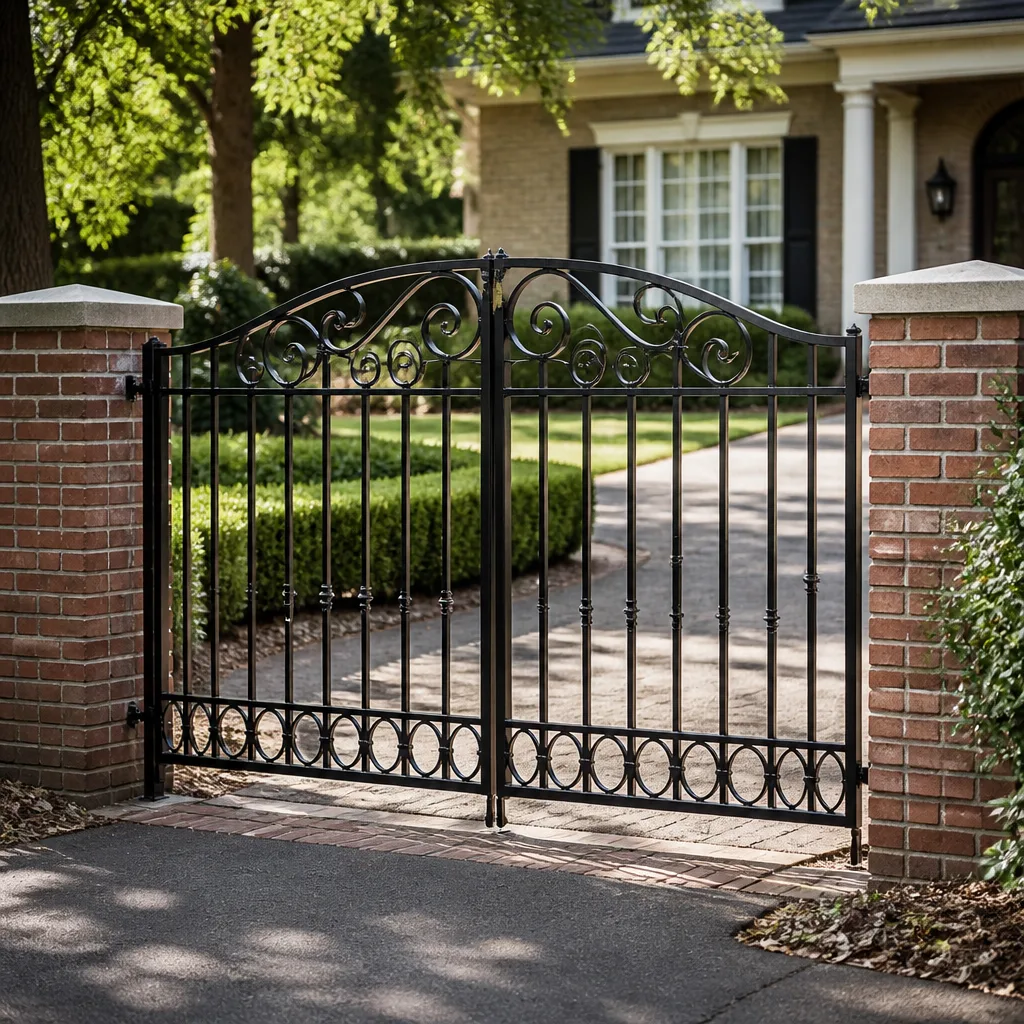 Wrought iron
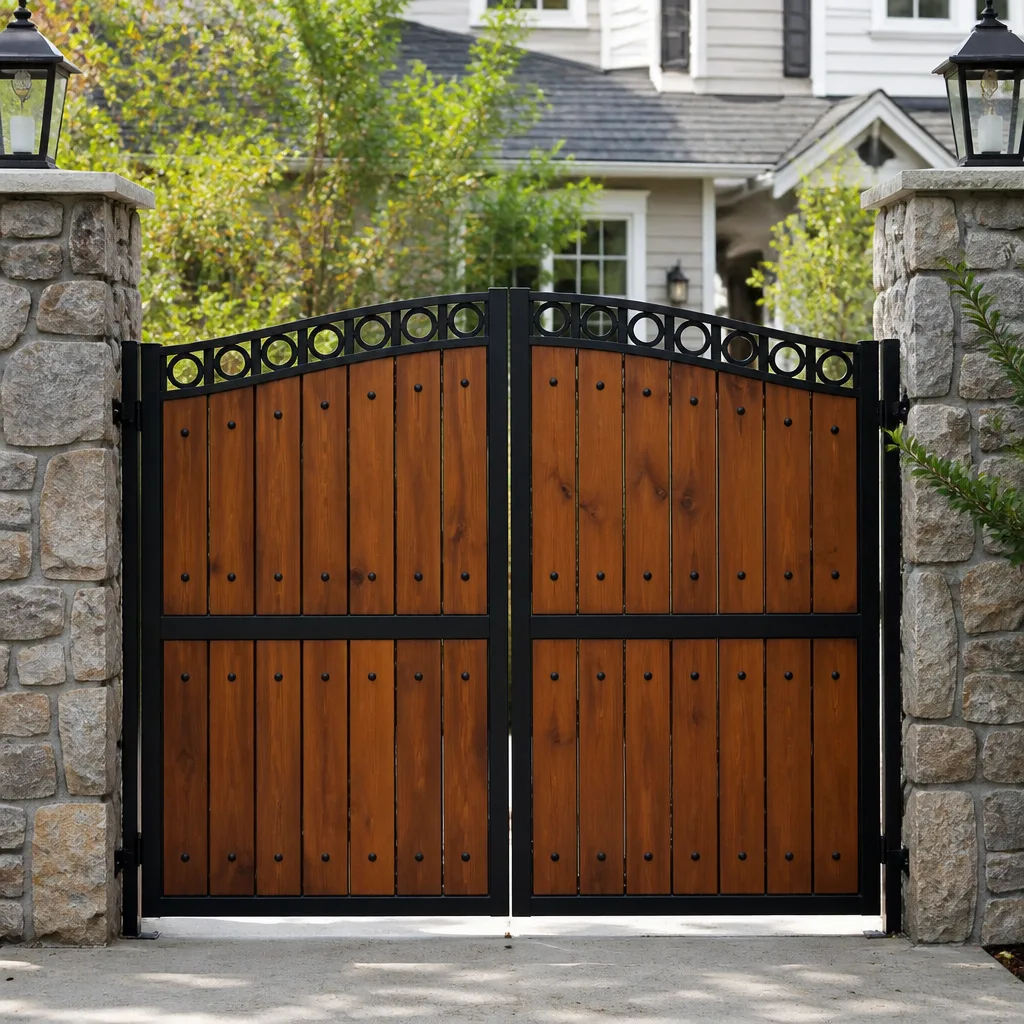 Wood & steel frame
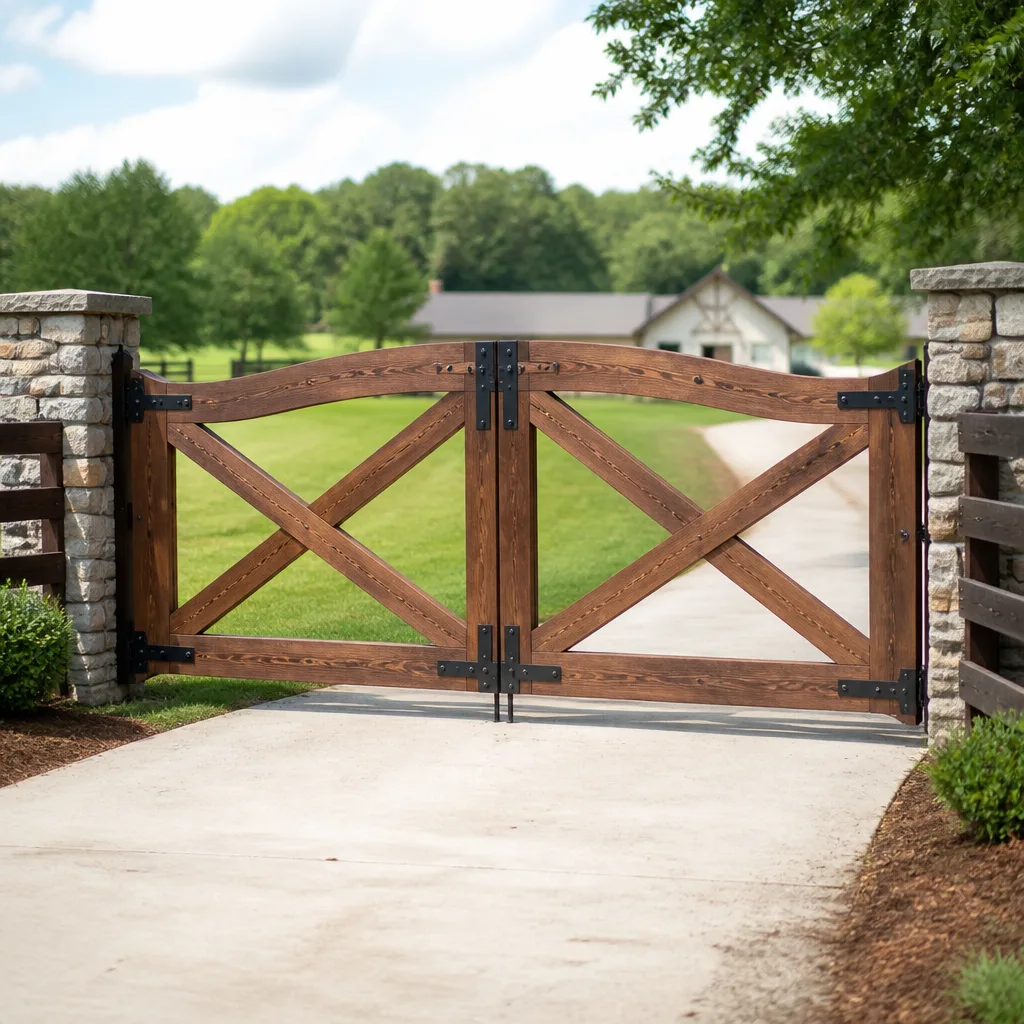 Farm & ranch
 Sliding driveway gates
 LiftMaster operators
Free on-site gate assessment - hinges, posts, and your LiftMaster or Nice gate operator checked before anything is quoted
The assessment is free and the quote is the invoice.
Get your free estimateDIY vs Professional Gate Repair: The San Bernardino Homeowner’s Decision Guide
Replacing a battery in a gate remote is a five-minute job. Adjusting the force sensitivity setting on an automated operator without a current meter is not. That single distinction is the whole argument, and it’s where most DIY-versus-professional conversations go wrong. An over-force setting is exactly what turns a swing gate into a crushing hazard, and California property owners carry the liability when an entrapment injury happens on their driveway. We’re not here to tell you every gate problem needs a technician. We’re here to draw a hard, specific line between the repairs you can safely handle in San Bernardino and the ones that put your family, your warranty, and your insurance on the hook.
Quick Answer
Mechanical and cosmetic gate tasks – battery swaps, photo-eye lens cleaning, track debris removal, remote programming, hinge lubrication – are safe for a mechanically literate homeowner to do. Anything involving the operator’s force settings, control board, power wiring, safety-edge compliance, or a heavy panel that has slipped, sagged, or come off its track belongs to a trained technician. The dividing line isn’t difficulty. It’s liability.
Styles & brands we work with
- Wrought iron
- Wood & steel frame
- Farm & ranch
- Sliding driveway gates
- LiftMaster operators
Table of Contents
- Where the DIY Line Actually Falls
- The DIY-Safe List: Tasks You Can Do Without Risk
- The Professional-Only List: Tasks That Create Liability
- Tools You Own vs. Diagnostic Gear a Specialist Carries
- The Hidden Cost of DIY Misdiagnosis
- UL 325, Force Settings, and Why California Holds You Liable
- How Your Insurance Treats Self-Performed Gate Repairs
- What San Bernardino Does to Gate Systems
Where the DIY Line Actually Falls
The useful question isn’t “how hard is this repair?” It’s “what happens if I get it wrong?” A gate system is part machine and part electrical safety device. The mechanical half tolerates amateur work far better than the electrical half does. You can adjust a sagging hinge pin without creating a hazard. You can’t guess at the current draw that sets a safe stopping force.
We’ve seen this play out across San Bernardino more times than we can count. Someone notices the gate reversing too early, so they dial up the force on the operator until it pushes through. It works. The gate closes. And now the safety device that’s supposed to protect a child, a pet, or a delivery driver has been quietly disabled. That’s the pattern with DIY gate work: the fix appears to succeed while the dangerous part has already happened.
Here’s the split we use when a homeowner calls and asks whether they should tackle something themselves:
- If your mistake can pinch a finger, it’s probably DIY-safe.
- If your mistake can crush, trap, or electrocute, it isn’t.
- If your mistake voids the manufacturer’s warranty, don’t touch it – this includes most operator internals on LiftMaster, DoorKing, and Elite units.
- If your mistake changes how the gate behaves around people, stop and call.
That’s the whole framework. Everything else in this guide expands on it. If you’re reading this in San Bernardino and your gate system has been acting up, our gate repair page breaks down the repair categories we handle, and the team can talk you through what’s safe to try on your own.
The DIY-Safe List: Tasks You Can Do Without Risk
These are the repairs we’d happily walk a homeowner through over the phone. None of them touch the operator’s safety logic or the property’s electrical supply. All of them matter for keeping a gate running, especially in San Bernardino’s heat and dust, and all of them are within reach for anyone comfortable with basic tools.
- Battery replacement in remotes and keypads. Pop the case, match the battery type, replace, and test. Nothing here can hurt you or the system.
- Programming a new remote to an existing operator. Every major brand – LiftMaster, Linear, Mighty Mule – has a pairing procedure in the manual. Follow it exactly and you’re fine.
- Cleaning photo-eye lenses. Dust, spider webs, and grit on the safety sensors cause most false reversals. Wipe the lenses with a soft cloth and clear any debris from the line of sight.
- Clearing the track or the swing arc. Leaves, twigs, gravel, and toys jamming a slide gate track will stop it dead. Shut the power off at the operator, clear the obstruction by hand, then restore power.
- Lubricating hinges, rollers, and the slide track. A manufacturer-approved lubricant on moving mechanical parts reduces strain on the operator. This is routine upkeep, not repair.
- Tightening visible fasteners. Bolts on hinges and posts backing out from vibration is normal. Snugging them back down with a wrench is safe as long as the panel isn’t visibly leaning or loose at the post.
- Resetting a tripped circuit breaker. If the operator has no power and the breaker is tripped, resetting it once is reasonable. If it trips again, stop – that’s an electrical fault that needs diagnosis.
- Replacing an exterior keypad or access keypad battery. Same logic as the remote. Swap and test.
Notice what’s missing from that list: anything that requires opening the operator housing. The moment you take the cover off a control board, you’re working on equipment that holds energy and runs logic you can’t see. Our electric gate repair technicians handle that side of the system, and there’s a reason we keep it separate from basic mechanical work.
The Professional-Only List: Tasks That Create Liability
These are the jobs that turn a small problem into an expensive one, or worse, into a hazard. Every item on this list shares at least one of three risks: safety-device failure, warranty void, or injury liability. If your gate needs any of the following, a trained technician should be the one doing it.
- Adjusting force sensitivity or reverse sensitivity settings. This requires a current meter and knowledge of what the operator’s limits should be. Guessing creates a crushing hazard.
- Replacing a control board. Boards are model-specific, sensitive to incorrect voltage, and often carry warranty implications. LiftMaster and DoorKing boards in particular have variant differences that matter.
- Replacing or repairing the operator motor. Motor work involves both mechanical alignment and electrical connections. Wrong alignment shortens motor life.
- Wiring a new operator or replacing power wiring. Line voltage work. If you’re not licensed for it, don’t do it.
- Installing, adjusting, or replacing safety edges and photo-eye systems. These are the safety devices. Their placement, alignment, and function are dictated by UL 325, not by what seems to work.
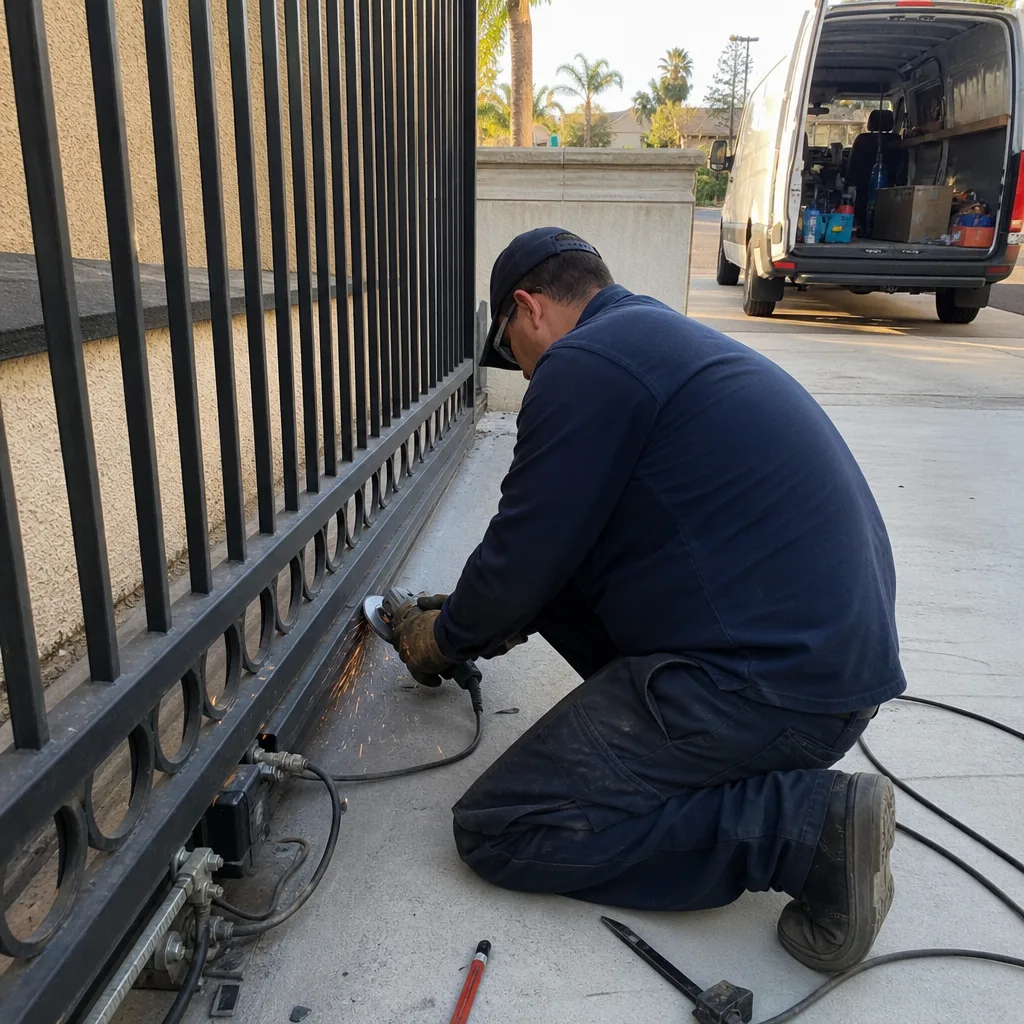
- Repairing a heavy gate panel that has sagged, dropped, or come off its track. A hundred-plus pound panel in motion can crush a hand, a foot, or a person. This needs proper lifting and bracing.
- Replacing gate posts or repairing footing issues. Posts need proper footing depth and alignment. A mis-set post throws off the entire system.
- Diagnosing “it moves a little then stops” behavior. This symptom can mean board failure, motor failure, sensor failure, or power supply trouble. It needs real diagnosis, not parts-swapping.
That last point is where we see the most expensive DIY mistakes. A gate that moves and then stops could be ten different things. Replacing a control board when the actual fault is a failing photo-eye doesn’t fix the gate. It just adds a new board to the pile of parts you’ve already bought. Save yourself and call a specialist.
Tools You Own vs. Diagnostic Gear a Specialist Carries
This is one of the least-discussed parts of the DIY conversation. It’s not just skill – it’s equipment. A lot of gate repairs are technically understandable to a homeowner but practically impossible without the right tools. Here’s the honest comparison.
Tools a homeowner typically has
- Adjustable wrench and socket set
- Screwdrivers, including Torx bits
- Pliers and wire strippers
- Level and tape measure
- Shop vacuum and cleaning supplies
- Ladder and flashlight
Diagnostic equipment a gate specialist uses
- Clamp meter for measuring operator current draw
- Multimeter for testing board voltage and continuity
- Manufacturer-specific diagnostic codes and fault trees
- Force measurement tools that verify UL 325 compliance
- Brand-specific programming interface or handheld tester
- Lifting and bracing equipment for heavy panel work
- Proper torque and alignment tools for post and hinge work
The gap isn’t skill – it’s knowledge of what “correct” looks like on each brand. A LiftMaster operator, a DoorKing unit, and a Mighty Mule system each have their own fault logic, their own force-setting procedures, and their own known failure patterns. Our technicians have up to 13 years of experience working across those specific systems, and that’s the knowledge that keeps diagnosis accurate the first time.
The Hidden Cost of DIY Misdiagnosis
The classic DIY trap is replacing parts to find the actual problem. You buy the wrong part, install it, discover it wasn’t the issue, and move on to the next guess. That path has three costs, and none of them are obvious when you start.
The first cost is the parts. Every wrong component you buy along the way is money gone. A control board is not a cheap guess. The second cost is time – gates often fail when you truly need them, and each wrong swap pushes the actual fix further out. The third and largest cost is the return trip. A technician arriving to a gate that has been partially disassembled, with unknown parts installed, faces diagnosis work that already includes sorting out what previous attempts did to the system.
We see this on San Bernardino gate systems where a homeowner has swapped a battery, then a fuse, then a photo-eye, all in pursuit of a board fault. The fix was always the board. The correct diagnosis on day one would have saved every intervening purchase and hour. That’s the real argument for a specialist: not “we know more,” but “we diagnose once.”
The pattern looks like this when it goes wrong:
- Symptom appears – gate stops partway, reverses unexpectedly, or won’t respond.
- Homeowner buys and installs the most likely part based on internet search.
- Problem persists. Second part gets purchased and installed.
- Problem persists again. Third part. Now the vehicle is stuck outside and someone is late for work.
- Technician finally called – diagnosis now includes figuring out what was done before.
- Repair timeline extends, and final cost includes three unnecessary parts.
The professional route collapses steps two through five into a single diagnosis on a single visit. That’s the entire point.
UL 325, Force Settings, and Why California Holds You Liable
UL 325 is the standard that governs automated gate safety in the United States. It sets the requirements for force limits, entrapment protection, and safety edges on any automated gate that opens and closes without someone watching it. That last part describes nearly every automated driveway gate in San Bernardino.
Here’s what homeowners often don’t realize: UL 325 compliance is a property-owner responsibility, not just a manufacturer’s. If a child is injured by an automated gate on your property and the gate’s force settings or safety devices aren’t compliant, you are the one exposed. “Nobody told me the setting was too high” is not a legal shield.
This is the single strongest reason to leave force adjustment to a professional. A technician with a current meter can test the operator’s stopping force, verify it’s within spec, and document that safety devices are functioning. That’s a job you can’t do accurately by feel. If you’ve been adjusting force settings to stop nuisance reversals, that’s a signal that something else is wrong – failing photo-eyes, misaligned sensors, or operator wear – and the correct fix addresses the cause, not the safety limit.
Safety edges follow the same logic. A safety edge that’s installed wrong, misaligned, or bypassed leaves your gate without a primary entrapment guard. If your safety edge is damaged or your gate has ever “bumped” something and kept going, that’s not a maintenance item. That’s a gate that needs a professional visit before someone gets hurt. Our team is based in San Bernardino, and we’ve walked property owners through exactly this scenario more times than we’d like.
How Your Insurance Treats Self-Performed Gate Repairs
This is the part almost nobody thinks about until after a claim. Under a standard California homeowner’s policy, liability coverage usually applies to injuries on your property regardless of who did the repair. What matters is whether the injury was a result of negligence. An improper repair that creates a hazard can be treated as homeowner negligence, and that’s where coverage gets complicated.
Insurance carriers look at three things after a gate-related injury claim:
- Was the gate system compliant with current safety standards at the time of the injury?
- Was maintenance and repair documented, and was it done by a qualified professional?
- Was there any indication the property owner had been warned the system was unsafe?
If a homeowner performed their own force adjustment and the gate injured someone as a result, that first and second question become very hard to answer favorably. Coverage isn’t guaranteed to be denied, but the carrier has grounds to dispute. That’s a bad position to be in – and it’s avoidable. When a specialist performs the repair and verifies the safety systems, that work is documented, defensible, and stands on its own. Nothing in this guide is meant to be legal advice – talk to your insurance agent about how your specific policy reads – but this is the practical reality of gate liability in San Bernardino.
What San Bernardino Does to Gate Systems
San Bernardino’s inland heat and seasonal dust do specific things to gate hardware that homeowners should factor into their maintenance thinking. The region’s swing gate operators work harder in summer – metal panels expand, lubricants thin out, and motors run hotter. Dust and grit get into slide tracks and hinge points, and grit accelerates wear on rollers and bushings. Those are the conditions that make routine lubrication and debris clearing – the DIY-safe list – genuinely important for keeping a gate running between professional visits.
The heat also affects electronics in ways homeowners don’t always recognize. Control board failures often cluster in the hottest months, and batteries in remotes and keypads drain faster in sustained heat. If your remote range is shrinking, the first thing to try is a fresh battery. If that doesn’t fix it, the range issue is often an antenna or board symptom – which lands in the professional column.
Seasonal wind matters too. Gate panels catch wind and swing hinge fasteners loose, which is why checking and snugging bolts back down is worth doing. If the panel itself has started to lean or dropped on one side, that’s past the safe DIY zone. Panel geometry work requires the right equipment and lifting technique.
What San Bernardino gate owners actually need to know about climate is this: routine DIY maintenance pays off because it prevents the failures that heat and dust accelerate. That’s the valuable half of the DIY question. Do the safe things regularly, and the professional repairs come less often.
Common Mistakes to Avoid
- Adjusting force settings to stop a reversing gate. The gate is reversing because a safety device is telling it to. Turning up the force disables the safety rather than fixing the cause. This is the single most dangerous DIY move on a gate.
- Bypassing or taping over a photo-eye. Homeowners sometimes bypass a sensor that keeps tripping. That sensor is a UL 325-required safety device. Bypassing it doesn’t make the gate work better – it removes the protection that keeps a child from being crushed.
- Replacing parts based on internet symptom searches. Gate symptoms overlap heavily between boards, motors, sensors, and power supply. Buying the most-searched part costs more in the end than diagnosing correctly.
- Working on an energized operator. If you’re working near the control board or wiring, power must be off at the breaker – not just at the remote. Line voltage in a gate operator can seriously injure you.
- Lifting a heavy panel without help or bracing. A dropped gate panel can crush hands, feet, and worse. If a panel has come off its track or is sagging badly, this is not a solo job.
- Ignoring a growing gap at the post. Slight leaning after years of heat cycling is common in San Bernardino, but a post that’s visibly shifting needs a professional look before the whole gate fails.
- Skipping the annual safety check because the gate “seems fine.” A gate that opens and closes is not the same as a gate whose safety devices work. Photo-eyes, safety edges, and force limits all need periodic verification.
See the difference
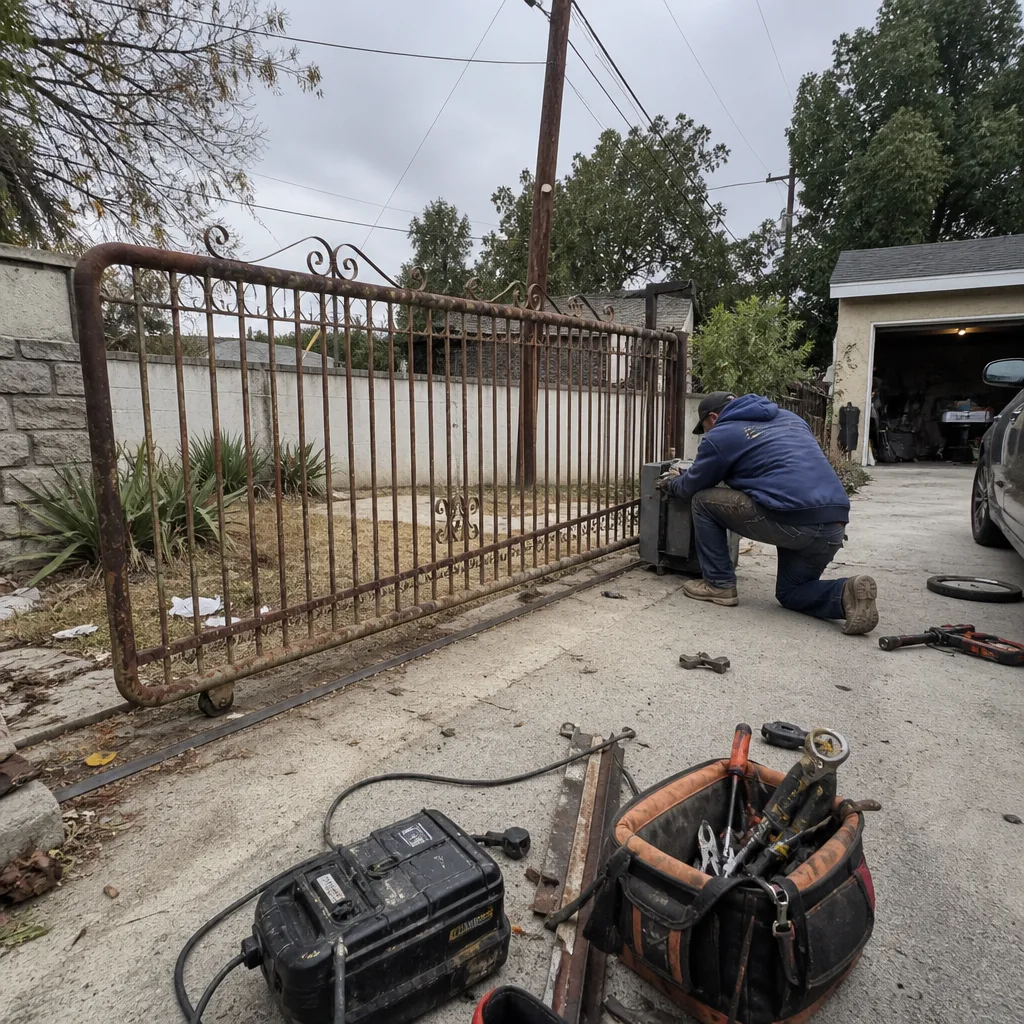 Before
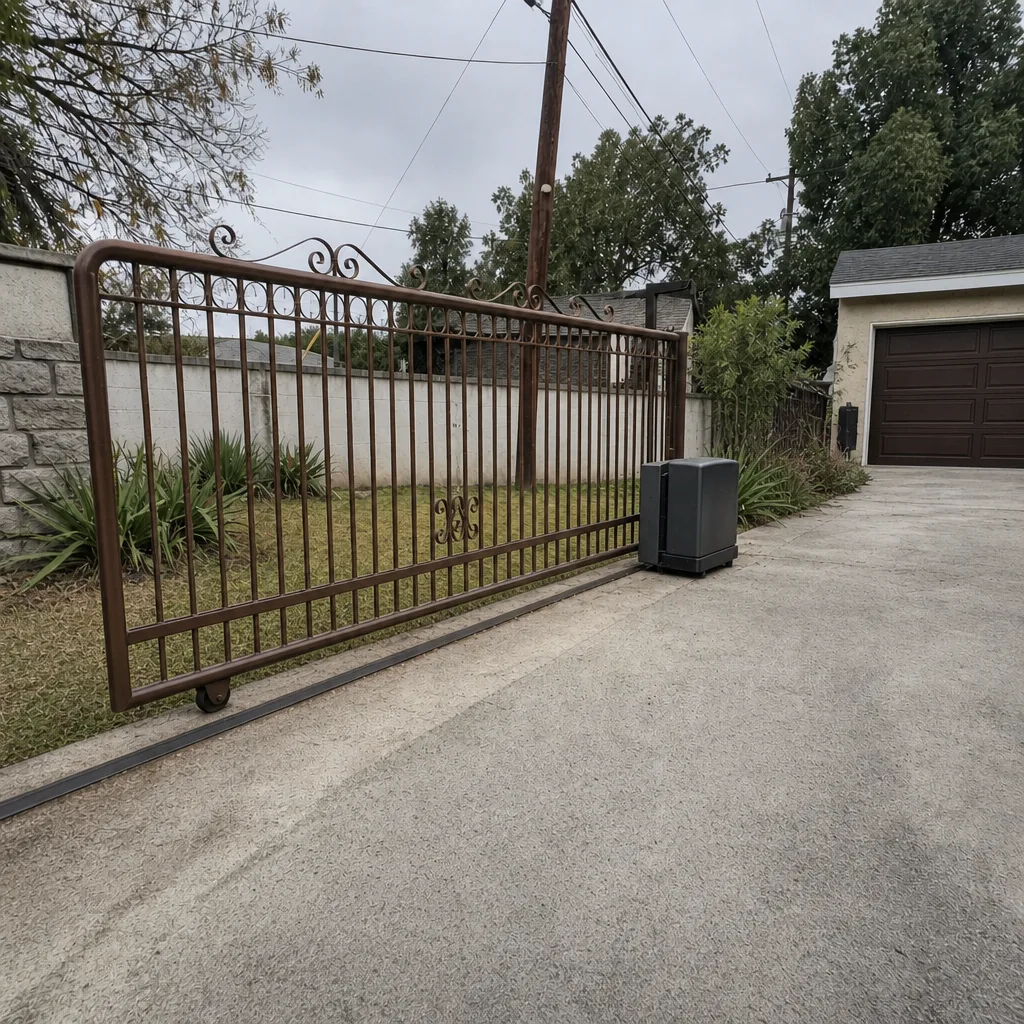 After
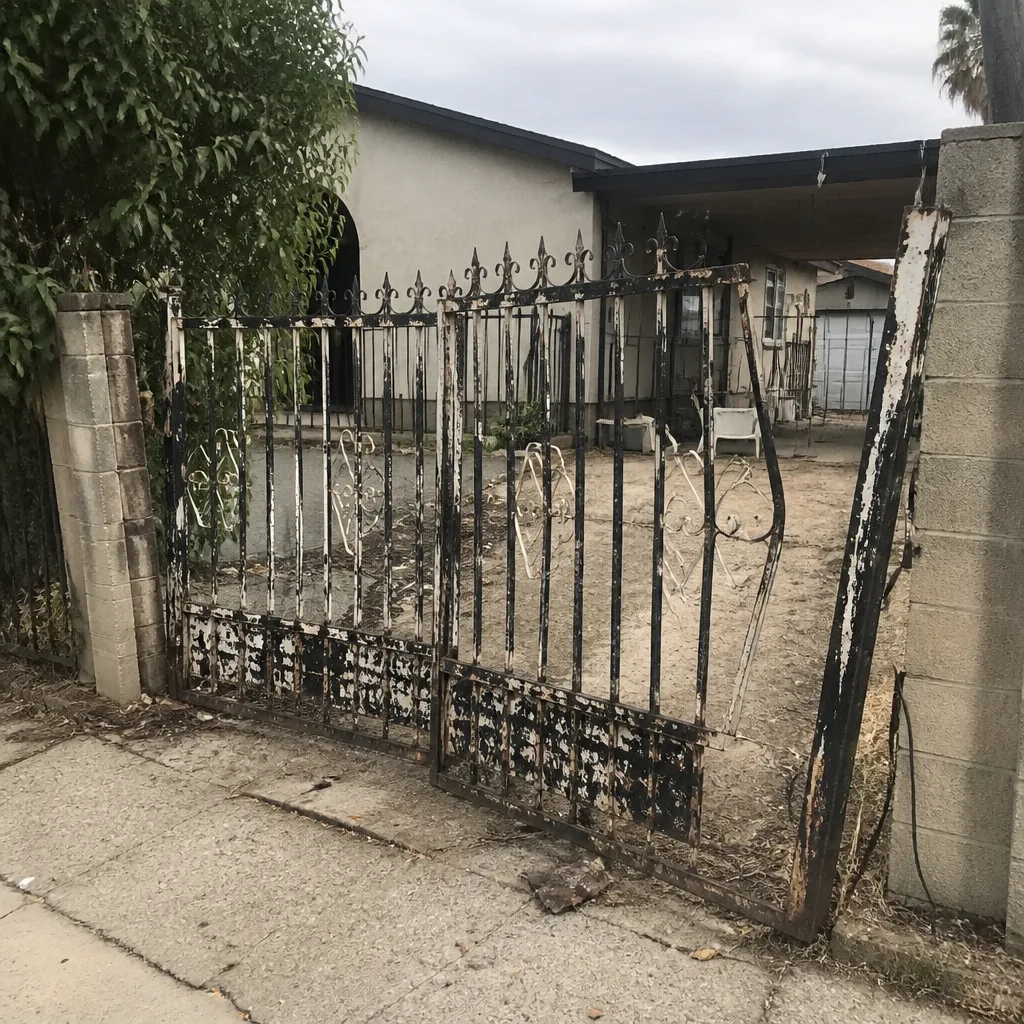 Before
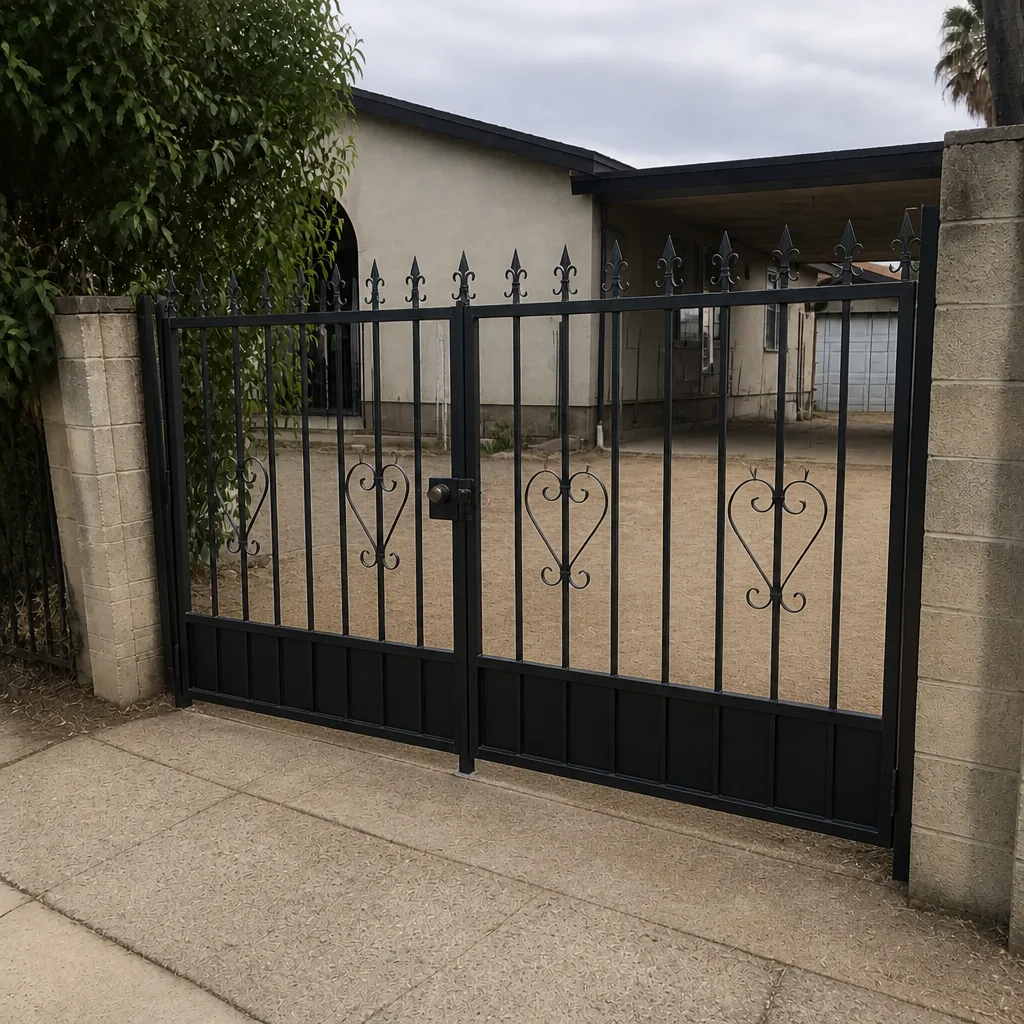 After
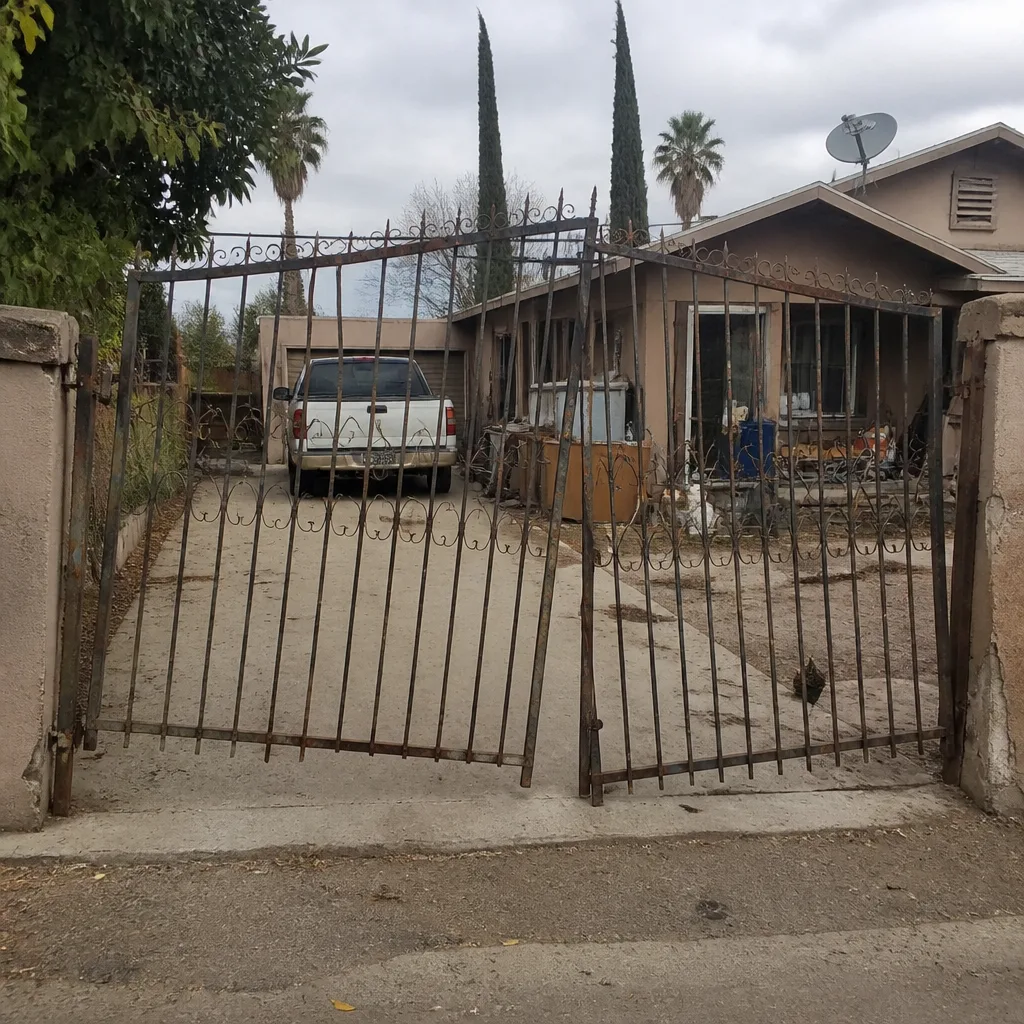 Before
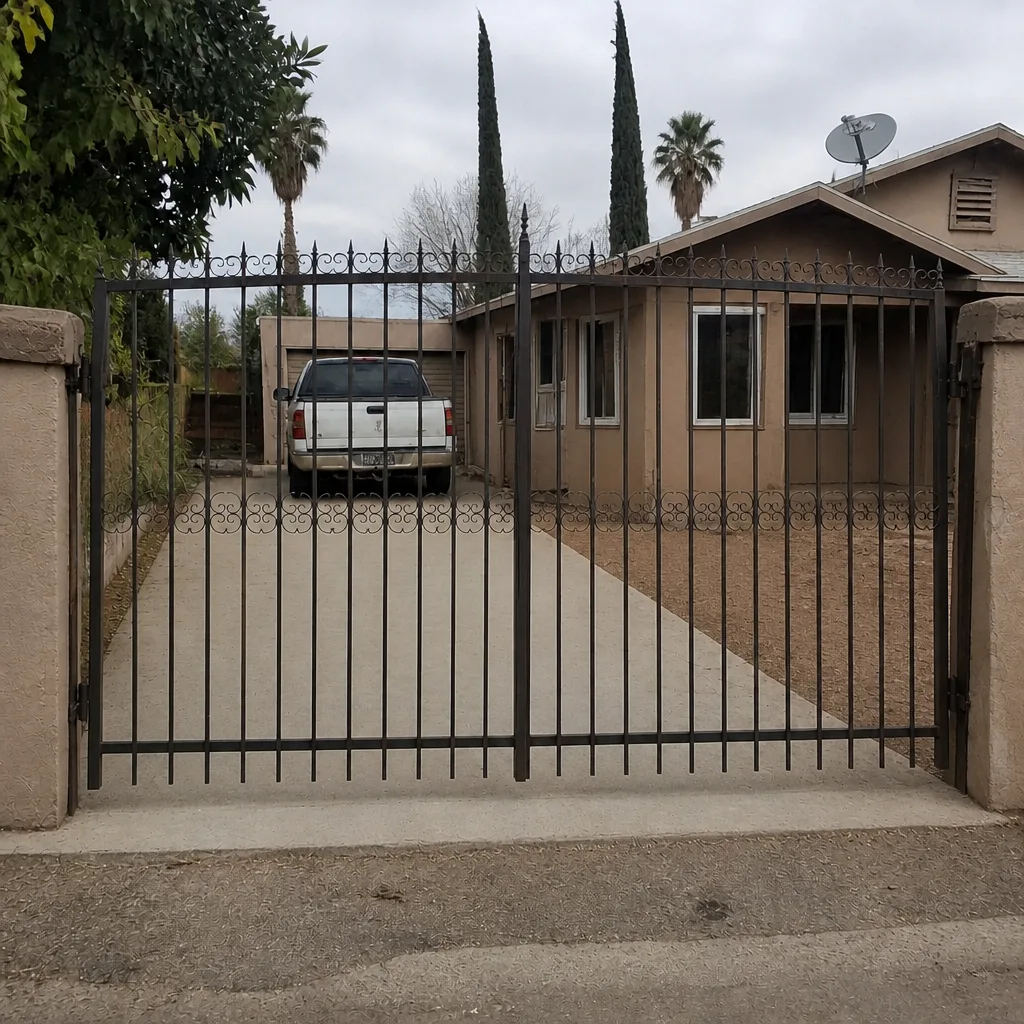 After
When to Call a Professional
Call for a technician the moment any of the following is true: your gate reverses unpredictably, stops partway, won’t close against something in its path, or has stopped responding to the operator entirely; your photo-eye or safety edge is damaged, misaligned, or bypassed; your control board, motor, power wiring, or operator internals need work; your gate panel has slipped, sagged, or come off its track; or your gate has ever “bumped” something without stopping. Any of those is a safety issue, not a maintenance item, and the correct response is to shut the gate’s power off and get a specialist on it. Valor Gate Repair offers free estimates in San Bernardino – call (866) 389-3501. We answer 24/7, with fast dispatch from 7am to 7pm, Sunday through Friday.
Frequently Asked Questions
Yes. Remote and keypad battery swaps and remote programming are safe DIY tasks on any brand, including LiftMaster, Linear, and Mighty Mule. Follow the manufacturer’s procedure for programming and you won’t affect the operator’s safety logic. If the new remote still won’t pair after a battery change, call us – that points to a receiver or board issue.
Yes. Force settings determine how hard the gate pushes before it reverses, and they need a current meter to test accurately. An over-force setting is what makes a gate dangerous around people, and California holds the property owner liable for entrapment injuries on their property. Leave force adjustment to a technician. Call (866) 389-3501 for an exact estimate – estimates are free.
Your homeowner’s insurance may dispute coverage if the repair was a contributing factor to the injury. Carriers look at whether the gate was compliant with safety standards, whether the work was done by a qualified professional, and whether the property owner had been warned the system was unsafe. Having a documented professional repair protects your position. Talk to your insurance agent about your specific policy.
No. That symptom can come from board failure, motor failure, sensor failure, voltage supply issues, or a misaligned track, and it needs real diagnosis. Every wrong part you replace along the way adds cost and time. One call for a diagnosis is cheaper than three attempts at the wrong repair.
Yes, and you should. Dust and grit cause most false reversals, so wiping the photo-eye lenses and clearing debris from the slide track are the highest-value DIY tasks on a San Bernardino gate. Shut the power off at the operator before you clear the track by hand, then restore power and test the gate through a full open-and-close cycle.
You don’t verify UL 325 compliance by looking at the gate. It requires testing the operator’s stopping force with a current meter and confirming the photo-eye and safety edge systems are functioning correctly. That’s a professional check. If you’ve never had it done on your automated gate, call (866) 389-3501 for a free estimate.
The Bottom Line
The DIY-versus-professional line on gate repair isn’t about difficulty. It’s about what happens if you get it wrong. Batteries, remotes, sensor cleaning, track clearing, and lubrication are yours to handle – and doing them regularly is what keeps a gate running in San Bernardino’s heat and dust. Force settings, control boards, motors, wiring, safety devices, and heavy panel work belong to a trained technician. Get those wrong and you’re looking at a safety hazard, a voided warranty, and a potential insurance dispute. Draw the line where we’ve drawn it and both your gate and your liability stay in good shape.
Valor Gate Repair is a dedicated gate specialist handling three lines of work: gate repair, electric gate repair, and gate installation. We service LiftMaster, FAAC, BFT, Linear, Viking, Ghost Controls, DoorKing, Elite, and Mighty Mule systems across San Bernardino. Every job is priced on a free written estimate, and the price is quoted and agreed before any work starts. Call (866) 389-3501 for a free estimate. We answer 24/7, with fast dispatch from 7am to 7pm, Sunday through Friday.
Written by the team at Valor Gate Repair.