
Last updated November 16, 2026
 Wrought iron
 Wood & steel frame
 Farm & ranch
 Sliding driveway gates
 LiftMaster operators
Free on-site gate assessment - hinges, posts, and your LiftMaster or Nice gate operator checked before anything is quoted
The assessment is free and the quote is the invoice.
Get your free estimateGate Repair Emergency Preparedness Guide for San Bernardino Homes
Here’s a mistake we see often: you pull the manual release cord during a power outage, the gate rolls free like it’s supposed to, and then the power comes back and the gate just sits there. It won’t re-engage. That happens because the carriage wasn’t reset into the operator correctly, and it’s one of the most common reasons people call us after an outage. A gate that fails closed traps your vehicles. One that fails open leaves the property exposed. In San Bernardino, both happen most often during high-wind events and power interruptions. This guide shows you how to handle either safely, what to document before a failure, and when the job needs a trained technician.
Quick Answer
The core of gate emergency preparedness is knowing three things before a failure happens: how your gate’s manual release actually works, whether your system fails safe (closes and stays locked) or fails open (unlocks), and where your operator model and local gate specialist contact are written down. During an outage, release the gate only according to your operator’s procedure and re-engage the carriage properly when power returns. When a gate is stuck open overnight, secure it with a temporary physical barrier, not the operator.
Styles & brands we work with
- Wrought iron
- Wood & steel frame
- Farm & ranch
- Sliding driveway gates
- LiftMaster operators
Table of Contents
- Manual Release by Gate Type: What to Do and What to Avoid
- Fail-Safe vs. Fail-Secure: Which Mode Does Your Gate Use?
- Battery Backup for San Bernardino Outages: What Capacity You Need
- When the Gate Is Stuck Open Overnight: Temporary Security
- Document These Facts Before a Failure Happens
- High-Wind Events and What They Do to Your Gate
- When to Call a Professional
- Frequently Asked Questions
Before we get into each section, it helps to know what kind of system you’re working with. Valor Gate Repair is a dedicated gate specialist. We handle gate repair, electric gate repair, and gate installation, and we work on the operators that show up most often on San Bernardino properties: LiftMaster, FAAC, BFT, Linear, Viking, Ghost Controls, DoorKing, Elite, and Mighty Mule. That matters because each brand releases, re-engages, and reports faults differently. Generic advice from a generalist can actually damage a carriage. We diagnose by each brand’s specific logic.
Our technicians have up to 13 years of experience with manual and automated gate systems, and we’ve seen just about every failure mode these operators produce. The guidance below reflects what actually goes wrong, not what the manuals assume will happen.
Manual Release by Gate Type: What to Do and What to Avoid
A gate’s manual release is a safety feature, not a routine operating method. Every automated operator includes a way to disengage the gate from the motor so it can be moved by hand during an outage or emergency. The release procedure depends entirely on the operator brand, and getting it wrong is how carriages get damaged and how gates end up jammed off their track. Here’s how the major brands generally work:
- LiftMaster: Most residential LiftMaster operators use a release that disengages the trolley or carriage from the rail. On these systems, after you re-engage, you want to confirm the carriage is fully seated in the operator’s drive position before restoring power. If it isn’t, the operator will run but the gate won’t move, and the motor may strain.
- FAAC: FAAC operators vary widely between swing and slide models. Some use a manual release key or lever, and some swing operators require you to release the arm from the gate. The key point: re-engage the release mechanism fully before powering back up, and don’t force a release that feels stuck.
- Linear: Linear slide and swing operators typically use a release cord or key mechanism. On slide gates, the gate should roll freely by hand when released. If it doesn’t roll smoothly, the issue is mechanical (rollers, track, or carriage), not electrical, and that’s worth noting before you call.
- BFT: BFT operators include their own release hardware. Re-engagement must be complete, and the operator should be cycled manually (if the model allows) to confirm the carriage is seated before restoring power.
Two rules apply to every brand. First, never force a release that won’t move. Second, once you re-engage, test the gate by hand before restoring power. If it moves freely when it shouldn’t, the carriage isn’t seated. That single check prevents most post-outage service calls.
For a full breakdown of brand-specific repair, our gate repair page covers diagnostic and repair details.
Fail-Safe vs. Fail-Secure: Which Mode Does Your Gate Use?
Fail-safe means the gate defaults to open or unlocked when it loses power or detects a fault. Fail-secure means it defaults to closed and locked. Which mode your gate runs in determines what happens the moment the power drops, and most homeowners have no idea which one their system is set to.
Here’s what each means in practice for San Bernardino homes:
- Fail-safe gates open or stay open. That makes them easier to exit in an emergency, which is why some residential installations are configured this way. The trade-off: when the gate is open, the property is exposed, and during a windstorm or outage that could last hours, that exposure is real.
- Fail-secure gates stay closed and locked. That keeps the property secure, but if there’s no battery backup or manual release in good working order, vehicles are trapped inside until power returns. For a single-gate residential property, that’s usually a few hours. For a multi-vehicle household or an HOA entry, it becomes a real problem fast.
You can find out which mode your gate runs in by checking your operator’s manual or by asking us during a service visit. It’s worth knowing before a power outage, not after. If your gate is fail-secure, that’s the strongest argument for adding or maintaining a battery backup. If it’s fail-safe, your priority shifts to temporary security when the gate is stuck open.
Battery Backup for San Bernardino Outages: What Capacity You Need
Battery backup keeps a gate operating when the power drops, and for a fail-secure gate it’s the difference between a system that keeps working and a driveway you can’t exit. Not every operator supports battery backup out of the box. Whether yours does depends on the brand and model.
Here’s how to think about it:
- Check whether your operator supports backup. LiftMaster operators commonly have battery backup accessory options. FAAC, BFT, Linear, Viking, Ghost Controls, DoorKing, Elite, and Mighty Mule models vary. Consult the model-specific manual or have us confirm during a service visit before buying any accessory.
- Size the battery to your typical outage length. San Bernardino outages range from momentary blips to multi-hour events during high-wind conditions. A backup rated for a few cycles won’t carry you through a long outage. Ask how many gate cycles the battery supports and match that to how often your gate is used per day.
- Maintain the battery, don’t just install it. Lead-acid and gel batteries degrade over time. A battery that’s three to five years old may pass a quick test and still fail under real load. If your gate is fail-secure and you rely on the battery, have it checked on a schedule.
One thing to keep straight: a battery backup doesn’t fix a gate with a worn carriage or a failing control board. It only extends operation. If your gate is already stuttering or occasionally reversing, address the underlying problem first. For electrical system issues, our electric gate repair page covers what we diagnose and repair.
When the Gate Is Stuck Open Overnight: Temporary Security
A gate that’s stuck open and can’t be repaired until the next day is the second failure mode, and it’s the one that leaves you exposed. You can’t wait for a technician. You need interim measures that don’t involve the operator and don’t risk injury. If the gate won’t close, do these steps in order:
- Stop running the operator. If the gate is stuck and the motor is still trying to cycle, turn off power to the operator at the disconnect or breaker. Continuing to cycle a jammed operator causes more damage to the gearbox and motor.
- Disengage the gate safely per your brand’s release procedure (see the section above). When it’s disengaged, the gate shouldn’t be forced.
- Create a physical barrier. A heavy rubber wheel stop, a movable concrete barrier, a vehicle parked tightly across the opening, or a sturdy temporary panel across the gateway will block casual vehicle and pedestrian access. Combined with motion-triggered lighting at the opening, that covers most overnight risk.
- Lock the pedestrian gate if you have one. Many properties with a driveway gate also have a walk-through gate or gate-adjacent door. Secure it separately.
- Take photos of the gate’s position and any visible damage. That’s information for whoever comes out, and it helps you describe the problem accurately when you call.
Don’t try to force a slide gate back onto a track it’s come off of, and don’t try to physically prop or pin a swing gate that’s swinging. A heavy panel that swings or falls is a crush hazard. Wait for a professional on those.
Document These Facts Before a Failure Happens
Emergency response is faster when the dispatcher already has the details. The single best thing you can do today, before the gate fails, is write down the information a technician will need. Keep it in your phone and on paper somewhere in the house.
- Operator brand and model number. The brand matters (LiftMaster, FAAC, BFT, Linear, Viking, Ghost Controls, DoorKing, Elite, Mighty Mule), and the model number is usually on a plate on the operator housing or inside the control box cover. Photograph it.
- Who installed the gate, and when. Even if you didn’t use the original installer, keep the contact info. That’s your first call if the gate is under warranty.
- Where the manual release is and how it works. Write out the steps for your specific operator model, or keep the release key attached to the operator housing where you can find it in the dark.
- Gate type and size. Swing or slide, single or double, approximate width and weight, and material (steel, aluminum, wood, iron).
- Which local gate specialist you’ll call. Have the number written down, not just saved in your phone, in case the phone dies during an outage. The number for Valor Gate Repair is (866) 389-3501. We answer 24/7. Fast dispatch is 7am-7pm.
- Whether you have a property HOA or management contact. If your gate is shared with neighbors, know who to notify.
All of that takes about ten minutes to gather. It’s the difference between a call that goes quickly and a call where you’re reading a faded label off an operator housing with a flashlight in the dark.
High-Wind Events and What They Do to Your Gate
San Bernardino gets high-wind events, and automated gates take the wind load hardest at exactly the point where it’s least convenient. A large flat-surfaced swing gate, in particular, acts like a sail in a gust, and the wind stress translates directly into the operator and its mounting.
What actually fails during a wind event usually comes down to a few things:
- Operator strain. A gust pushes back against the gate as the motor runs, and the operator works harder to hold position or complete its cycle. Repeated strain shortens the life of the motor and gearbox.
- Hinge and mounting loosening. Swing gate hinges and operator brackets take wind load constantly. When they loosen, the gate sags and the operator starts fighting misalignment, which can trip limits and cause the gate to stop mid-cycle.
- Obstruction trip on a swinging panel. Many automated gates include obstruction detection. A gust that swings the gate back against the operator’s expected path can trigger a stop or reverse. That’s not a fault; it’s the system doing its job. Don’t override it.
The practical reminder: after any significant wind event in San Bernardino, walk out and check your gate by hand. Look for sag at the outer edge, listen for a new scrape or grunt as it cycles, and watch whether it reaches the limits smoothly. Early hinge and bracket tightening on a windy-property gate prevents far more serious operator failure.
For installation questions, including whether a particular gate style is suited to a high-wind property, our Valor Gate Repair team can help.
Common Mistakes to Avoid
- Pulling the release and never re-engaging the carriage correctly. This is the most common post-outage problem. After the gate is released and power returns, the carriage has to be fully reseated before the operator will drive the gate. If you’re not sure, don’t’ restart the operator. Test the gate by hand first.
- Assuming “fail-secure” and “fail-safe” mean the same thing. They don’t. One locks you in, one opens the property. Know which applies to your gate before a power event, not during one.
- Running the operator on a jammed gate “just to see.” Cycling the operator against a jammed gate or a gate that’s come off its track damages the gearbox and can burn out the motor. If it’s jammed, stop and call.
- Forcing a slide gate back onto the track. A slide gate that has jumped its track is at risk of coming fully off and causing injury. Don’t lift, shove, or rock a gate back into place.
- Installing a battery backup accessory on an unsupported operator. Not every model supports battery backup. Buying a battery before confirming compatibility wastes money and can create a wiring problem. Check first.
- Not writing down the model number. Model numbers fade. Labels wear off. A photograph of the operator plate saves real time on the day you need it.
- Leaving the gate stuck open overnight with no temporary barrier. In San Bernardino, an open driveway gate overnight is a security problem. A wheel stop or a parked vehicle across the opening costs nothing and provides real security.
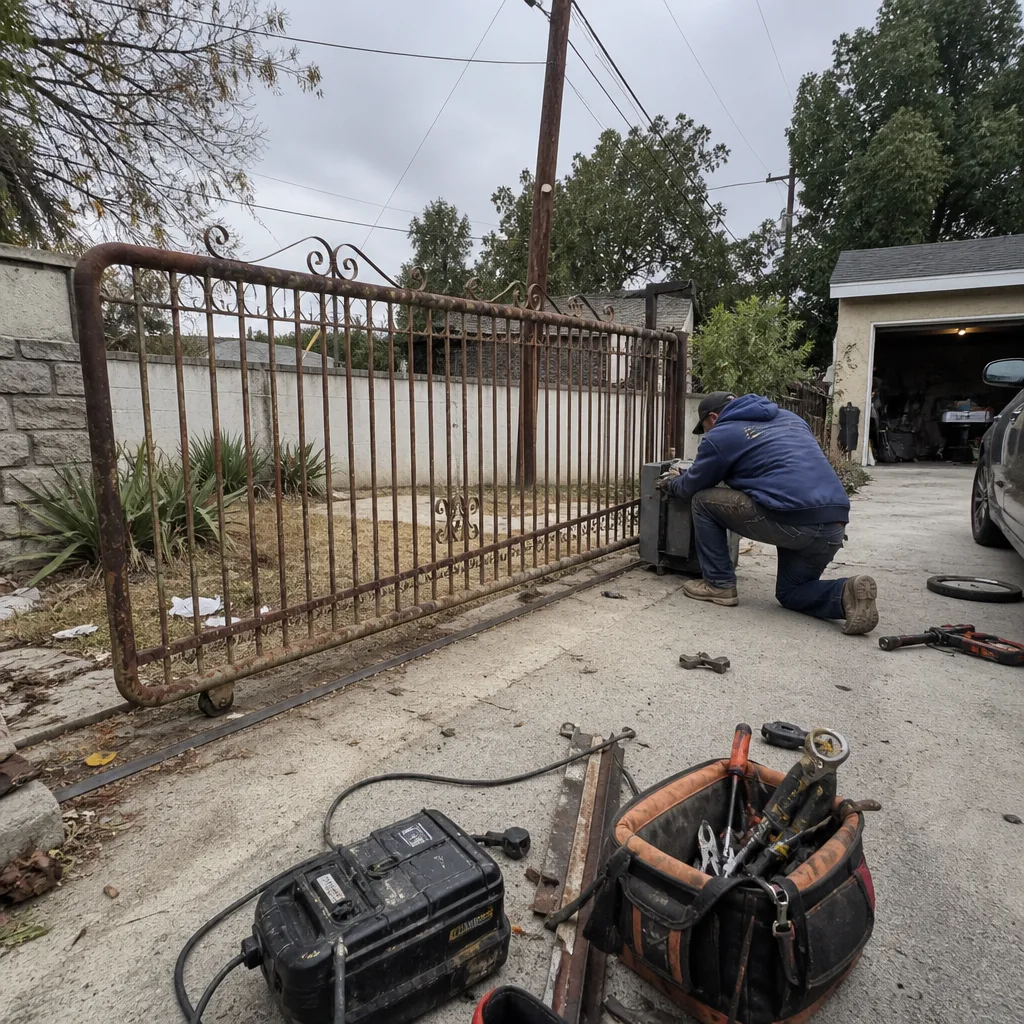
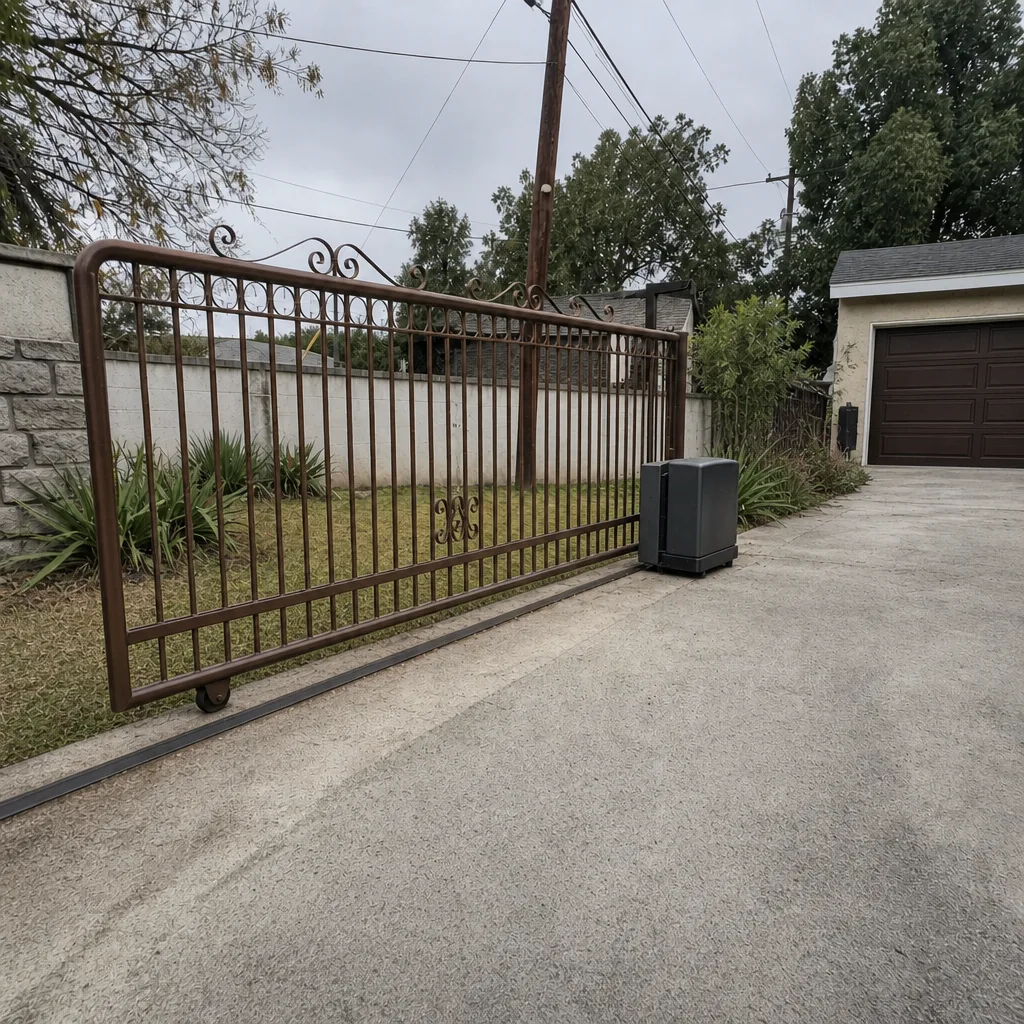
See the difference
 Before
 After
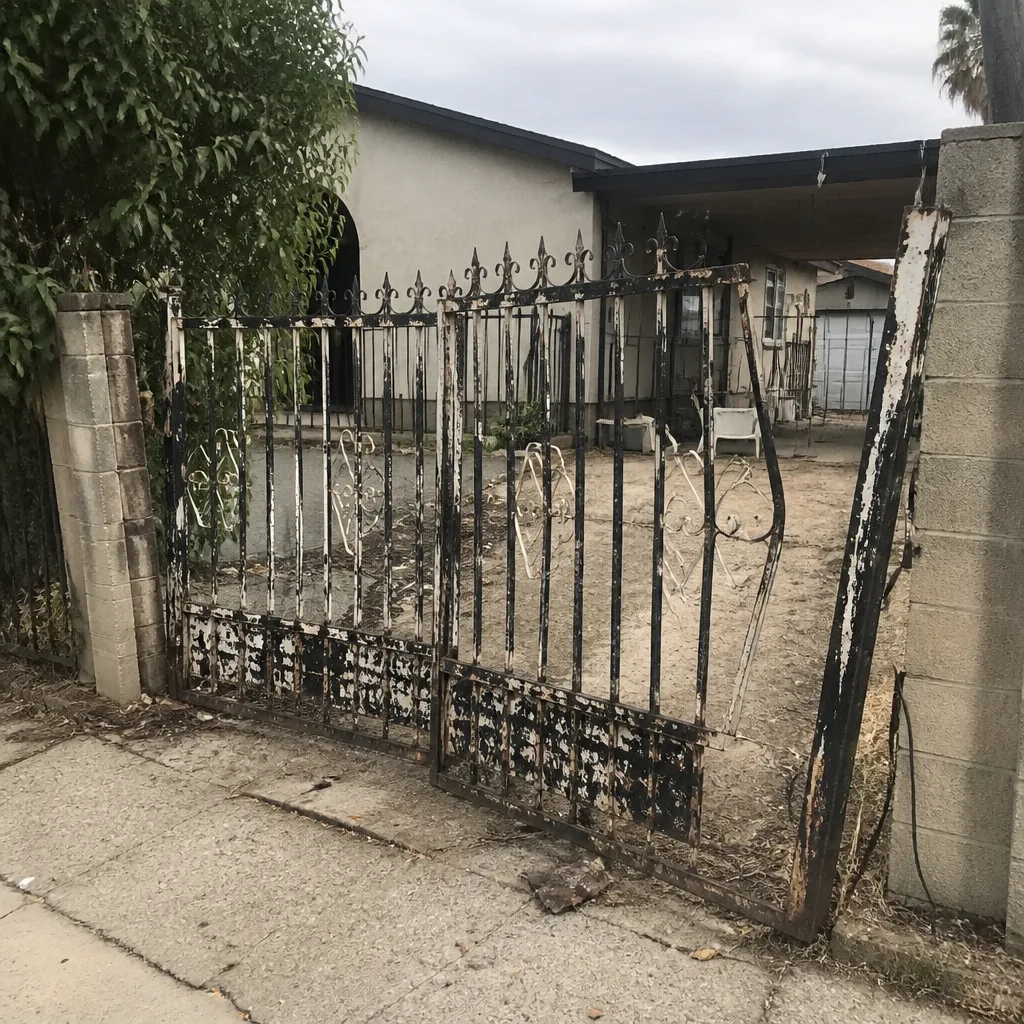 Before
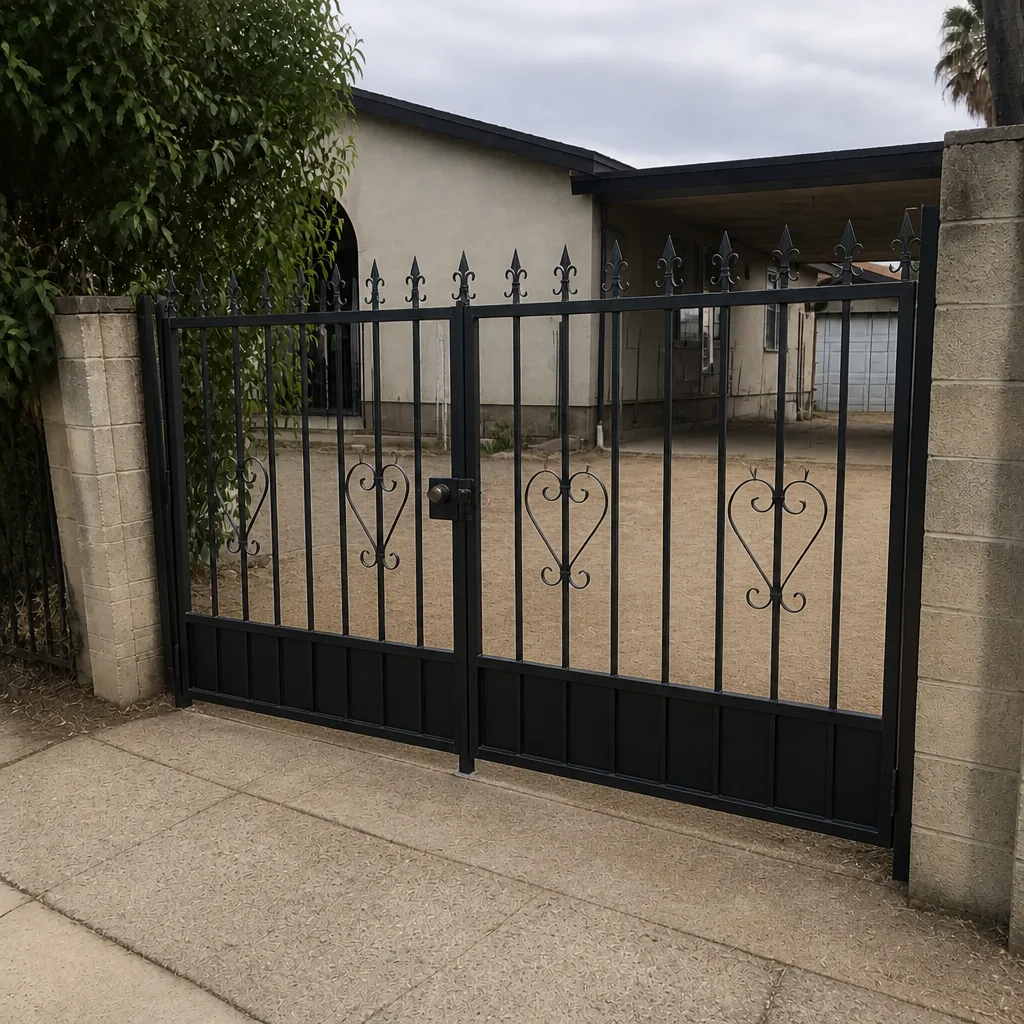 After
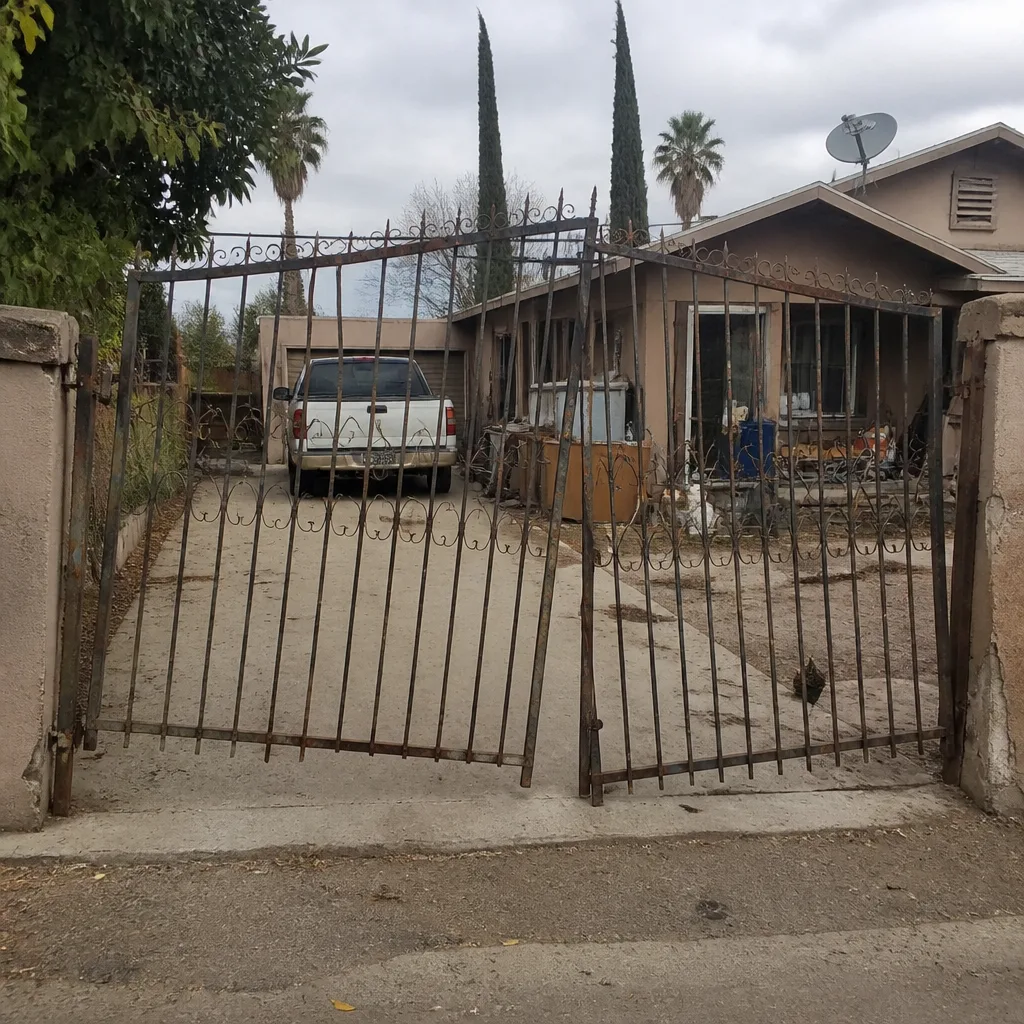 Before
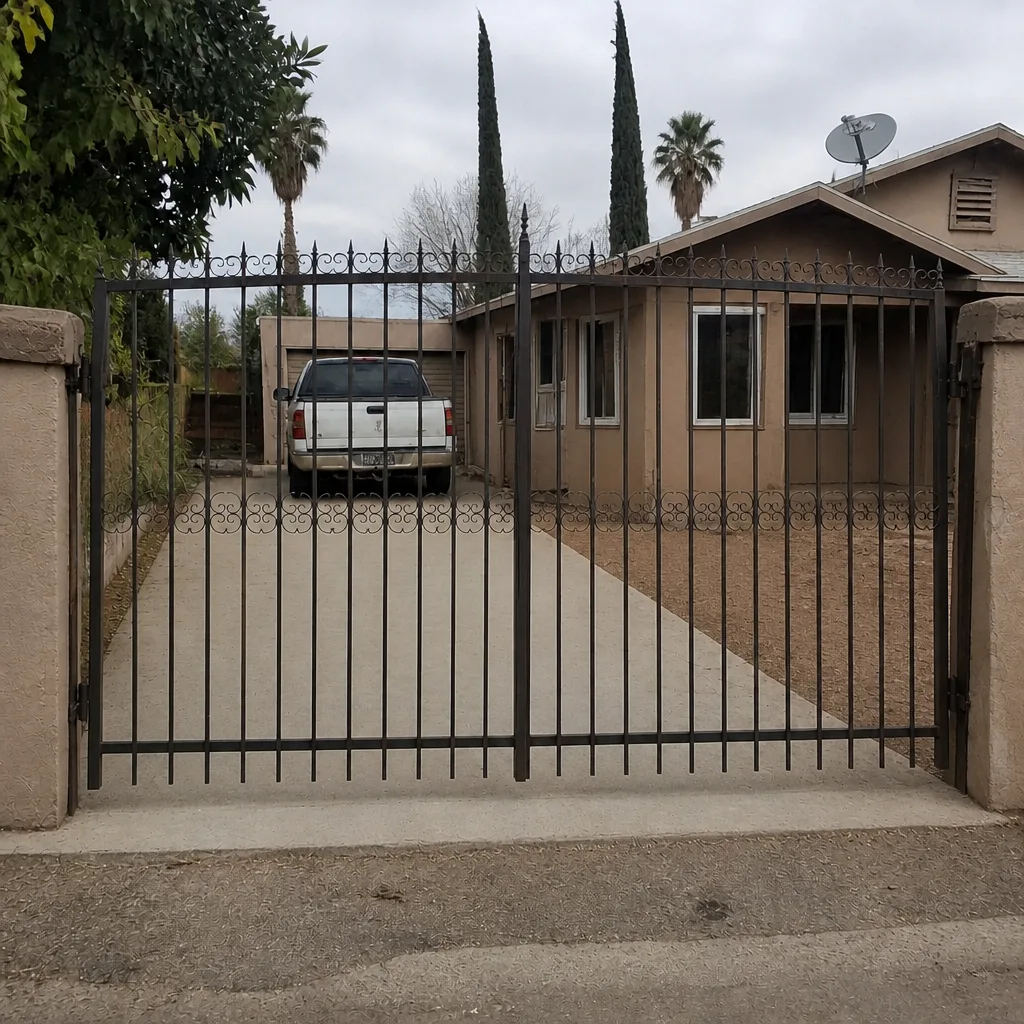 After
When to Call a Professional
Some gate problems you can handle yourself: releasing the gate during an outage, re-engaging it correctly, replacing batteries in the remote, checking the obstruction sensor for debris. Others need a trained technician. Call a professional if any of these apply: the gate won’t re-engage after a manual release, the gate runs but won’t move, the gate stops mid-cycle and reverses for no apparent reason, a slide gate has come off its track, an operator trips the breaker, or the control board shows fault lights you can’t identify. Also call if you have a fail-secure gate and no working battery backup, before an outage forces the issue.
Valor Gate Repair offers free estimates in San Bernardino, and our technicians have up to 13 years of experience diagnosing the brands San Bernardino properties actually have. We’re a gate specialist, not a generalist. When we diagnose, we know what a LiftMaster control board does versus a FAAC and a Linear, and we don’t replace parts by guesswork. If you’re not sure whether your situation qualifies as urgent, call us and we’ll tell you honestly what to do. Call (866) 389-3501. We answer 24/7. Fast dispatch from 7am to 7pm, Sunday through Friday.
Frequently Asked Questions
Release the gate only according to your operator brand’s procedure. On most liftmaster and linear operators, there’s a release cord or key mechanism that disengages the carriage from the rail. On FAAC and BFT swing operators, it’s often a release key or lever at the operator arm. The key point is that once you release the gate, you have to re-engage the carriage correctly before restoring power. If you’re not sure how your specific model works, call before you force anything. We answer at (866) 389-3501.
The carriage isn’t fully seated in the operator’s drive position. When the carriage isn’t seated, the operator will run but the gate won’t move. This is the most common call we get after outages in San Bernardino. Don’t keep cycling the operator trying to make it seat. Test the gate by hand; if it moves freely when it shouldn’t, the carriage isn’t engaged. Call a technician to reseat it correctly. Call (866) 389-3501 for an estimate.
Fail-safe means the gate opens or stays open and unlocked when it loses power. Fail-secure means the gate closes and stays locked. Fail-safe is easier to exit but leaves the property exposed; fail-secure keeps the property locked but requires a working battery backup or manual release to avoid trapping vehicles. Which mode your gate runs in depends on how it was configured. If you don’t know which you have, we can tell you during a service visit. Call (866) 389-3501.
You need battery backup if your gate is fail-secure and you can’t have vehicles trapped during an outage, or if you rely on the gate for daily access. San Bernardino outages during high-wind events can last hours. Not every operator model supports battery backup, so confirm compatibility before buying one, and check the battery on a schedule since old batteries can pass a quick test and still fail under load. Call (866) 389-3501 for an exact quote on your system.
Turn off power to the operator at the disconnect, so the motor stops cycling a jammed gate. Then create a physical barrier: a wheel stop, a movable barrier, or a vehicle parked tightly across the gate opening. Lock any adjacent pedestrian gate. Don’t force a slide gate back onto the track, and don’t prop a swinging panel. We’ll be out from 7am in the morning if you call tonight. We answer 24/7. Call (866) 389-3501.
Yes. Large swing gates act like sails in high-wind events, which puts constant strain on hinges, operator brackets, and the motor. What fails is usually hinge and bracket loosening or operator strain, not the wind ripping the gate off. Obstruction trips during wind are normal and shouldn’t be overridden. After any significant wind in San Bernardino, check the gate by hand and look for sag, new noises, or a rough cycle. Call (866) 389-3501 if anything looks off.
The Bottom Line
Emergency gate preparedness comes down to three things: knowing how your gate releases and re-engages, knowing whether it fails safe or fail-secure, and writing down the model number and specialist contact before you need them. During a power outage, release correctly and reseat the carriage before restoring power. When a gate is stuck open overnight, secure the opening with a physical barrier and stop cycling the operator. After a wind event in San Bernardino, inspect the gate by hand. If re-engagement doesn’t work or something looks damaged, stop and call a specialist. That’s the line between a quick fix and an expensive repair.
Contact
If your gate has failed, won’t re-engage, or you want a professional to take a look before the next outage, call Valor Gate Repair at (866) 389-3501 for a free estimate. We answer 24/7. Fast dispatch from 7am to 7pm, Sunday through Friday. Our technicians have up to 13 years of experience, and we’re a gate specialist, not a generalist, which means you get someone who diagnoses your system correctly the first time. For more about our service area, visit our San Bernardino page.
Written by the team at Valor Gate Repair.