
Last updated November 16, 2026
 Wrought iron
 Wood & steel frame
 Farm & ranch
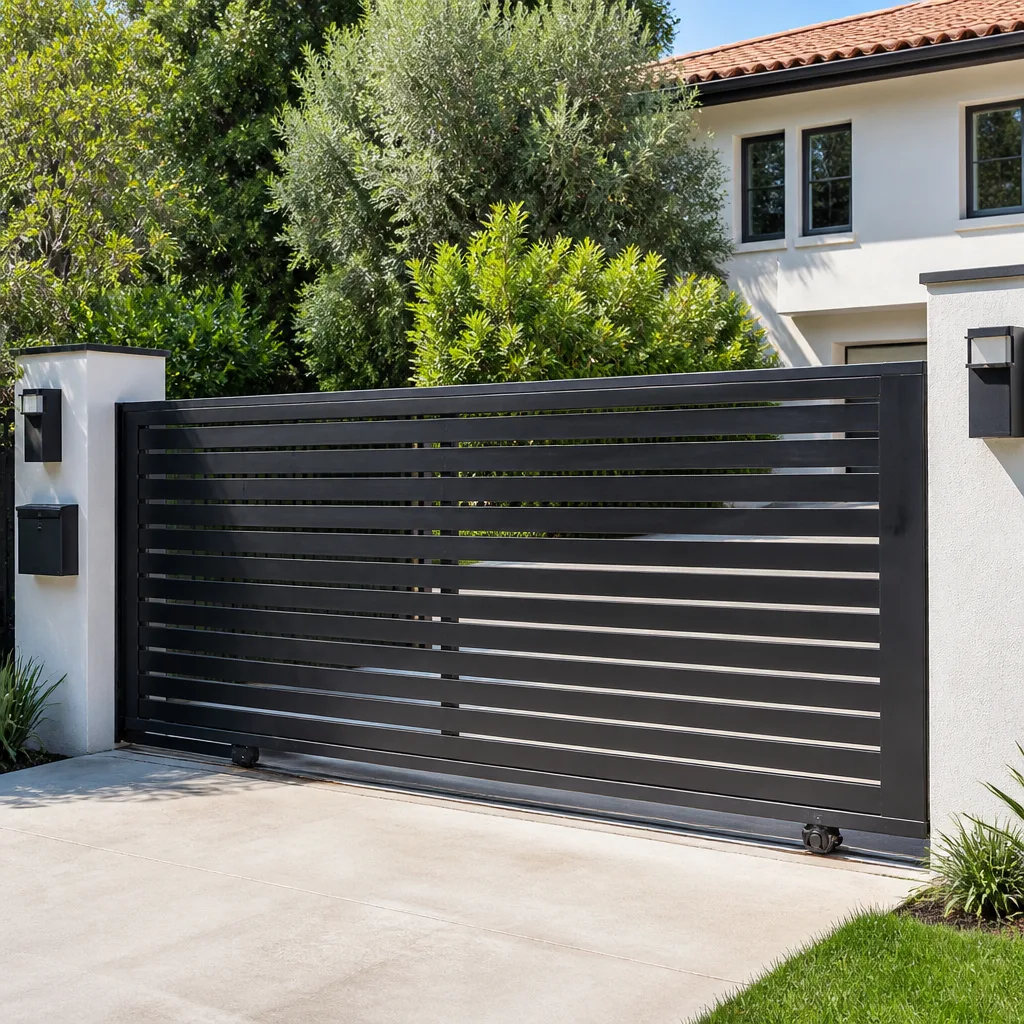 Sliding driveway gates
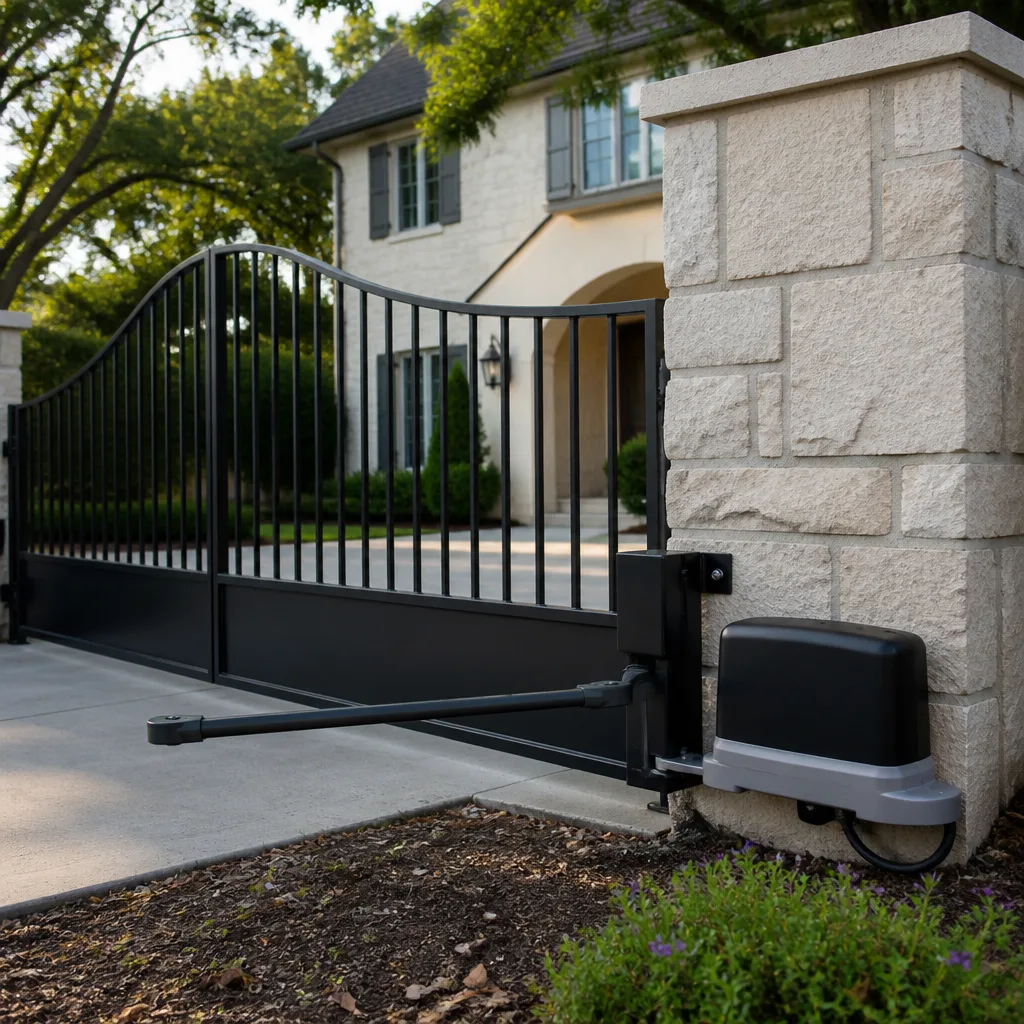 LiftMaster operators
Free on-site gate assessment - hinges, posts, and your LiftMaster or Nice gate operator checked before anything is quoted
The assessment is free and the quote is the invoice.
Get your free estimateGate Repair Maintenance Schedule: What to Do and When
Lubricating a gate once a year with WD-40 is the single most common maintenance mistake we undo. It feels like upkeep. It isn’t. That spray strips the grease your operator’s chain and arm linkage depend on, then holds onto Inland Empire dust until the wear it was supposed to prevent shows up in the gearbox. A real maintenance schedule isn’t one annual task either. It’s three tiers running at three different intervals, and mixing them up is why so many automated gate systems around San Bernardino wear out early. This guide lays out that calendar, component by component, so you know what to check at 30 days, what to touch at 90, and what belongs in a full annual service.
Quick Answer
A gate maintenance schedule has three tiers: a 30-day visual inspection of tracks, sensors and hardware; a 90-day mechanical check of the chain, arm linkage and operator; and a full-system service once a year covering lubrication, battery backup and control board condition. Follow all three and your gate system lasts far longer than one that only gets attention when it fails.
Styles & brands we work with
- Wrought iron
- Wood & steel frame
- Farm & ranch
- Sliding driveway gates
- LiftMaster operators
Table of Contents
- Why One Annual Task Isn’t a Schedule
- The 30-Day Tier: Visual Inspections
- The 90-Day Tier: Mechanical Checks
- The Annual Tier: Full-System Service
- The Right Lubricant for San Bernardino Heat and Dust
- Inspecting and Tensioning the Chain or Arm Linkage
- Battery Backup: The Component Everyone Ignores
- The Post-Santa Ana Wind Checklist
- When to Call a Professional
Why One Annual Task Isn’t a Schedule
Most gate owners treat maintenance as a single event. Spring arrives, someone sprays the chain, maybe tightens a bolt, and the gate is considered handled for the year. In our experience, that pattern misses almost everything that actually causes premature failure. A gate system has parts moving at wildly different rates, and treating them all on the same interval means some get checked too late and others never get checked at all.
Think about what a gate in San Bernardino deals with. Summer heat bakes the operator housing and thins lubricants faster than in cooler climates. Dry, windy stretches push fine dust into every open joint, and that dust turns into an abrasive paste wherever grease is over-applied or the wrong product is used. A gate is also a heavy moving object under constant load. The control board, operator motor, chain or arm, rollers, hinges and safety sensors don’t all degrade on the same timetable.
That’s why we split maintenance into three tiers:
- 30-day visual tier: fast, frequent checks that catch obvious problems before they grow.
- 90-day mechanical tier: hands-on checks of the moving parts that take the most load.
- Annual full-system tier: a complete service covering lubrication, electronics, battery and structural condition.
A gate that only gets the annual tier is running blind for eleven months. A gate that gets only the 30-day tier never has its mechanical parts properly addressed. Both together, on their own intervals, is what a working schedule looks like. At Valor Gate Repair we’ve seen this pattern across residential and commercial systems, from small driveway gates to heavy commercial setups, and the ones on a real calendar consistently outlast the ones that aren’t.
The 30-Day Tier: Visual Inspections
The 30-day tier is a walkaround. You’re not fixing anything – you’re looking and listening, and writing down what seems off. Ten minutes once a month covers it, and it catches the problems that become expensive later.
Here’s what to check each month:
- Look at the track and path. On a sliding gate, run your eyes along the full length of the track. Clear leaves, gravel and dust buildup, especially where the ground dips or the track meets concrete. Debris in the track is the most common cause of a gate that drags or stops partway.
- Check the safety sensors. Look at the photoelectric eyes and any edge sensors. Wipe off dust and check they’re aligned and unobstructed. A misaligned sensor is the top cause of a gate that reverses or won’t close.
- Listen to the gate cycle. Open and close it once. A healthy operator sounds steady. Grinding, squealing or a laboured motor sound is worth noting. Intermittent problems are easier to catch listening than on a single visit.
- Look for loose hardware. Check hinges, brackets, hinge posts and any exposed bolts. Loose bolts work themselves looser under vibration and can become stripped or snapped with use.
- Walk the perimeter of the gate body. Look at the frame for rust, cracks, bends or panels that sag or pull away. A gate that’s lost its shape puts extra load on the operator.
- Test the manual release. Every automated gate should have a working manual release. Make sure the key works and the gate can be moved by hand. This matters most during a power outage or after a failure.
Do this in daylight when the gate isn’t needed for access. A monthly walkaround takes very little time, and it’s how you catch a problem before it becomes a repair. The point isn’t to fix things yourself. The point is to know your gate, so when something does fail you can describe it accurately and get the right help.
The 90-Day Tier: Mechanical Checks
The 90-day tier is where you get your hands on the moving parts and check the things that carry load. This is the work that prevents secondary failures – a worn gearbox, a bent arm, a snapped chain – by catching wear before it spreads.
What belongs in the quarterly check:
- Chain or arm linkage. Check for slack, wear or binding (see the section on tensioning below). A loose or over-tight chain both cause problems – slack causes noisy slapping and wear, over-tight strains the gearbox.
- Rollers and carriers. On sliding gates, check the rollers for flat spots, cracks or wobble. A flat-spotted roller makes the gate work harder every cycle.
- Hinges and pivots. On swinging gates, check the hinges for play. A hinge with play throws the gate off alignment, which the operator then fights every time it moves.
- Operator connections. Check the arm attachment points, mounting brackets and any connecting hardware. Look for wear at the pivot points – that’s where the load concentrates.
- Lubrication state. Look at the chain and exposed moving parts. Is there still a proper film of grease, or does it look dry, or packed with grit? The condition tells you what the next 90 days will do.
Quarterly checks also tell you when to schedule the annual service. If you find several small issues, that’s a sign the annual tier is coming due. This is a quarterly check on the gate repair side of what we do – catching mechanical wear before it turns into a component failure is the whole point.
Let’s be clear about one thing: this isn’t instruction to adjust your own chain tension unless you’re comfortable with it. The quarterly check is about identifying condition. The actual repair or adjustment is where a specialist adds value on systems like DoorKing or LiftMaster operators, because what looks like a minor chain issue can be a sign the gearbox has already started to go.
The Annual Tier: Full-System Service
The annual service is the deep pass. It’s the tier that keeps automated and electric gates reliable across all four seasons in San Bernardino, and it’s the one that matters most for the electronics and operator side of the gate system.
A complete annual service should cover:
- Full lubrication of all moving parts with the correct products for the component and the climate (covered in the next section).
- Chain or belt condition and tension set properly – not just checked but adjusted where needed.
- Operator internals. Motor condition, limit switches and how the operator handles a full cycle.
- Control board inspection. Look for moisture intrusion, corrosion, looseness or signs of component wear. This is where brand-specific knowledge pays off.
- Battery and backup system test (see the battery section below).
- Safety sensor and edge testing under operating conditions, including reverse-on-contact behaviour.
- Structural check of posts, hinges, brackets and track alignment.
The annual tier is also where remote controls, keypads and access hardware get checked and reprogrammed. Systems running on a DoorKing or a LiftMaster controller behave differently when they degrade, and a generic look doesn’t tell you what’s actually wrong. What we do on the electric gate repair side is diagnose by the specific logic of each brand, not by guesswork. That’s why a proper annual service is best done by a gate specialist who knows your operator.
One thing worth stating plainly: a once-a-year service isn’t a substitute for the monthly and quarterly tiers. It’s the top layer of the schedule. Skip the lower tiers and the annual service is basically a catch-up on problems that built up over the year.
The Right Lubricant for San Bernardino Heat and Dust
This is where most of the damage gets done. The wrong product on the wrong part is worse than nothing at all. Lubricant choice is about heat and dust, and San Bernardino has an ample supply of both. Summer heat means products that turn too thin drip off the parts that need them, and dry, dusty stretches mean anything tacky becomes a grit magnet.
Here’s how the three main products map to your gate system:
- Chain lube (chain and cable lubricant): The correct match for roller chains on sliding gates. It’s designed to penetrate the rollers and pins, then set as a film that doesn’t attract grit the way general-purpose grease does. This is the product for the drive chain, and it’s the one that actually protects it.
- White lithium grease: For the loaded, open surfaces where you want a longer-lasting film – arm linkage pivot points, gate hinges, sliding surfaces and heavily loaded joints. It stays put better than spray in the heat, but it’s also more of a grit magnet, so apply it thinly and keep it off the track.
- Silicone spray: For the parts that should stay dry – photoelectric eyes, sensor lenses, weather seals and some plastic and rubber components. It lubricates without leaving a tacky film that collects dust.
Where not to put it: tracks. Sliding gate tracks should be kept clean and dry, not greased. Grease on the track collects grit and turns into a grinding paste that wears the rollers and track together. A dry, clean track is the goal.
And a note on WD-40 specifically: it’s a decent light-duty lubricant and water displacer, but it isn’t a chain grease or a long-term lubricant. Repeated use strips existing grease and leaves the chain under-protected in a hot, dusty place. That’s the exact mistake we’re undoing when we service a gate around San Bernardino. If you’re unsure which product your operator wants, ask before you apply. Your operator’s manual – whether it’s an Elite, a Mighty Mule or another brand – gives the right answer, and a specialist can confirm it quickly.
When it’s time to do the lubrication right, we’re happy to help. Our technicians have up to 13 years of experience with these systems.
Inspecting and Tensioning the Chain or Arm Linkage
Chain and arm linkage problems are the most common source of secondary failure on automated gates. Here’s what that means: a slightly slack chain doesn’t just run noisy. It slaps, wears the sprockets, and eventually throws the load onto the gearbox in a way the gearbox wasn’t built to handle. By the time the gearbox fails, the small chain issue has become a much bigger repair.
A proper inspection looks at both the condition and the tension:
- Condition: Check for rust, stiff links, stretched sections and missing rollers. A single stiff link can make the whole chain bind.
- Tension (sliding gates): With the gate in the middle of its travel, the chain should have some give but no sag. If it’s loose enough to slap or skip a sprocket tooth, it’s too loose. If it’s tight enough that it doesn’t move at all, that’s too tight and strains the gearbox.
- Arm linkage (swinging gates): Check the pivot points for play and the arm for bends. The arm should move smoothly through its full arc with no binding. A bent arm or worn pivot makes the operator fight the gate.
- Alignment: The chain should run straight along the track and over the sprockets. Misalignment causes wear on one side and is often the real cause behind repeated chain problems.
This is where we’d encourage a professional to handle the actual adjustment. Tensioning isn’t complicated, but getting it wrong does exactly the damage you’re trying to prevent, and a strain on the gearbox doesn’t show up until it’s too late. Brand-specific knowledge matters here too. A LiftMaster operator and a DoorKing system take different setups, and adjusting one like the other causes problems. On a commercial property in San Bernardino, where downtime really counts, this is a scheduled adjustment, not something to experiment with.
The general principle holds across every brand we service: check the condition quarterly, adjust professionally, and catch alignment problems before they become gearbox problems.
Battery Backup: The Component Everyone Ignores
Battery backup is the one part of an automated gate that nobody thinks about until a power outage exposes it. Then the gate doesn’t open, and the owner discovers the battery has been dead for who knows how long. For a homeowner, that’s an inconvenience. For an HOA with a shared access gate or a commercial property, it’s access control down.
Battery problems fall into three main types:
- Capacity loss: Batteries wear out quietly. A battery that starts a season at full capacity can end it unable to carry the gate through a brief outage. The operator won’t tell you – the gate cycles fine on AC power and only fails when it’s actually needed.
- Charging failure: The charger or charge circuit can fail while the battery itself is fine. The gate runs on AC and nobody notices until there’s an outage.
- Solar-specific issues: Solar-powered operators depend on the panel, the charge controller and the battery working together. Dust on the panel, a failing controller or an aging battery all show up the same way – not when they happen, but during an outage.
Battery maintenance belongs in the annual service tier, and it’s worth doing a mid-year check too. Testing means putting the system on battery power and running the gate through a full cycle to see how it performs, not just reading a voltage number. A voltage reading can look fine while the battery can’t carry load.
For solar systems, cleaning the panel is part of the check. Dust builds up here over a dry stretch, and a dirty panel charges less. The battery then does more of the work, so it ages faster. For AC-powered operators, the check is the charger and battery capacity together.
Batteries on LiftMaster, Elite, Mighty Mule and other systems all follow this pattern, even though charging setups differ. If you’ve never tested your battery under load, the next outage will be the test. That’s not the time you want to find out, and it’s why it’s worth having it checked as part of any electric gate system service.
The Post-Santa Ana Wind Checklist
Santa Ana winds are a seasonal reality in the Inland Empire, and the day after a strong wind is a maintenance day. Wind doesn’t just move gates – it moves debris, shifts posts, and drives dust into every exposed part. A post-storm check catches these before they become failures.
Run through this checklist after any significant wind event in San Bernardino:
- Clear debris from the track and sensors. Wind blows leaves, branches and grit into tracks and safety sensor paths. A blocked sensor is the top cause of a gate that won’t close. Clear the track, then wipe the sensor lenses.
- Check for shifted or leaning posts. Wind pressure on a gate panel puts stress on the post. Look for posts that lean or have cracks at the base. A shifted post throws the gate out of alignment, which stresses the operator every cycle.
- Inspect hydraulic operator pressure. Hydraulic operators can lose pressure or develop leaks under repeated wind load. If the gate moves sluggishly or the arm doesn’t hold position as it should, pressure loss is a possible cause. This isn’t a quick-visual check on most systems and is worth a professional look.
- Check panels and frames for bends or cracks. Wind-driven gates can bend frames and crack weld points. Look at the whole gate, not just the moving parts.
- Test the full cycle. Open and close the gate fully several times after the storm. Watch for hesitation, unusual sounds or stopping partway. Don’t just cycle it once – a problem that shows up on the third cycle still counts.
The post-wind checklist is the one that doesn’t fit neatly into the 30-90-annual structure, because it’s event-driven, not calendar-driven. Treat it as an add-on to the schedule. San Bernardino sees these winds often enough that seasonal wind prep is part of a complete maintenance routine, particularly for larger panels or older gates that have already seen some wear.
Common Mistakes to Avoid
- Spraying everything with WD-40. It strips good grease and leaves parts under-protected. Use chain lube on the chain, white lithium on loaded hinges and linkage, silicone on sensors.
- Greasing the track. The track should be clean and dry. Grease collects grit and turns the track into a wear surface. Clean it, don’t lube it.
- Treating a once-a-year service as a full schedule. The 30-day and 90-day tiers matter just as much as the annual service. Missing them is why a gate fails on a cycle count it should easily survive.
- Ignoring the battery until an outage. Test the battery under load during the annual service. A dead backup is only discovered when you actually need it, which is the worst time.
- Over-tightening the chain to stop noise. A too-tight chain strains the gearbox. Slack, not extra tension, is usually the right fix.
- Skipping the post-wind check. In San Bernardino, a strong Santa Ana event can shift a post or fill the track with debris in hours. A quick check after the wind saves a repair.
- Letting a generalist look at an automated system. Gates aren’t garage doors, and generalists miss brand-specific faults. A specialist reads the operator’s own logic and avoids wrong part replacement.
See the difference
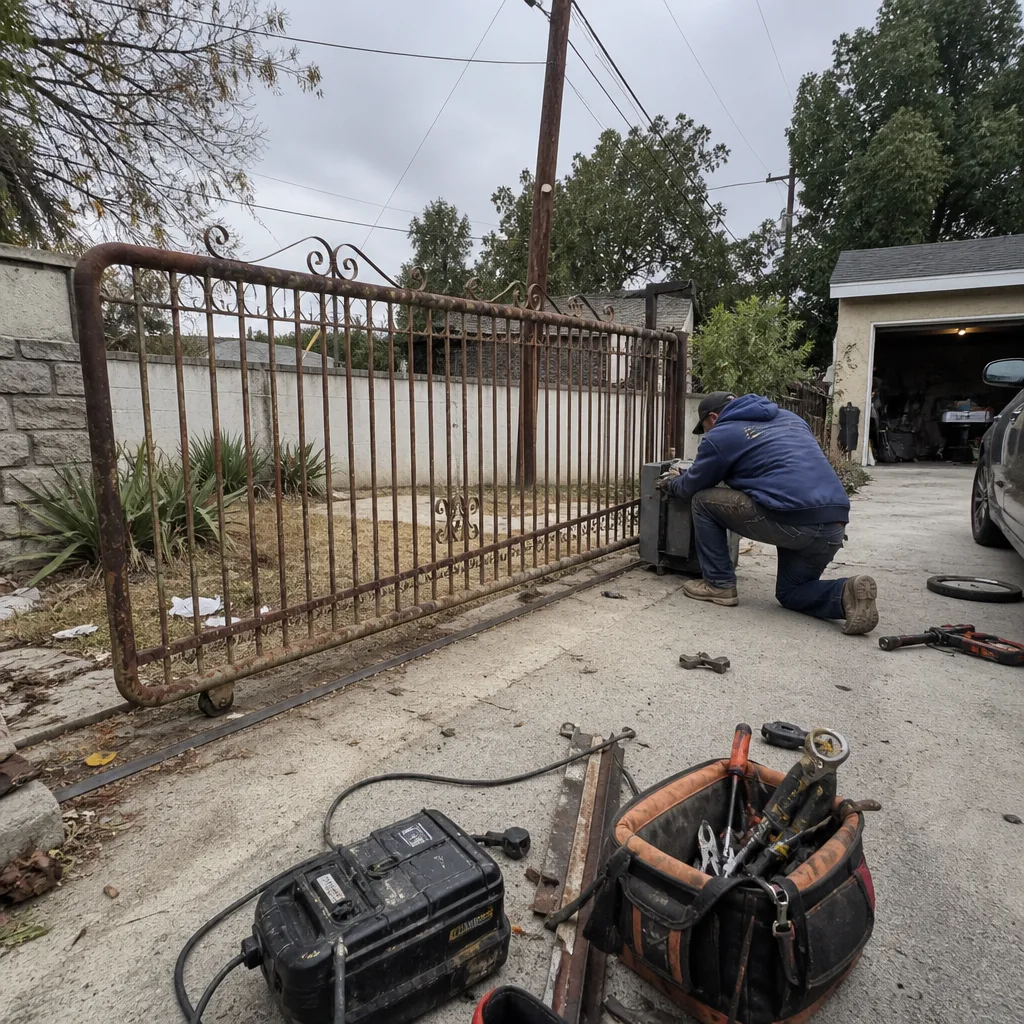 Before
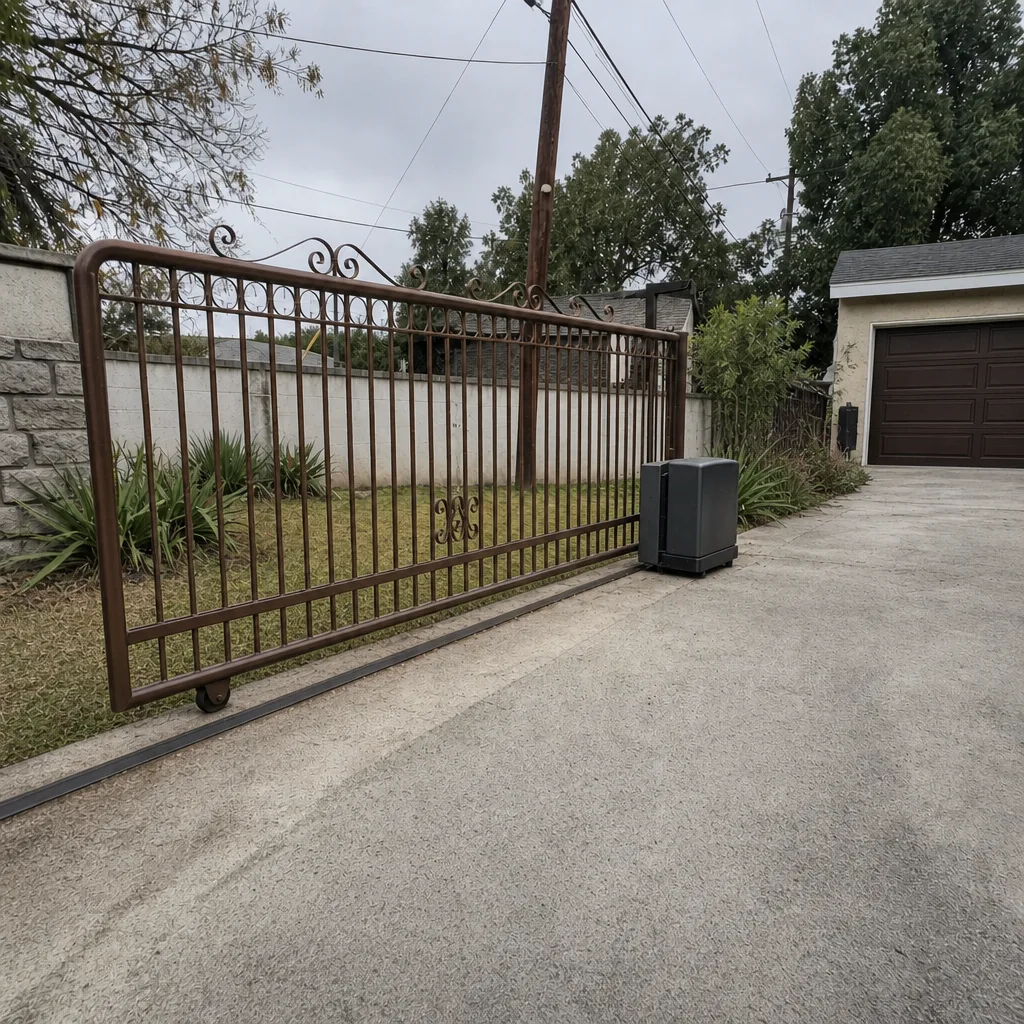 After
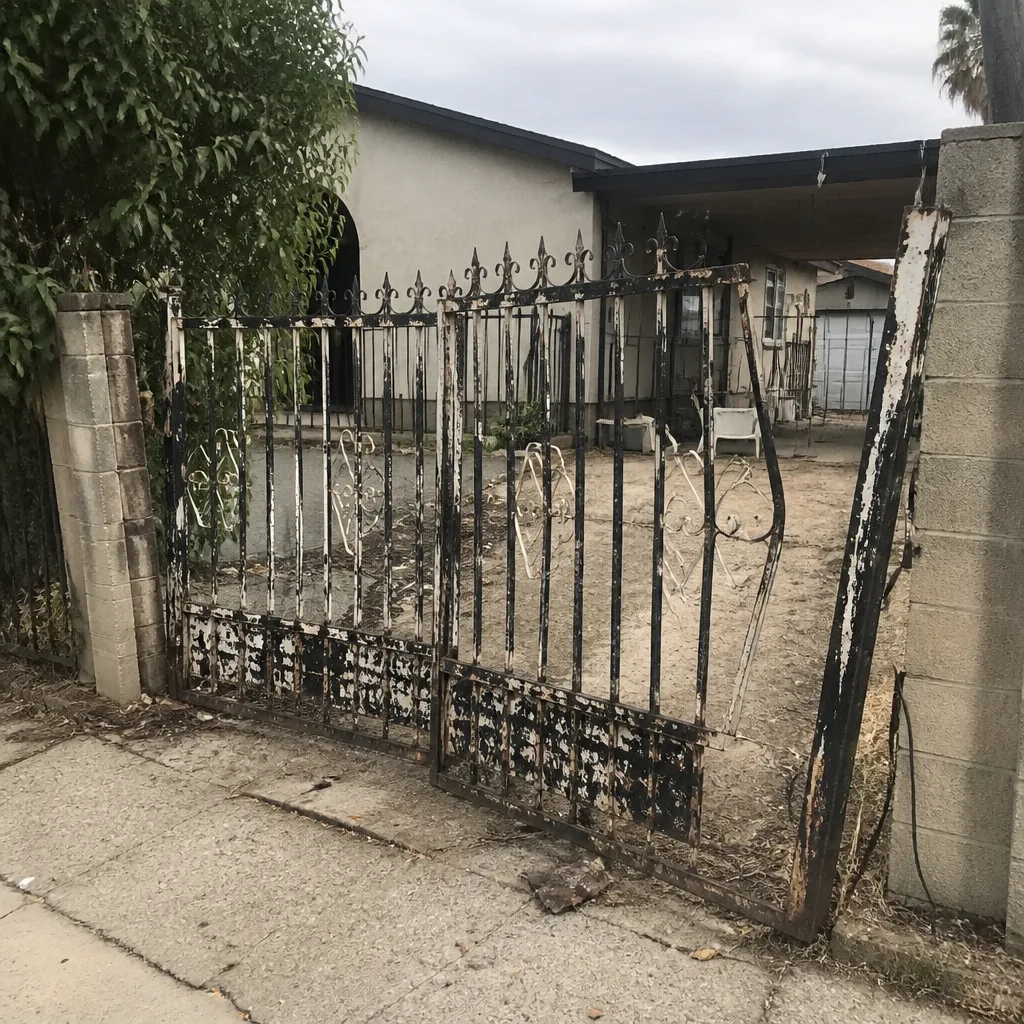 Before
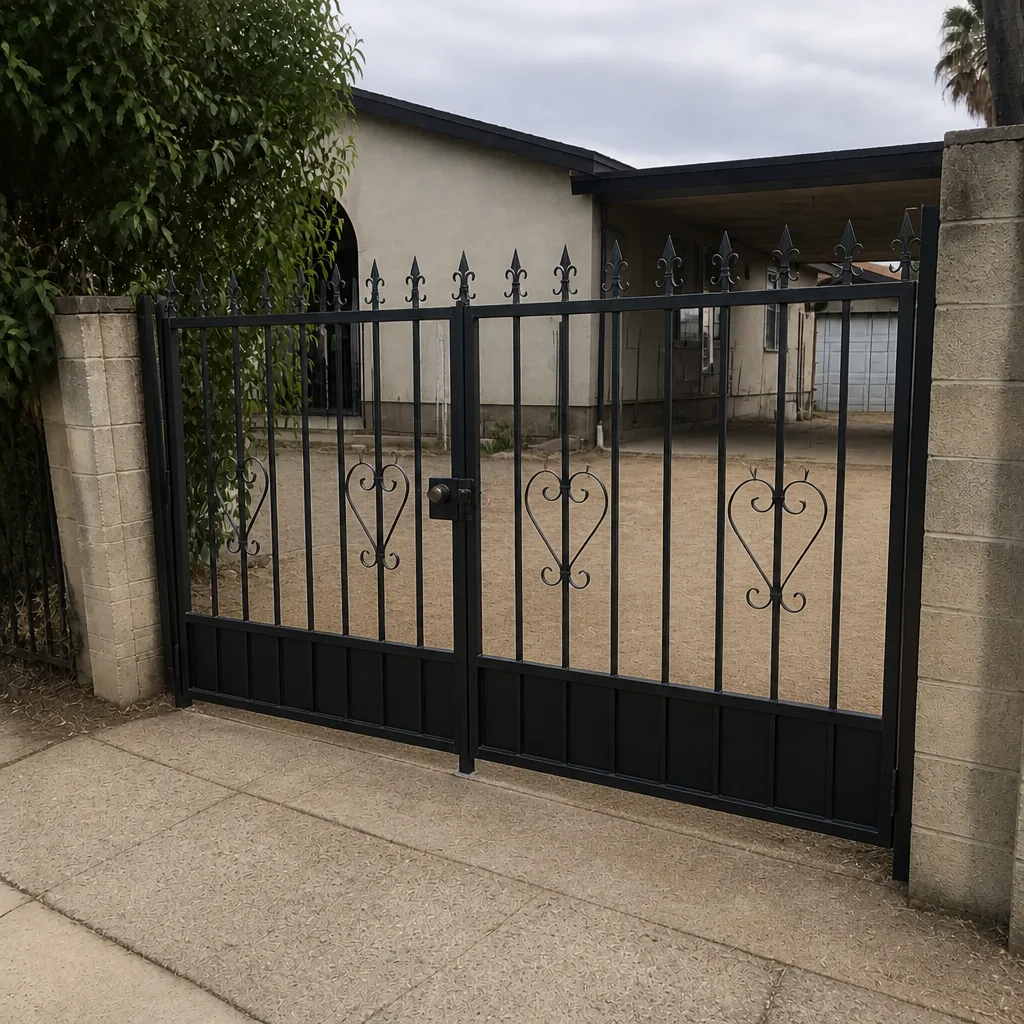 After
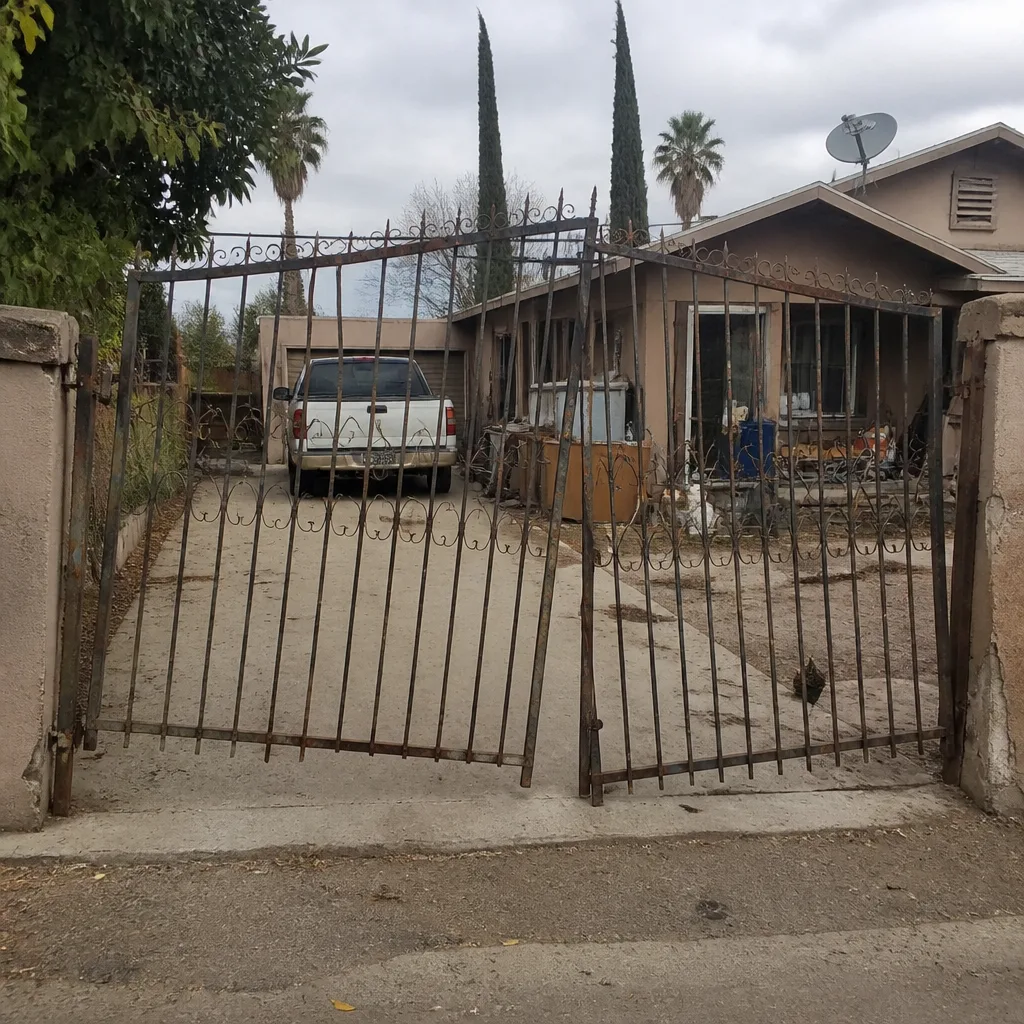 Before
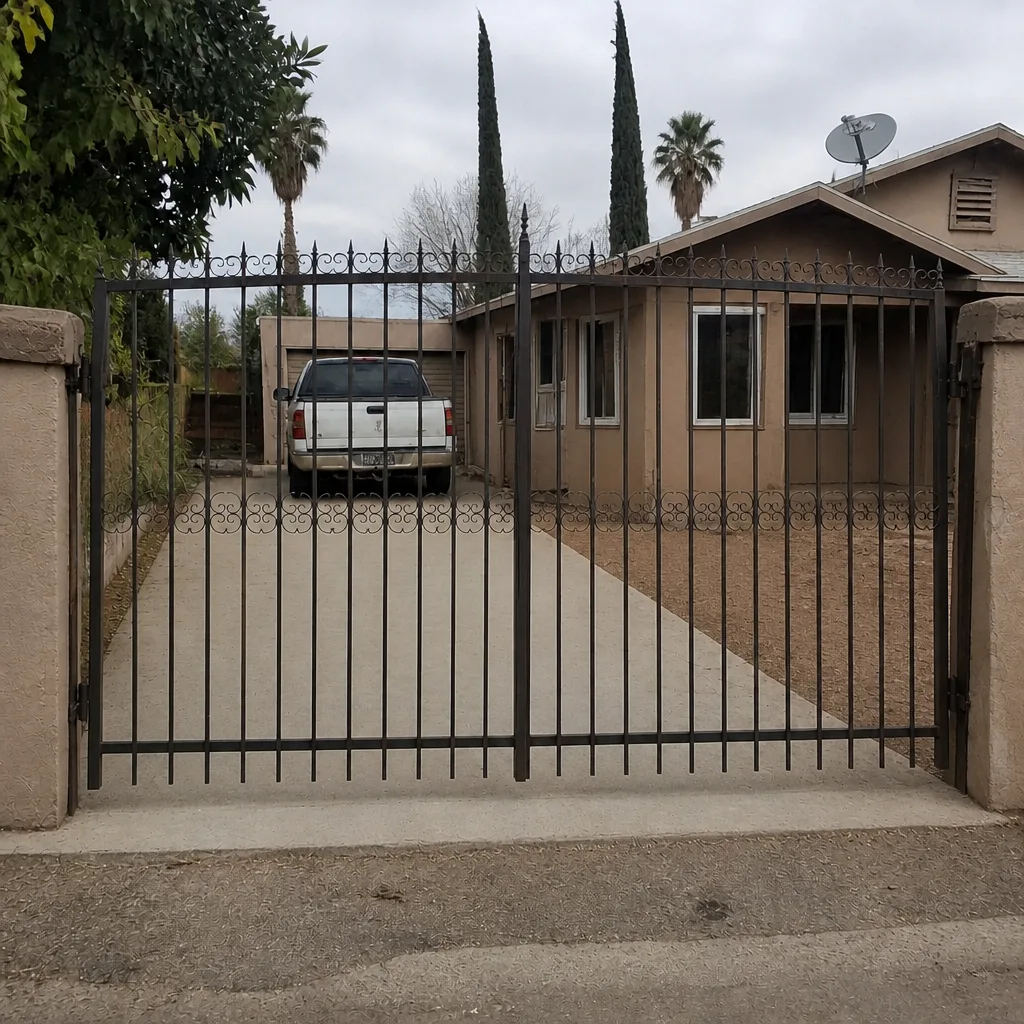 After
When to Call a Professional
Some maintenance is yours, and some is for a specialist. Call a professional when you find chain misalignment or slack that needs actual adjustment, when a hydraulic operator seems sluggish or leaking, when a control board shows moisture or corrosion, or when the gate has started to hesitate, bind or reverse for reasons you can’t see. Call sooner if the gate is leaning, a post is shifting, or the manual release won’t operate. If you’re in the San Bernardino area, Valor Gate Repair offers free estimates – call (866) 389-3501. We service LiftMaster, DoorKing, Elite, Mighty Mule and other major brands, so the fault gets diagnosed correctly the first time. We answer 24/7, with fast dispatch 7am-7pm, Sunday through Friday.
Frequently Asked Questions
A gate in San Bernardino should get a monthly visual check, a quarterly mechanical check and a full annual service. The three-tier schedule covers the different wear rates of the parts, which a single annual visit can’t do. That climate adds heat and dust, so the lower tiers matter more here than in cooler places.
A dedicated chain and cable lubricant is the right product for a gate chain. It penetrates the rollers and sets as a film that doesn’t attract grit, which white lithium and general grease do. Keep WD-40 off the chain as a maintenance product, and never grease the track itself.
Test the battery backup by running the gate on battery power through a full open and close cycle and watching its performance. A voltage reading alone can look fine while the battery can’t carry load. The best time for the test is during the annual service, before an outage finds it for you.
It’s possible to tension a gate chain yourself, but we’d recommend against it for most owners. Getting it too tight strains the gearbox, and the damage doesn’t show up until later. Chain misalignment and slack are worth a specialist’s look, especially on an automated system.
After a Santa Ana wind event, check the track and sensors for debris, look for shifted or leaning posts, inspect the frame for bends, and test the full gate cycle. Hydraulic operators can lose pressure under wind load, so any sluggish movement is worth a professional check.
Yes – the heat thins lubricants and dries out exposed moving parts faster than in cooler climates. It also makes the wrong product (like spray over grease) fail more quickly. For gates across San Bernardino, this means the quarterly check has to be done on schedule rather than skipped.
The Bottom Line
A gate maintenance schedule isn’t one annual task. It’s three tiers on three intervals: monthly visual checks, quarterly mechanical checks and a full annual service. Use the right lubricant for each part, test your battery under load before an outage does it for you, and run the post-wind checklist after every Santa Ana event in San Bernardino. Get those tiers running on their own calendar and your gate system will outlast one that gets attention only when it breaks. When you need a specialist, call (866) 389-3501 for a free estimate.
For more on what we handle across San Bernardino, or to book a free estimate, our team is ready. Call (866) 389-3501. We answer 24/7. Fast dispatch from 7am to 7pm, Sunday through Friday.
Written by the team at Valor Gate Repair.